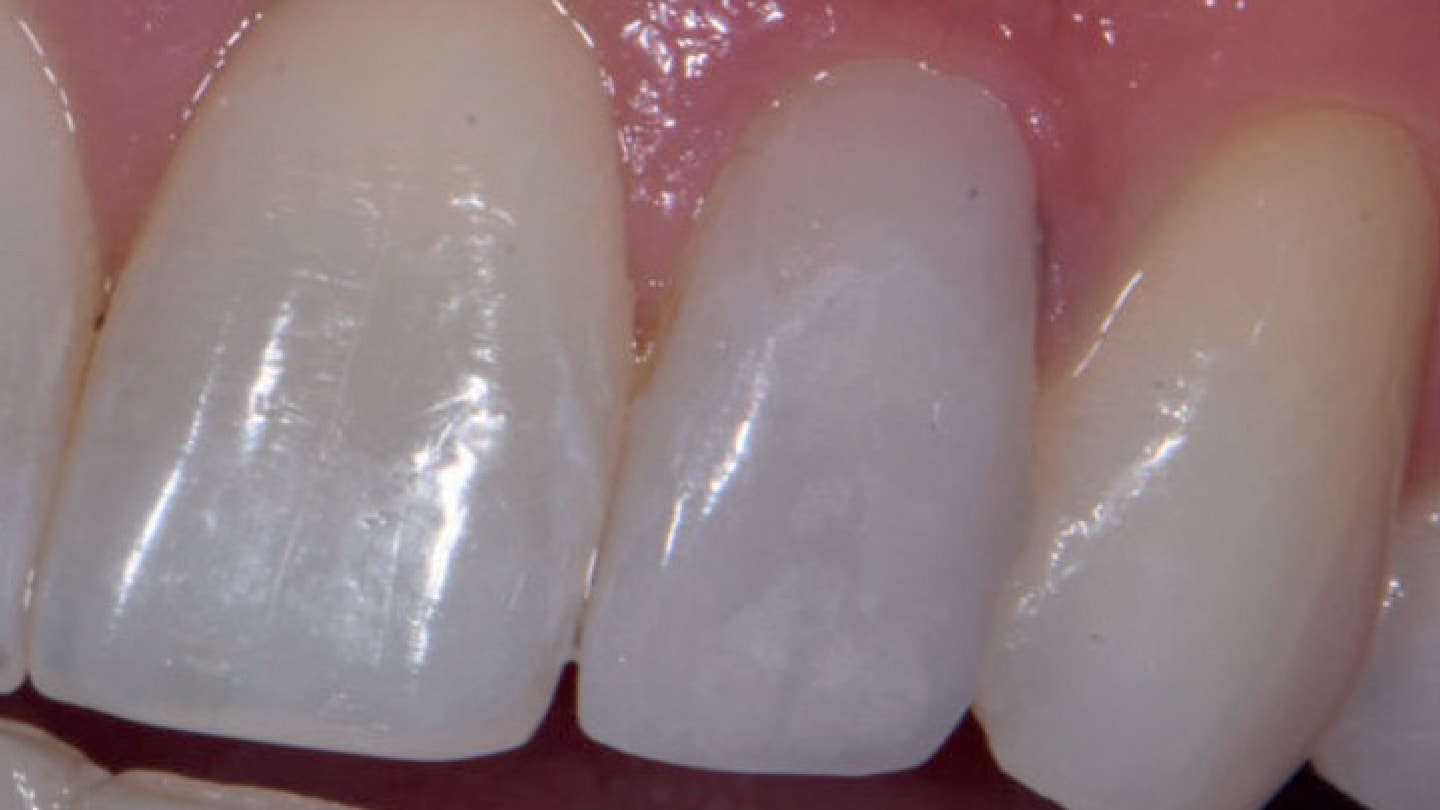
Clinical Report: Novel Technique for Creation of Guide Grooves in Veneer Prep
Overview
This report introduces a novel technique for preparing teeth for ceramic veneers that enhances the consistency of abutment thickness and form. By incorporating guide grooves into the line angles of the tooth, this method minimizes substrate removal while ensuring an ideal veneer shape.
Background
Ceramic veneers are widely utilized to enhance the aesthetics and function of anterior teeth, making the preparation of the underlying tooth critical for the success of the restoration. Traditional preparation techniques often compromise the ideal form and thickness of the veneer, potentially leading to issues such as veneer fracture. This new technique aims to address these shortcomings by improving the preparation process.
Data Highlights
No numerical data or trial data provided in the article.
Key Findings
The novel technique creates guide grooves on the line angles of the tooth to improve abutment form.
Minimally invasive principles are respected by removing minimal tooth substrate during preparation.
Uniform thickness of the veneer is achieved, critical for aesthetics and longevity.
Specialized burs are utilized to follow the contours of the tooth surface, reducing technique sensitivity.
The technique allows for broader application of veneers even when tooth shape is altered.
Clinical Implications
Clinicians should consider adopting this novel preparation technique to enhance the fit and longevity of ceramic veneers. By ensuring a uniform thickness and ideal abutment form, patient satisfaction and restoration durability can be significantly improved.
Conclusion
The introduction of guide grooves into the line angles during tooth preparation represents a significant advancement in veneer preparation techniques. This method not only preserves tooth structure but also enhances the overall quality of ceramic veneers.