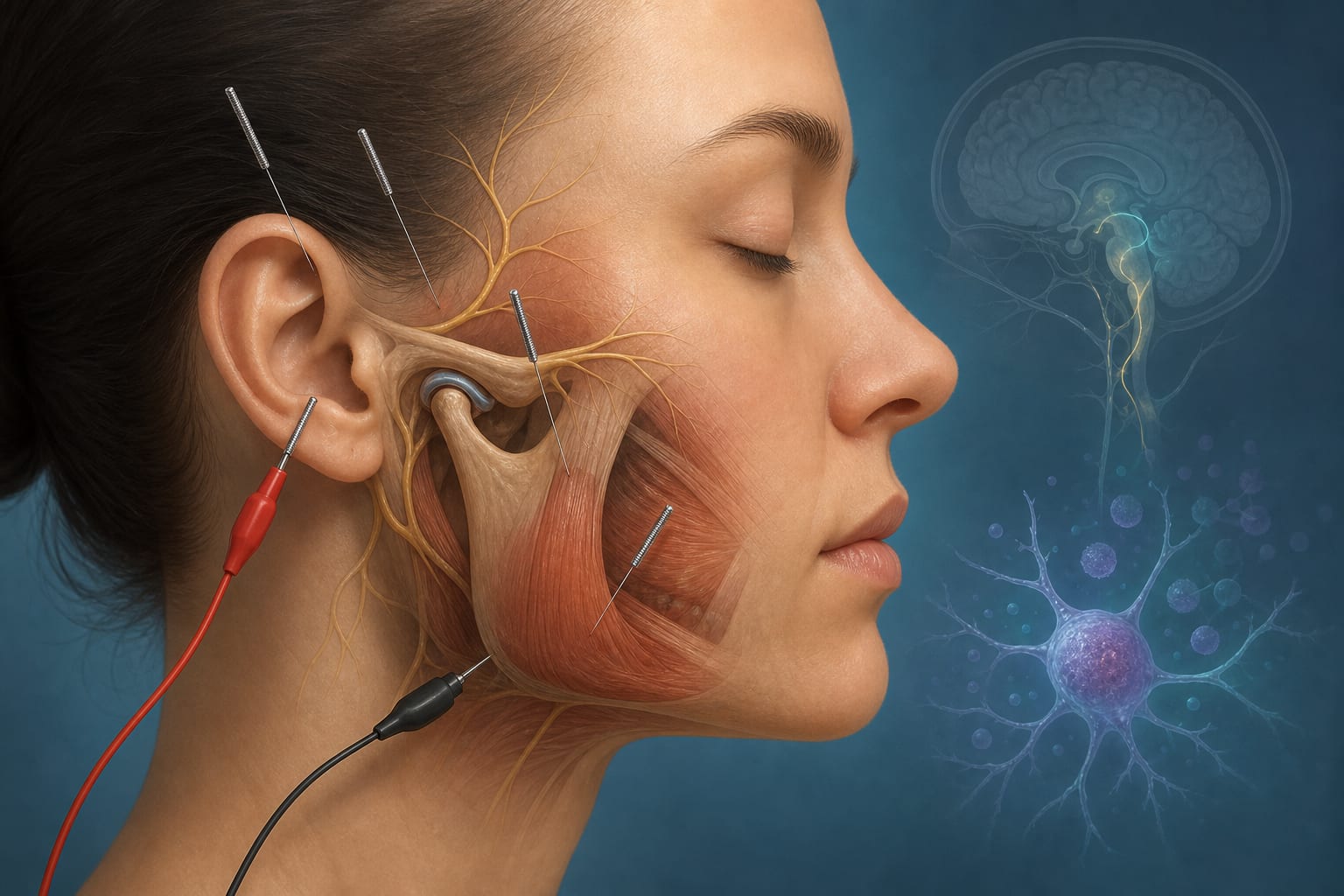
Electroacupuncture for Temporomandibular Disorder–Related Pain: Clinical Evidence, Mechanisms, and Safety—A Narrative Review
-
By
-
Huang, Miao
-
Zhu, Xingzhong
-
Zhang, Ping
-
April 20, 2026
Electroacupuncture as a Treatment for Pain Associated with Temporomandibular Disorders
Overview
Electroacupuncture (EA) has emerged as a non-pharmacologic treatment for pain associated with temporomandibular disorders (TMD). Evidence suggests EA may alleviate pain and improve emotional distress and functional outcomes, although further rigorous studies are needed to confirm its long-term effectiveness.
Background
Temporomandibular disorders (TMD) are prevalent conditions that significantly impact patients' quality of life and daily functioning. Traditional treatments often rely on pharmacologic interventions, which may not always provide adequate relief. Electroacupuncture offers a potential alternative approach, combining traditional acupuncture techniques with electrical stimulation.
Data Highlights
Current evidence from randomized controlled trials (RCTs) and systematic reviews indicates that EA is effective in managing TMD-associated pain, though results vary based on study design and protocols.
Key Findings
- EA may alleviate pain through mechanisms such as activation of Aβ and Aδ fibers and enhancement of local blood flow.
- Immunomodulation via suppression of proinflammatory cytokines is another proposed mechanism of EA.
- Minor and short-lived side effects, such as pain at the site of application, have been reported, with no serious complications noted.
- The efficacy of EA is contingent on specific clinical protocols and TMD subtypes included in trials.
- Standardization of treatment protocols and practitioner training is necessary for clinical implementation.
Clinical Implications
The findings suggest that EA could be considered as a complementary treatment option for managing TMD pain. However, clinicians should be aware of the variability in efficacy and the need for standardized protocols.
Conclusion
EA appears to be a safe and potentially beneficial modality for TMD pain management, warranting further high-quality studies to establish its long-term effectiveness.
Related Resources & Content
- Frontiers in Neurology, 2026 -- A meta-analysis of neuroimaging evidence for acupuncture-mediated modulation of altered central pain processing in patients with chronic pain
- Frontiers in Medicine, 2026 -- Core acupoint selection strategies and multifactorial analysis for acute musculoskeletal pain
- Frontiers in Pain Research, 2026 -- Efficacy and safety of low- and high-intensity magnetic field therapies for orthopedic pain: a systematic review
- The BMJ, 2023 -- Management of chronic pain associated with temporomandibular disorders: a clinical practice guideline
- BMC Oral Health, 2024 -- Efficacy of acupuncture and laser acupuncture in temporomandibular disorders: a systematic review and meta-analysis of randomized controlled trials
- conexiant — Pain With Movement Linked to Poorer Outcomes in TMD
- Management of chronic pain associated with temporomandibular disorders: a clinical practice guideline
- NHS England GIRFT/Royal College of Surgeons adult TMD guideline
- Management of chronic pain secondary to temporomandibular disorders: a systematic review and network meta-analysis of randomised trials - PubMed
- Efficacy of acupuncture and laser acupuncture in temporomandibular disorders: a systematic review and meta-analysis of randomized controlled trials | BMC Oral Health | Springer Nature Link
- Efficacy of acupuncture on craniomandibular myofascial pain in temporomandibular disorder patients: A systematic review - PubMed
This content is an AI-generated, fully rewritten summary based on a published scholarly article. It does not reproduce the original text and is not a substitute for the original publication. Readers are encouraged to consult the source for full context, data, and methodology.