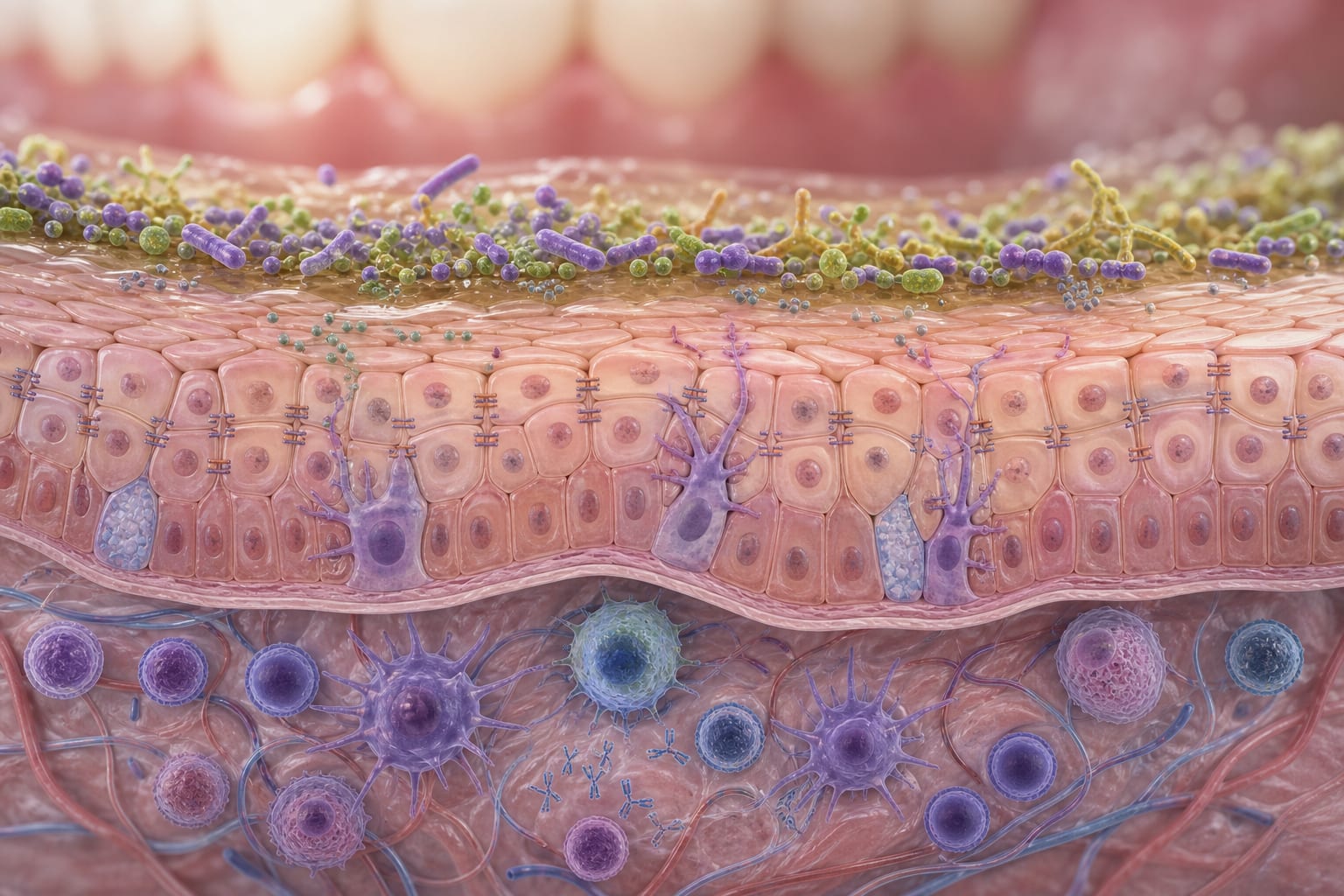
Clinical Report: Strategies and Mechanisms for Remodeling the Immune Barrier of the Oral Mucosa
Overview
This review discusses the critical role of the oral mucosal barrier in defending against pathogens and maintaining systemic health. It highlights the mechanisms of barrier remodeling and the implications of barrier dysfunction, along with novel therapeutic strategies for restoration.
Background
The oral mucosa is essential for protecting against pathogens and maintaining overall health, serving as the largest mucosal surface exposed to the environment. Its barrier function is vital not only for local oral health but also for systemic well-being, influencing conditions such as diabetes and cancer. Understanding the dynamics of oral mucosal barrier remodeling is crucial for developing effective interventions for related diseases.
Data Highlights
No numerical data or trial data presented in the article.
Key Findings
The oral mucosal barrier consists of physical, chemical, microbial, and cellular components that work together to maintain homeostasis.
Barrier remodeling involves structural, immunological, ecological, and functional changes in response to environmental and pathological challenges.
Dysfunction of the oral mucosal barrier can exacerbate local lesions and contribute to systemic diseases through the oral-systemic axis.
Recent technologies like single-cell sequencing have enhanced understanding of the mechanisms underlying barrier remodeling.
Novel therapeutic strategies include microbiota-targeted regulation and immune signaling pathway modulation.
Clinical Implications
Clinicians should be aware of the importance of the oral mucosal barrier in both local and systemic health. Targeted interventions aimed at restoring barrier function may improve outcomes in patients with oral mucosal diseases and related systemic conditions.
Conclusion
The oral mucosal barrier plays a pivotal role in health, and understanding its remodeling processes is essential for developing effective therapeutic strategies. Continued research is needed to integrate findings into clinical practice.