Comparison of the teaching effect of problem-based learning and case-based learning teaching methods in dental endodontics education - Report - DentalSpire
Clinical Report: Evaluating the Effectiveness of PBL Versus CBL in Dental Education
Overview
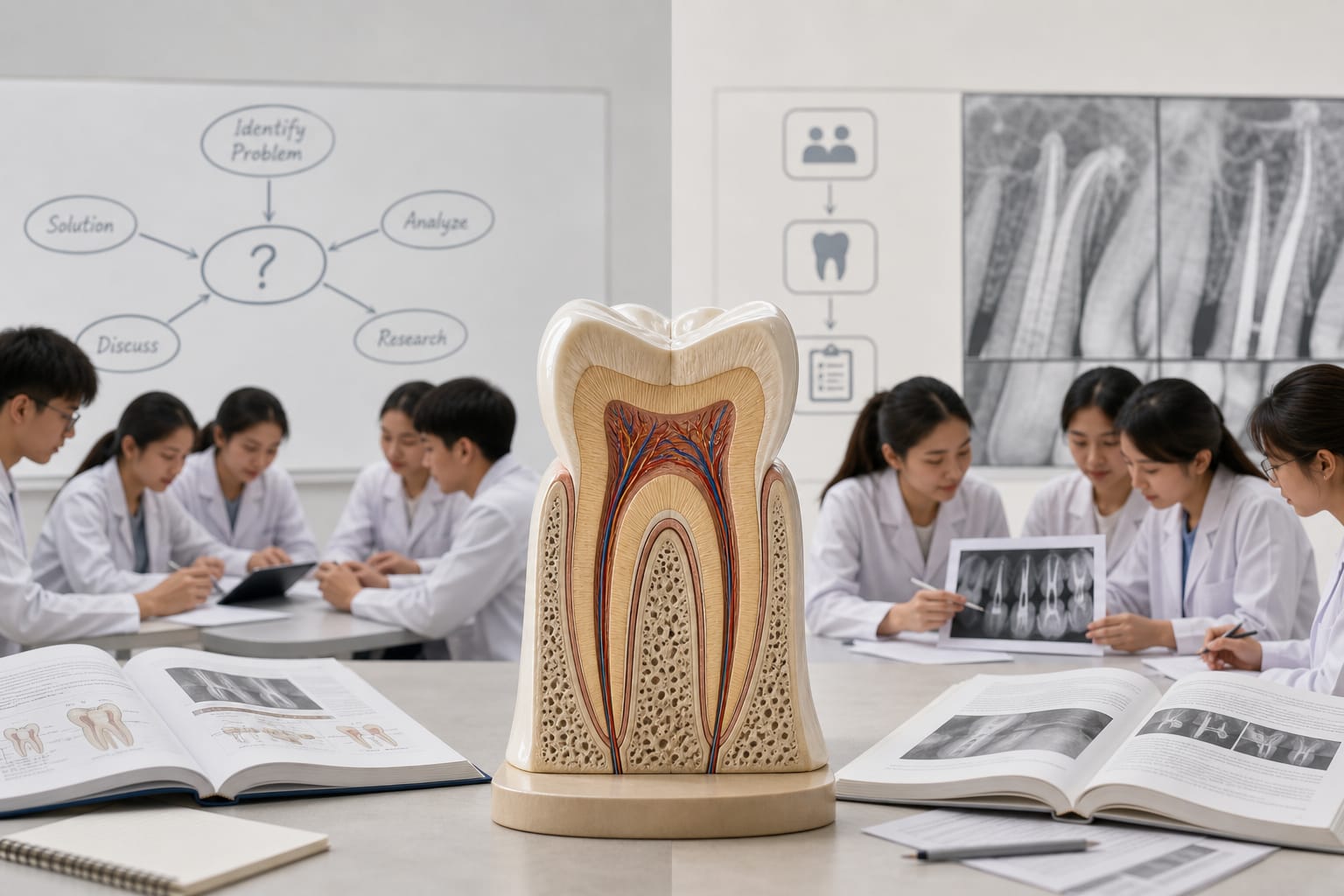
This study compares problem-based learning (PBL) and case-based learning (CBL) in dental endodontics education among 156 junior dental students. PBL was found to enhance critical thinking and self-directed learning, while CBL improved practical skills and application of theoretical knowledge.
Background
Effective pedagogical strategies in dental education are crucial for developing competent professionals. Traditional lecture-based methods often fail to engage students actively, limiting their ability to apply theoretical knowledge in clinical settings. Innovative approaches like PBL and CBL aim to address these challenges by fostering critical thinking and practical skills.
Data Highlights
Group
Theoretical Assessment
Practical Competencies
Learning Attitudes
PBL
Superior grasp of complex concepts
Less advanced operational skills
Greater enthusiasm for autonomous inquiry
CBL
Excelled in knowledge application
More advanced operational skills
Heightened awareness of practical relevance
Key Findings
PBL enhances critical thinking and self-directed learning.
CBL improves practical skills and application of theoretical knowledge.
Clinical Implications
Educators should consider the specific educational goals and learner attributes when selecting instructional strategies. A blended approach combining PBL and CBL may optimize educational outcomes in dental endodontics training.
Conclusion
Both PBL and CBL are effective in dental education, each with distinct advantages. Tailoring instructional methods to meet educational objectives can enhance student learning experiences.