The Impact of Self-management Ability on Oral Frailty in Older Adults with Hypertension: The Chain Mediating Role of Anxiety and Nutritional Status - Report - DentalSpire
Advertisement
The Impact of Self-management Ability on Oral Frailty in Older Adults with Hypertension: The Chain Mediating Role of Anxiety and Nutritional Status
Clinical Report: The Role of Self-management Skills in Oral Frailty Among Hypertensive Seniors
Overview
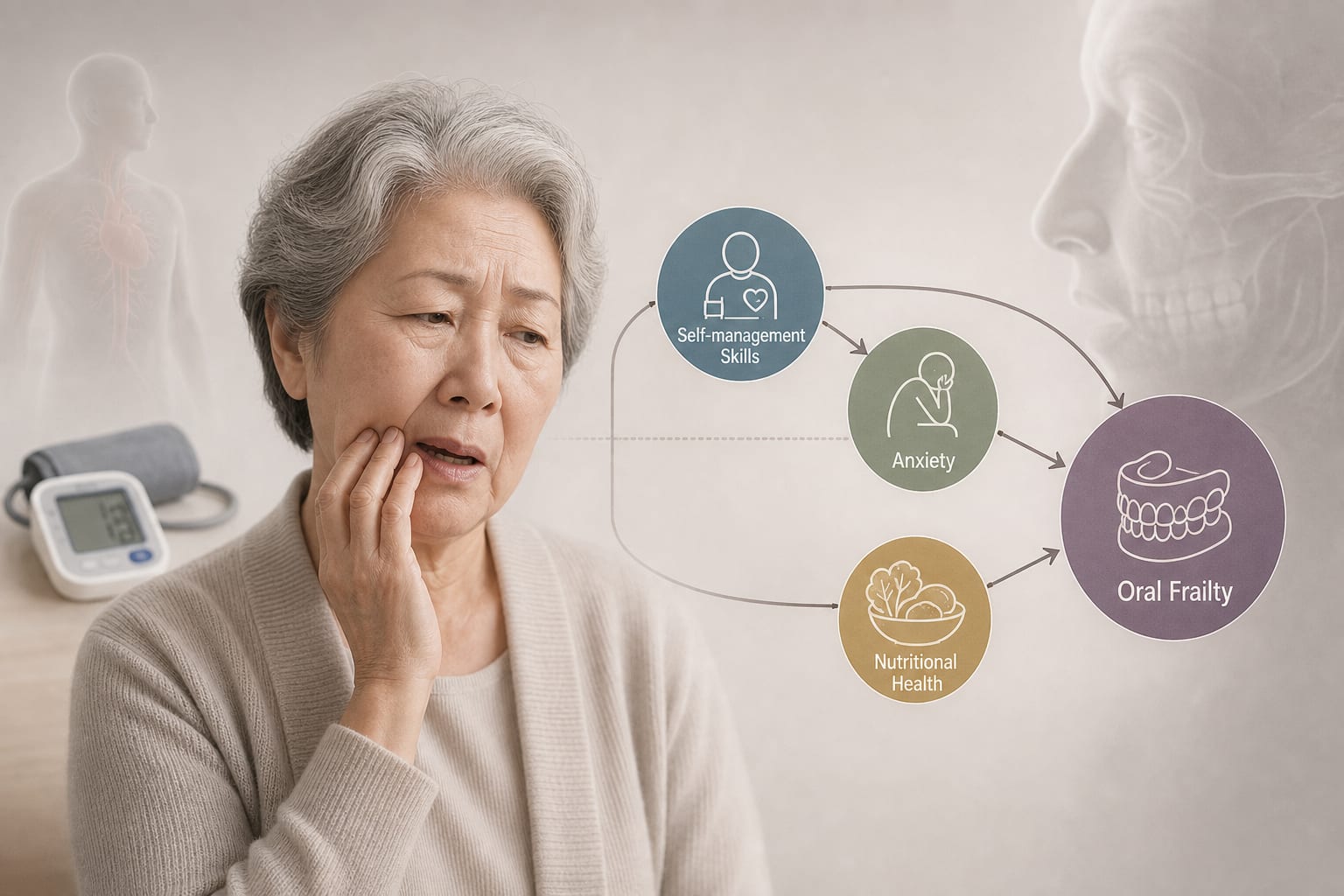
This study investigates the interplay between self-management skills, anxiety, and nutritional health in relation to oral frailty among hypertensive seniors. Findings suggest that enhancing self-management abilities can mitigate oral frailty through reduced anxiety and improved nutritional status.
Background
Oral frailty is a significant concern among older adults, particularly those with hypertension, affecting their quality of life and increasing mortality risk. With a prevalence of up to 61.5%, understanding the factors influencing oral frailty is crucial for developing effective interventions. This study highlights the importance of self-management skills, anxiety, and nutritional health in addressing oral frailty.
Data Highlights
Variable
Effect Size (β)
95% Confidence Interval (CI)
Direct effect of self-management on oral frailty
-0.037
-0.054 to -0.019
Anxiety pathway
-0.017
-0.024 to -0.011
Nutritional status pathway
-0.008
-0.014 to -0.004
Serial mediation (anxiety-nutritional status)
-0.009
-0.019 to -0.003
Total mediating effect
47.90%
N/A
Key Findings
Oral frailty prevalence among hypertensive seniors is as high as 61.5%.
Significant correlations exist between self-management ability, anxiety, nutritional status, and oral frailty (p<0.001).
Self-management ability has a direct negative effect on oral frailty.
Anxiety and nutritional status mediate the relationship between self-management and oral frailty.
The total mediating effect accounts for 47.90% of the overall effect.
Clinical Implications
Clinicians should focus on enhancing self-management skills in hypertensive seniors to reduce oral frailty risk. Addressing anxiety and optimizing nutritional status are essential components of comprehensive care strategies.
Conclusion
Improving self-management abilities, alongside managing anxiety and nutritional health, can significantly reduce the risk of oral frailty in older adults with hypertension. Targeted interventions are necessary for better health outcomes.