Is It Possible for Artificial Intelligence in Healthcare to Achieve Genuine Inclusivity?
-
By
-
Beth Rush
-
June 22, 2026
Clinical Report: Is It Possible for Artificial Intelligence in Healthcare to Achieve Genuine Inclusivity?
Overview
The integration of equity, diversity, and inclusion (EDI) in AI healthcare systems is crucial to prevent the amplification of existing health disparities. The EDAI framework offers a structured approach to incorporate EDI principles throughout the AI lifecycle, addressing the needs of underserved populations.
Background
Artificial intelligence is increasingly utilized in healthcare, yet there is a significant risk that it may perpetuate existing disparities if not designed with inclusivity in mind. Populations facing barriers to care often remain underrepresented in AI training datasets, leading to their invisibility in algorithmic decision-making. Addressing these disparities is essential for ensuring equitable healthcare delivery.
Data Highlights
No numerical data was provided in the source material.
Key Findings
- AI in healthcare can reproduce existing disparities unless EDI is integrated throughout its lifecycle.
- The EDAI framework provides guidance for incorporating EDI at micro, meso, and macro levels.
- Populations at risk of invisibility in AI systems include those with unstable housing, migrants, and individuals with disabilities.
- Historical patterns of discrimination contribute to biases in medical AI, as noted in a 2024 study.
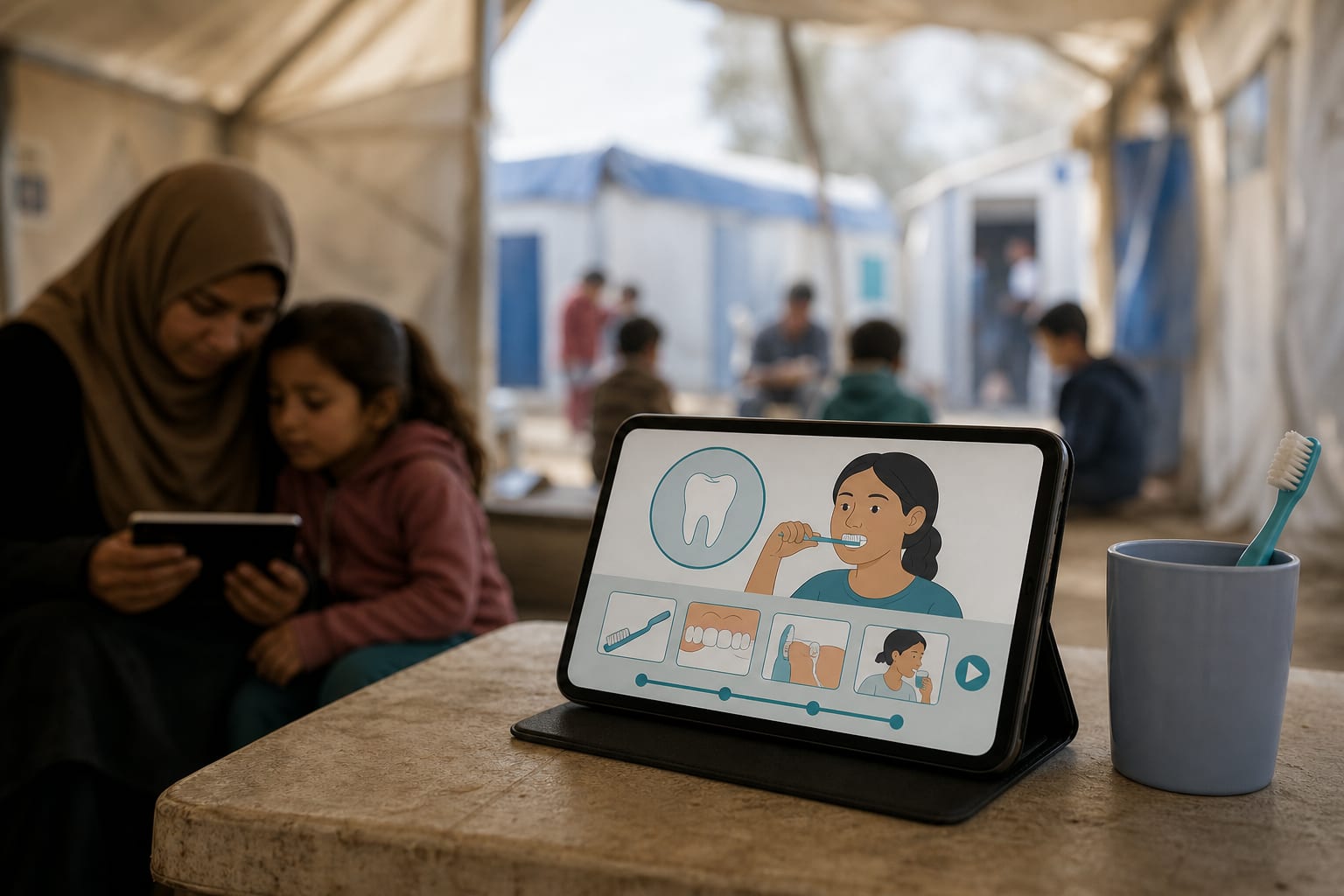
- The framework emphasizes the importance of including oral health in AI discussions to avoid reinforcing existing inequities.
Clinical Implications
Healthcare professionals and AI developers should prioritize the integration of EDI principles in the design and implementation of AI systems. This approach is vital to ensure that all populations, particularly those underserved, are adequately represented and served by healthcare technologies.
Conclusion
The EDAI framework represents a critical step towards achieving inclusivity in AI healthcare applications. By addressing the needs of diverse populations, the framework aims to mitigate the risk of exacerbating health disparities.
Related Resources & Content
- Rahimi, S.A., JMIR Publications, 2026 -- Towards Equitable and Inclusive AI in Health and Oral Health Care
- Reddy, S., Learning Health Systems, 2026 -- Will AI reduce health disparities—or create new ones?
- Frontiers in Digital Health, 2026 -- Perspectives on healthcare artificial intelligence policy from health equity professionals: findings from an interview study
- Kaiser Family Foundation, 2026 -- The Growing Use of Artificial Intelligence in Health Care and Implications for Disparities
- HTI-1 Final Rule - ONC - Office of the National Coordinator for Health Information Technology
- aace endocrine ai — Why we all belong in the AI conversation
- Interval cancer, sensitivity, and specificity comparing AI-supported mammography screening with standard double reading
- COMPASS-GH is a consensus roadmap for defining standards for safe, accurate and equitable AI in general health queries
- HTI-1 Final Rule - ONC - Office of the National Coordinator for Health Information Technology
Based on findings from:
Can AI in Health Care Be Truly Inclusive?
Beth Rush. Journal Of Medical Internet Research (Jmir), 2026.
https://www.jmir.org/2026/1/e104527
This content is an AI-generated, fully rewritten summary based on a published scholarly article. It does not reproduce the original text and is not a substitute for the original publication. Readers are encouraged to consult the source for full context, data, and methodology.