Developing and Defining the GAPA Digital Infrastructure for Coordinated Oral Health Planning Across Home Care Organizations
-
By
-
Sara Björns
-
Jessica Persson Kylén
-
October 9, 2026
Clinical Report: Developing and Defining the GAPA Digital Infrastructure
Overview
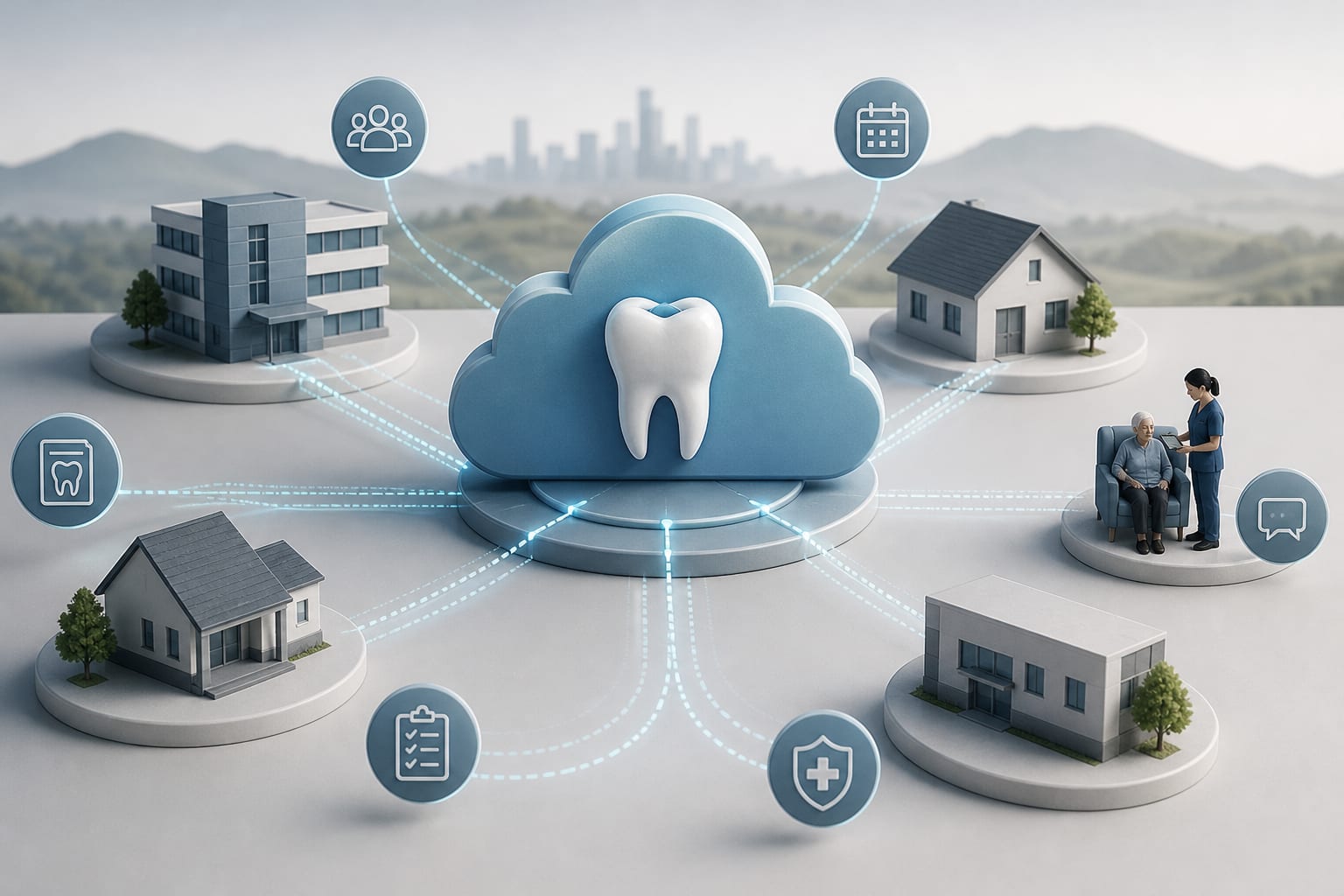
The GAPA study describes development of a cross-organisational digital platform intended to support shared oral health planning between Swedish municipal home care and public dental services. Its rationale is that digital documentation alone is insufficient: assessments, older adults’ preferences, responsibilities, recommendations, and follow-up need to be visible across organisational boundaries.
Background
Older adults receiving home care commonly have complex care needs, including multimorbidity and functional limitations, while interacting with multiple health and social care providers. Oral health is often poor in this population but is not adequately incorporated into routine workflows or interprofessional care planning, despite its connections with nutrition, comfort, communication, systemic health, and quality of life. In Sweden, public dental outreach assessments generate recommendations, but integration of paper-based recommendations into electronic records remains inadequate. The WHO Global Strategy and Action Plan on Oral Health 2023–2030 calls for stronger integration of oral health into health systems.
Data Highlights
| Measure or feature | Source detail |
|---|---|
| People reached by the nationally funded public dental support programme | Approximately 151,000 people in 2022 |
| Study period | January 2022 to February 2026 |
| Development process | Five cycles, from needs assessment and paper-based workflow modelling to specification of a high-fidelity platform |
| Study design and framework | Multimethod intervention development study structured by the updated Medical Research Council framework |
Key Findings
- The study aimed to develop and specify a digital platform for shared oral health care planning between municipal home care services and public dental services.
- In the Swedish context described, dental hygienists generally conduct outreach oral health assessments in collaboration with municipal care personnel and produce recommendations for daily oral care and dental treatment when indicated.
- Paper-based recommendations are inadequately integrated into electronic record systems, limiting continuity, accountability, and follow-up.
- The development premise was that digital documentation alone would not resolve fragmentation; shared infrastructure should make assessments, preferences, responsibilities, and follow-up actions visible across organisational boundaries.
- Development followed five iterative cycles and used end-user, professional, organisational stakeholder, and researcher participation, guided by co-design and integrated knowledge translation principles.
- The related ADA news article reports advocacy for dental-sector needs to be considered in the U.S. Federal Health IT Strategic Plan; the supplied context does not provide further details of the ADA’s proposed criteria.
Clinical Implications
The source identifies a need for oral health assessments and recommendations to be incorporated into shared care planning and communicated across home care and dental service boundaries. It also emphasises including older adults’ preferences and participation in oral-care planning; the supplied material does not report clinical outcomes from implementation of the GAPA platform.
Conclusion
GAPA’s development work specifies a cross-organisational digital infrastructure intended to support person-centred oral health planning in home care. The source frames shared visibility of assessments, responsibilities, preferences, and follow-up as central to addressing fragmented workflows.
Related Resources & Content
- GAPA programme study, article context, 2026 -- Developing and Defining the GAPA Digital Infrastructure for Coordinated Oral Health Planning Across Home Care Organizations
- ADA, ADA News, 2024 -- ADA advocates for dentists in Federal Health IT Strategic Plan
- World Health Organization, 2023–2030 -- Global oral health action plan 2023–2030
- Frontiers in Digital Health — Developing Reliable and Accessible Care Coordination: Collaborative Creation of a Hybrid CareCompass with Rural Informal Caregivers
- Journal of General Internal Medicine — Building a System-Wide Approach to Support Advance Care Planning Within an Academic Medical Center: Continuity Across Care Settings
- ADA News — Pandemic workgroup urges agencies to prioritize oral health
- Tracking progress on the implementation of the Global oral health action plan 2023–2030
- ADA advocates for dentists in Federal Health IT Strategic Plan
- Oral health care in older people in long-term care facilities: An updated systematic review and meta-analyses of implementation strategies - PubMed
- Teledentistry for Homebound and Institutionalized Older Adults: A Rapid Review for Its Potential Use in Primary Healthcare - PMC
Based on findings from:
From silos to shared plans: A complex intervention development and specification study of the GAPA digital infrastructure for cross-organisational oralhealth care planning in home care
Sara Björns, Jessica Persson Kylén. Digital Health, 2026.
https://journals.sagepub.com/doi/abs/10.1177/20552076261487078
This content is an AI-generated, fully rewritten summary based on a published scholarly article. It does not reproduce the original text and is not a substitute for the original publication. Readers are encouraged to consult the source for full context, data, and methodology.