Biofluorescence: A New Way to See and Share
-
By
-
Michael Miyasaki
-
January 1, 2026
-
7 min
Clinical Report: Biofluorescence: A New Way to See and Share
Overview
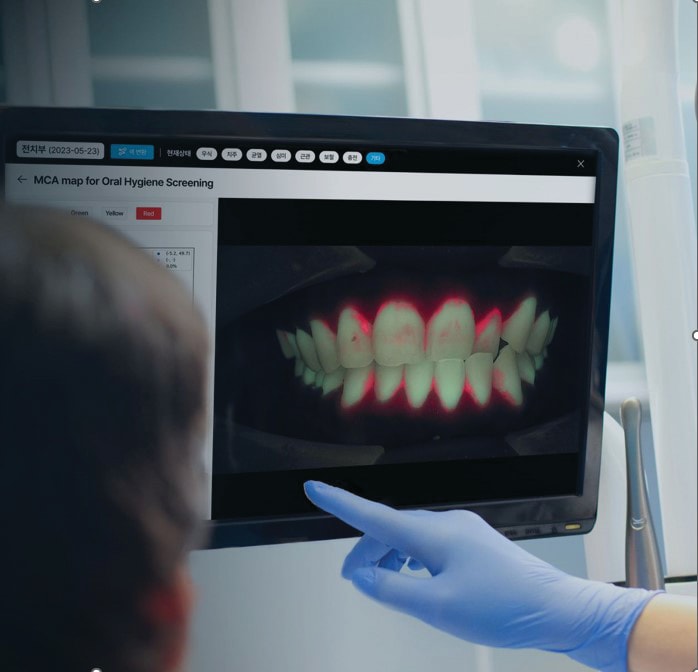
Biofluorescence technology enhances early detection of dental caries and periodontal disease by visualizing microscopic changes in enamel and biofilm activity. This innovative approach not only improves diagnosis but also fosters patient engagement and compliance through visual evidence of oral health.
Background
Dental caries and periodontal disease are among the most prevalent chronic diseases globally, often detected too late for effective intervention. Traditional diagnostic methods rely on visual and tactile assessments, which may miss early signs of disease progression. Biofluorescence technology offers a transformative solution by enabling the visualization of early demineralization and biofilm activity, thus redefining preventive care in dentistry.
Data Highlights
Biofluorescence provides measurable metrics such as percentage of fluorescence loss (ΔF), cumulative mineral loss (ΔQ), and lesion area (mm²), allowing for objective assessment and monitoring of dental health over time.
Key Findings
- Biofluorescence can detect demineralization before it is visible on radiographs.
- Quantitative metrics from biofluorescence can track changes in enamel health over time.
- Red fluorescence indicates metabolically active biofilm, aiding in targeted patient education.
- Patients are more likely to accept treatment when they can visually see their oral health status.
- Biofluorescence enhances the effectiveness of preventive measures by allowing for real-time monitoring of treatment outcomes.
Clinical Implications
Incorporating biofluorescence into dental practice can significantly enhance early detection and patient communication regarding oral health. By providing visual evidence of disease progression and treatment efficacy, clinicians can foster greater patient engagement and compliance with preventive care recommendations.
Conclusion
Biofluorescence represents a significant advancement in dental diagnostics, enabling earlier intervention and improved patient outcomes through enhanced visualization and quantification of oral health.
Related Resources & Content
- ORCA-EFCD consensus report on clinical recommendation for caries diagnosis. Paper I: caries lesion detection and depth assessment - PMC
- Evaluation of residual carious dentin detection methods after cavity preparation: a randomized clinical trial | BMC Oral Health | Springer Nature Link
- Living Sensor Illuminates Epigenetic Changes Inside Cells — The Analytical Scientist
- Can a Pocket Microscope Replace the Stain? — The Pathologist
- Advancements in Fluorescence-Guided Surgery Devices: A Technical Review and Prospective Innovations — Surgical Endoscopy
- The ASCO Post — New Imaging Technique Identifies Receptors for Targeted Cancer Therapy
- ORCA-EFCD consensus report on clinical recommendation for caries diagnosis. Paper I: caries lesion detection and depth assessment - PMC
- Evaluation of residual carious dentin detection methods after cavity preparation: a randomized clinical trial | BMC Oral Health | Springer Nature Link
- Diagnostic efficacy of VELscope in oral potentially malignant disorders: a systematic review and meta-analysis
Based on findings from:
Biofluorescence: A New Way to See and Share
Michael Miyasaki. Inside Dentistry, 2026.
https://www.insidedentistry.net/2026/02/biofluorescence/
This content is an AI-generated, fully rewritten summary based on a published scholarly article. It does not reproduce the original text and is not a substitute for the original publication. Readers are encouraged to consult the source for full context, data, and methodology.