Clinical Report: Immortalization through Telomerase Enhances EV Properties
Overview
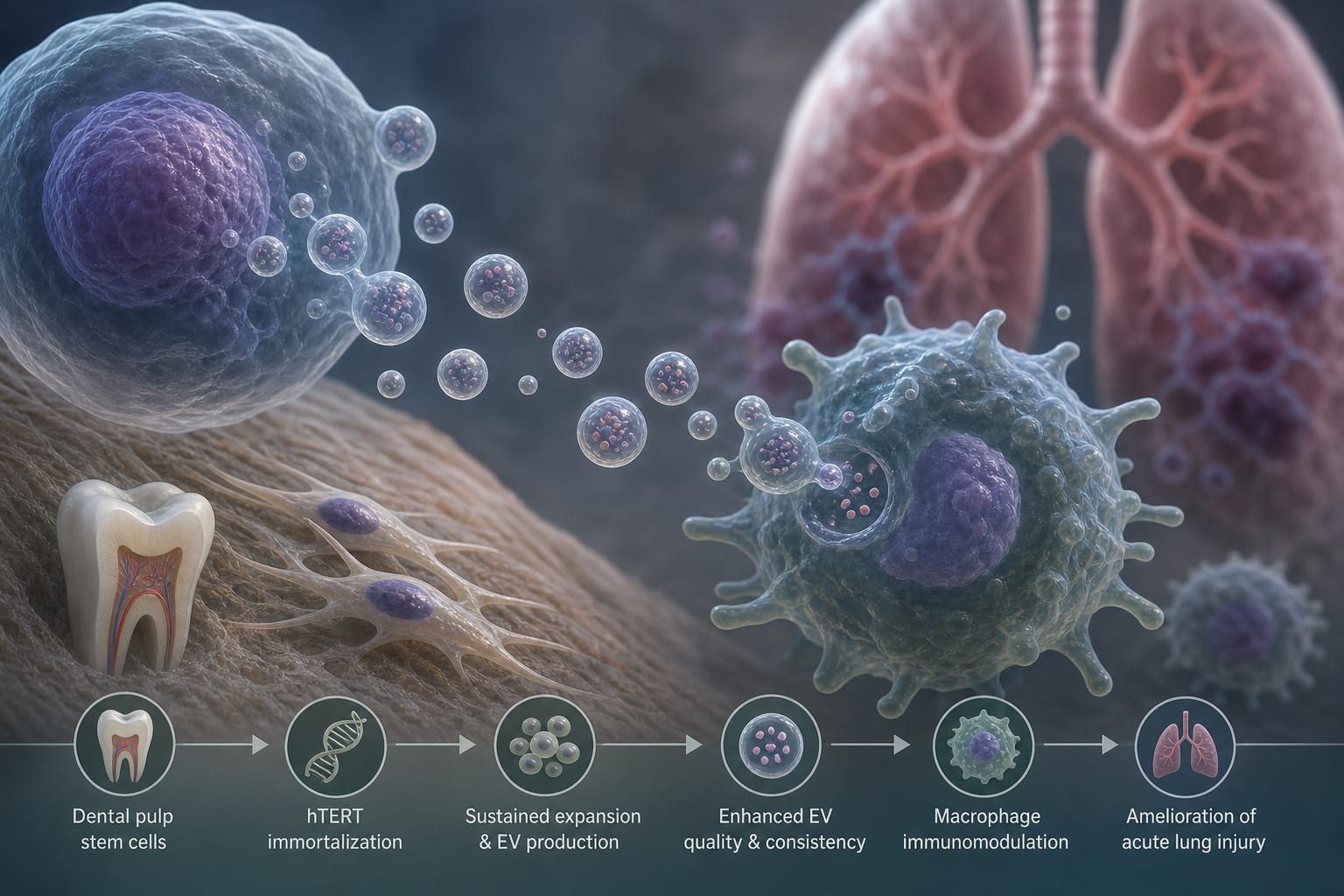
This study demonstrates that immortalization of dental pulp stem cells (DPSCs) via hTERT expression preserves the immunomodulatory properties of extracellular vesicles (EVs) across multiple passages. The findings suggest that hTERT-immortalized DPSCs can serve as a reliable source for EV production with consistent anti-inflammatory activity.
Background
DPSCs are promising for regenerative medicine due to their ability to secrete bioactive EVs that mediate immunomodulatory effects. However, the finite lifespan of primary DPSCs limits the scalability of EV production, necessitating methods to extend their functional viability. Immortalization via hTERT offers a potential solution to enhance the therapeutic application of DPSC-derived EVs.
Data Highlights
No numerical data provided in the article.
Key Findings
hTERT expression increased telomerase levels without affecting DPSC differentiation potential.
EVs from both naïve and hTERT-immortalized DPSCs showed similar size and morphology.
Both EV sources effectively suppressed pro-inflammatory cytokines in activated macrophages.
hTERT-immortalized DPSC-derived EVs retained immunomodulatory activity through at least passage 15.
In vivo studies demonstrated comparable efficacy of EVs from both sources in reducing lung inflammation.
Clinical Implications
The ability to produce EVs from hTERT-immortalized DPSCs may facilitate the development of standardized and scalable EV therapies for inflammatory conditions. This approach could enhance the clinical applicability of DPSC-derived EVs in regenerative medicine.
Conclusion
The study supports the use of hTERT-immortalized DPSCs as a viable source for producing EVs with consistent anti-inflammatory properties, paving the way for their application in clinical settings.