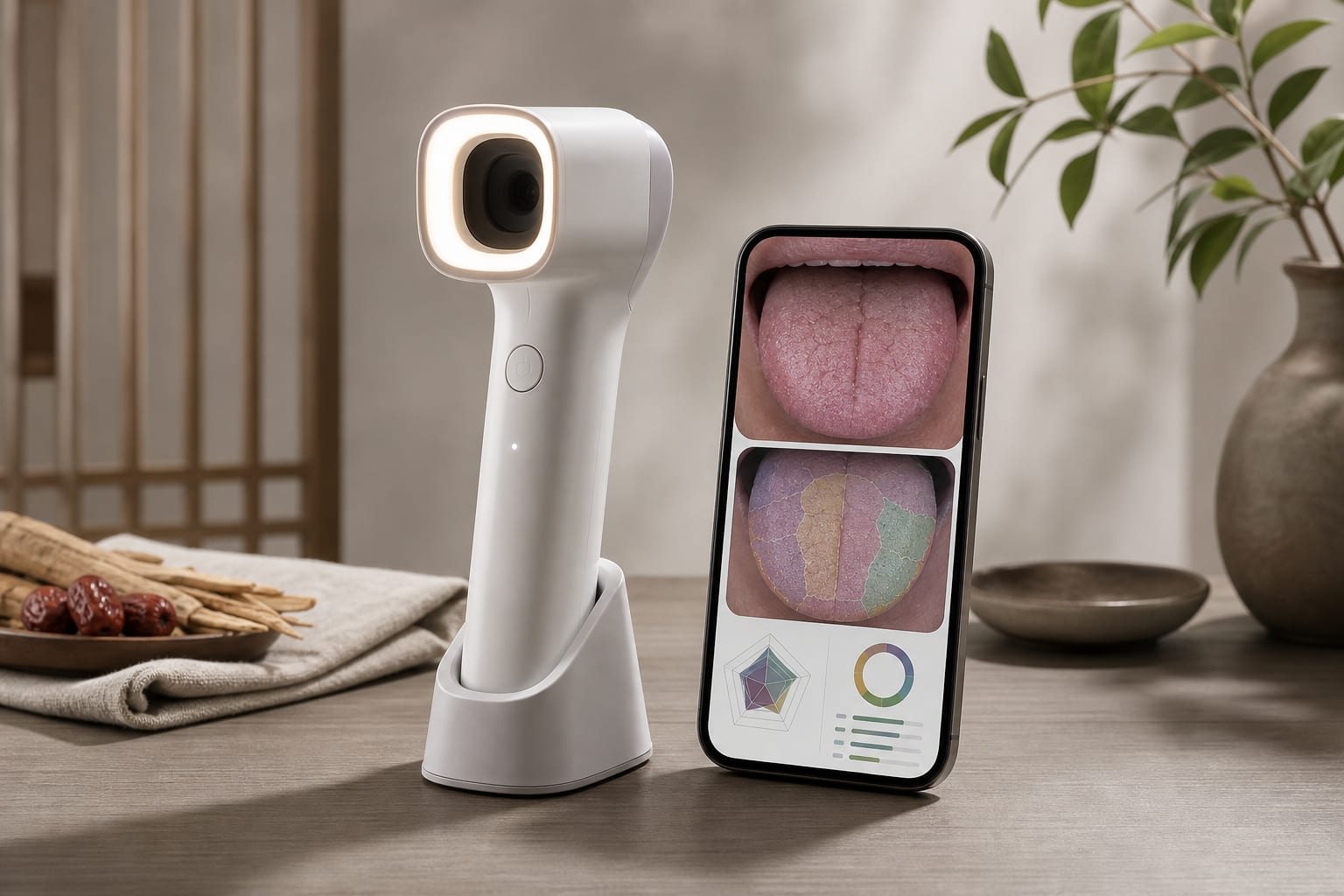
Clinical Report: A mobile non-invasive tongue imaging device with automated evaluation
Background
The increasing focus on preventive healthcare has led to a demand for continuous health assessments. Tongue inspection, a vital diagnostic tool in Traditional Chinese Medicine, provides insights into health status but is often limited by the need for skilled practitioners. The development of automated, portable solutions could improve diagnostic reliability and extend access to tongue assessments in various settings.
Data Highlights
No numerical or trial data provided in the source material.
Key Findings
Fissured tongue is associated with various internal health conditions, including gastrointestinal issues.
Conventional tongue inspection relies on subjective judgment, limiting diagnostic reliability.
Automated tongue analysis could improve accessibility and consistency in diagnosis.
Mobile imaging solutions may help overcome barriers to in-person assessments.
Deep learning methods have advanced tongue image segmentation and feature recognition.
Clinical Implications
The development of a mobile tongue imaging device could facilitate more objective assessments in community settings. This may help address the shortage of qualified practitioners and improve the scalability of tongue diagnosis.
Conclusion
The introduction of automated tongue imaging technology represents a significant step towards enhancing the accessibility and reliability of tongue diagnosis in various healthcare environments.
National survey data found lower per-capita representation across 23 occupations in nonmetropolitan communities, with the largest workforce differences observed among psychologists, physicians, and surgeons.