Clinical Report: Exploring the Role of Artificial Intelligence in Diagnosing Oral Diseases
Overview
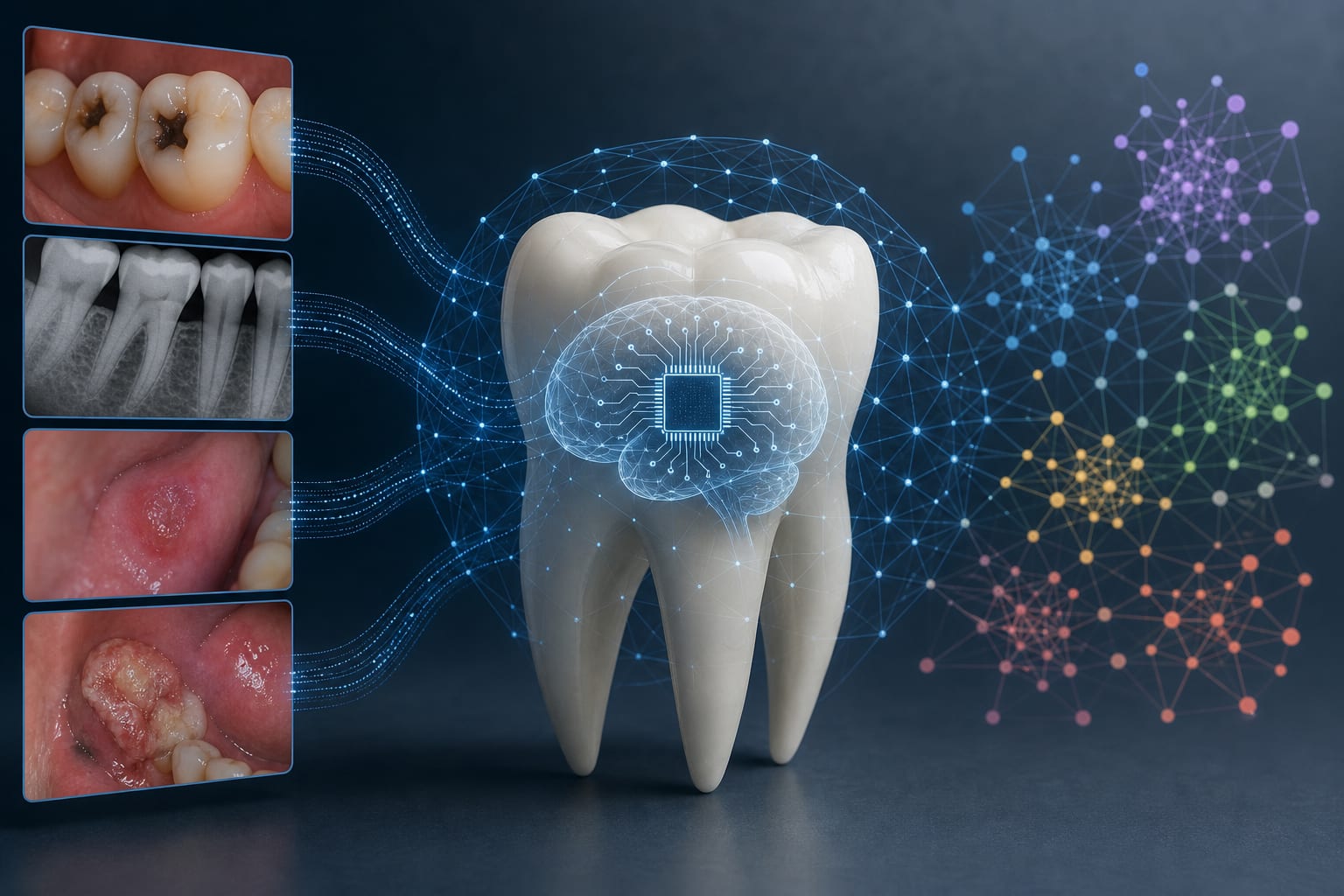
This bibliometric study analyzes the role of artificial intelligence (AI) in diagnosing oral diseases, highlighting the growth patterns and research trends in this field.
Background
Oral diseases affect approximately 3.5 billion people globally, making them a major health concern. Early detection and accurate diagnosis are crucial for effective management and prevention of these conditions. Traditional diagnostic methods often rely on subjective judgment, which can compromise accuracy.
Data Highlights
No numerical data provided in the source material.
Key Findings
AI has been integrated into dental practice to improve diagnostic processes.
Current research hotspots include disease diagnosis, orthodontic intervention, and maxillofacial morphological segmentation.
AI significantly enhances the speed and accuracy of diagnosing dental caries and apical periodontitis.
Bibliometric analysis reveals a rapid growth in AI research in dentistry, particularly in diagnostic imaging and deep learning.
Research findings are scattered across multiple disciplines.
Clinical Implications
Ongoing research and collaboration in this field are essential to develop standardized approaches and validate AI applications in clinical settings.
Conclusion
The study provides an overview of the current state and future directions of AI in diagnosing oral diseases.