Clinical Report: A Randomized Controlled Trial of a Multilingual Digital Microlearning Program for Oral Health in Refugee Shelters
Overview
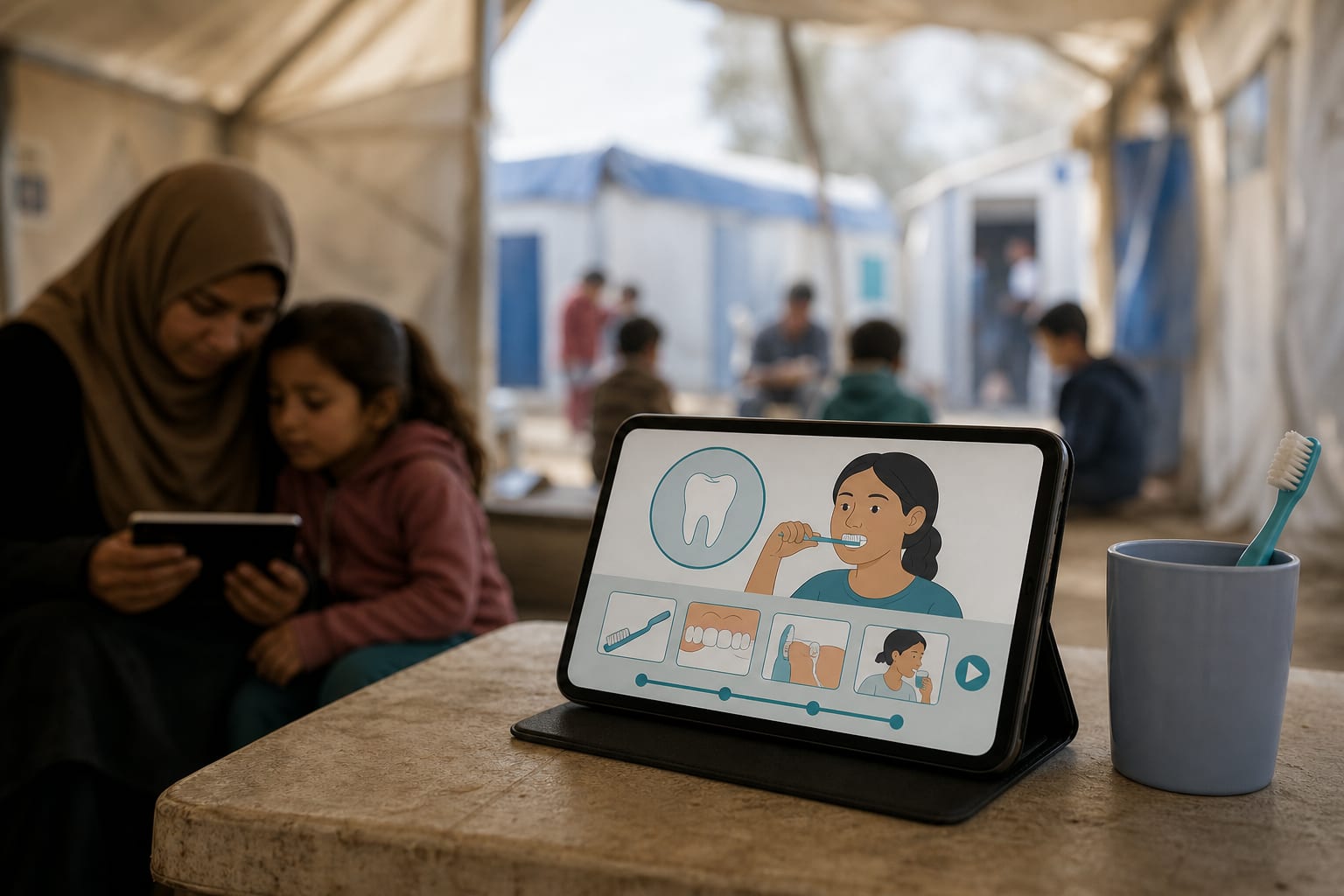
This study evaluates the effectiveness of a multilingual digital microlearning program designed to improve oral health literacy among refugees. The intervention aims to address significant barriers to oral health education faced by displaced populations.
Background
Refugees often experience significant barriers to accessing health information, particularly in oral health, which is crucial for overall well-being. The increasing number of displaced individuals worldwide highlights the urgent need for effective health education interventions tailored to this population. Digital health solutions, such as the GlobeSmile program, may provide scalable and accessible means to improve health literacy and outcomes in refugee shelters.
Data Highlights
No numerical data was provided in the source material.
Key Findings
The GlobeSmile program is designed as a multilingual, low-threshold microlearning intervention for oral health.
Digital health interventions can effectively improve knowledge and self-efficacy regarding oral hygiene among refugees.
Barriers to oral health access include language difficulties, cultural beliefs, and administrative challenges in host countries.
Existing oral health resources often lack cultural and linguistic adaptation for refugee populations.
Digital formats for health education have shown promise in enhancing oral health literacy and practices.
Clinical Implications
Healthcare providers should consider integrating digital health interventions to enhance oral health literacy among refugee populations. Tailoring these interventions to address linguistic and cultural barriers is essential for improving access and outcomes.
Conclusion
The study underscores the potential of digital microlearning programs to bridge the gap in oral health education for refugees, addressing critical health disparities in this vulnerable population.
by Maxi Katharina Müller, Fabian Schulz, George Jogho, Simone Steffens, Kirstin Vach, Ahmad Amro Baradee, Daniel R Reissmann, Benedikt C Spies, Anna-Lena Hillebrecht
In a pooled analysis of more than 1.5 million patients, sugar-sweetened beverages were associated with higher risks of HCC and ICC, while artificially-sweetened beverages showed no independent association with hepatic cancer.