Clinical Report: Imbalance of Host-Microbiome-Immune Interactions in Oral Diseases
Overview
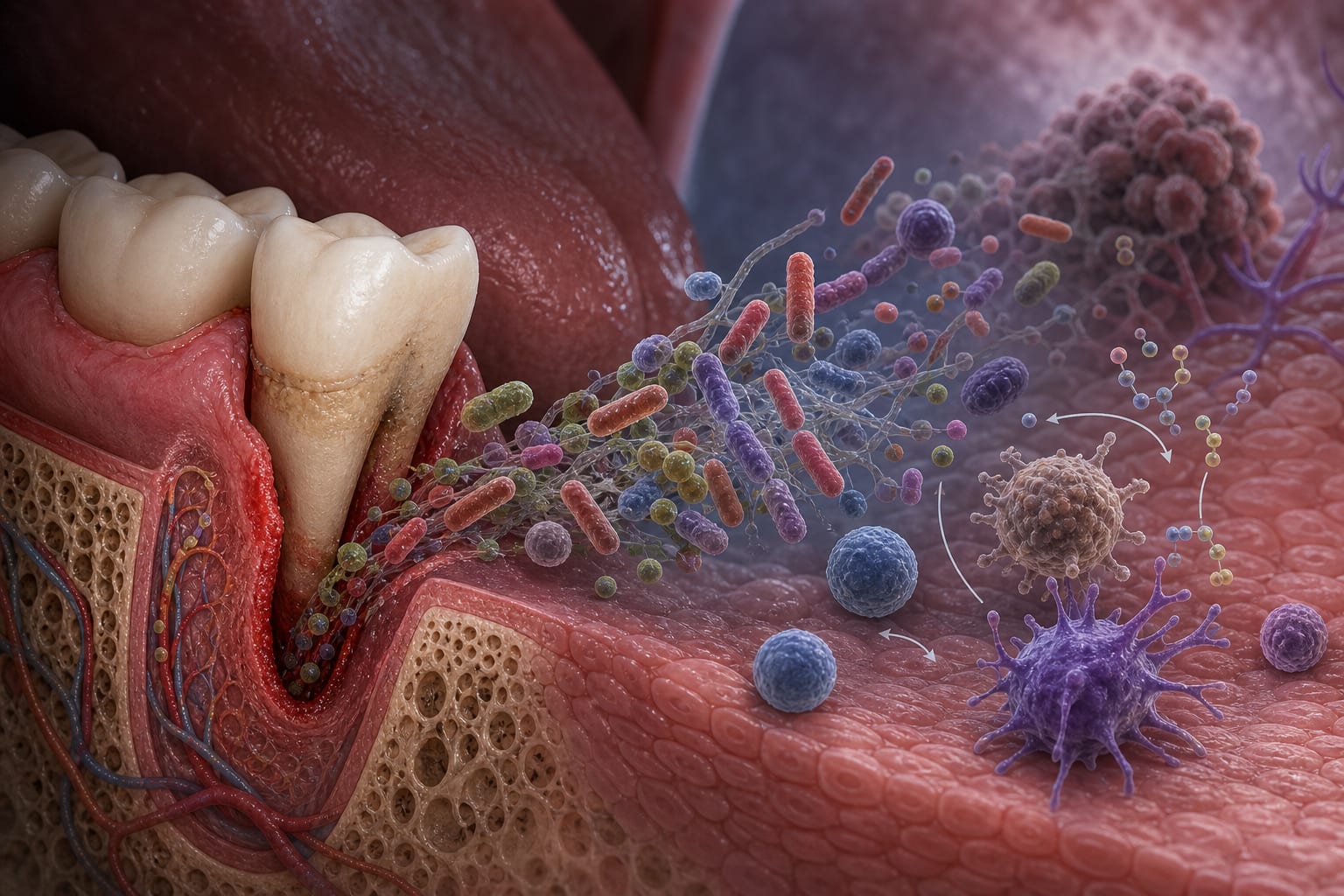
This review highlights the critical role of host-microbiome-immune interactions in oral diseases, emphasizing that dysbiosis contributes to conditions such as periodontitis, dental caries, and oral squamous cell carcinoma.
Background
The oral cavity's microbial ecosystem is essential for maintaining health, with its disruption linked to various oral diseases. Understanding the interplay between microbial communities, host immunity, and epithelial barriers is crucial for developing effective prevention and treatment strategies.
Data Highlights
No numerical data available in the source material.
Key Findings
Oral homeostasis relies on interactions among commensal microbial communities, epithelial barriers, and immune surveillance.
Dysbiosis promotes the expansion of pathobionts and amplifies inflammatory responses, leading to tissue injury.
Current models of oral disease should focus on ecological disruption rather than single-pathogen infections.
Environmental factors, such as nutrition and dental hygiene, significantly influence microbial composition and disease progression.
Emerging technologies, including microbiome-modulating therapies and multi-omics approaches, are advancing precision therapeutic development.
Clinical Implications
Clinicians should consider the integrated nature of host-microbiome-immune interactions when diagnosing and treating oral diseases.
Conclusion
Understanding oral diseases as disorders of host-microbiome-immune disequilibrium emphasizes the need for integrated strategies in clinical practice.
Researchers identified endogenous mutational and immune-response patterns in oral cancers arising without exposure to tobacco, alcohol, or human papillomavirus infections.