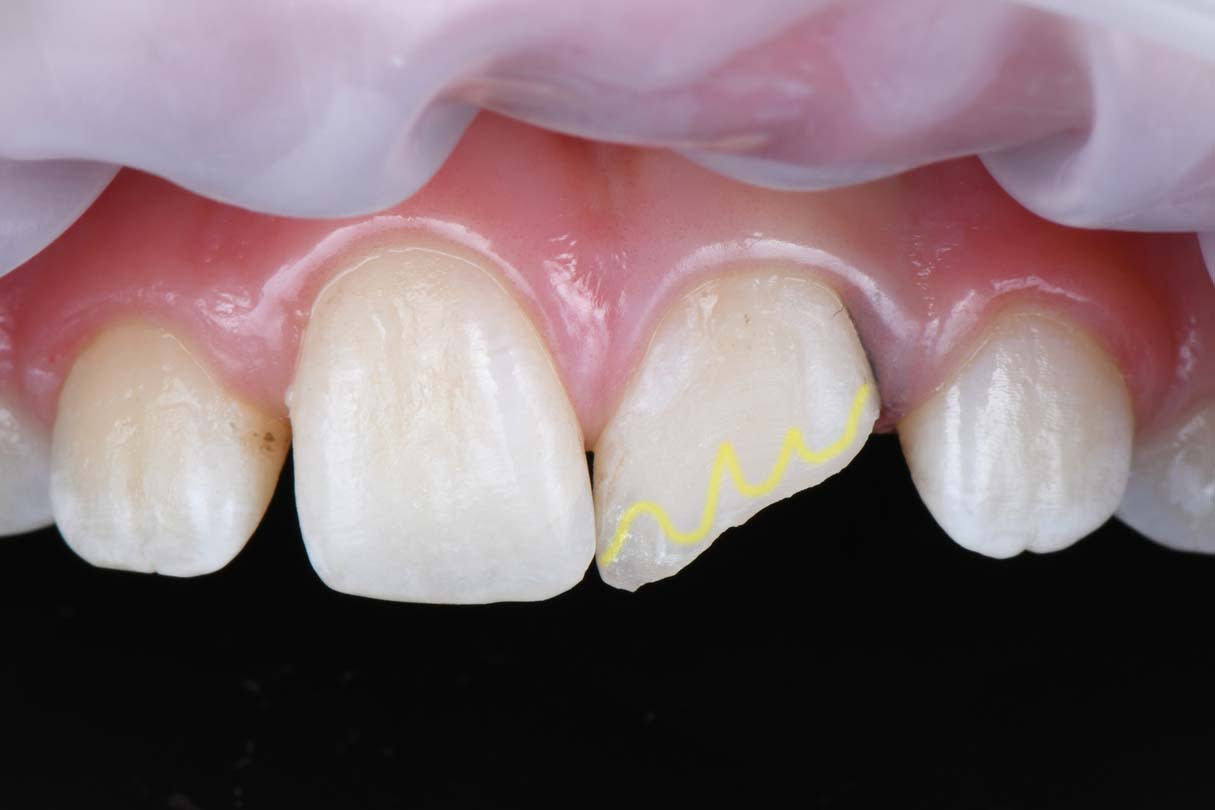
Restoring Anterior Trauma in a Pediatric Patient Using a Layered Direct Composite Technique
-
By
-
Michael J. Morgan
-
July 1, 2026
-
2 min
Clinical Report: Restoring Anterior Trauma in a Pediatric Patient Using a Layered Direct Composite Technique
Background
Restoring anterior teeth in pediatric patients is crucial for functional reasons. Fractures in primary and permanent dentition can lead to complications if not managed properly. The layered direct composite technique offers a conservative approach to restore function while minimizing the need for more invasive procedures.
Data Highlights
No numerical or trial data was provided in the source material.
Key Findings
- A conservative direct composite restoration was successfully planned and executed for a fractured maxillary left central incisor.
- The use of a silicone stent from a wax-up provided a reliable guide for enamel placement.
- Three-plane beveling maximized bonding surface area and created seamless margins.
- The layered composite technique utilized CLEARFIL MAJESTY® ES-2 to achieve natural translucency and incisal anatomy.
- Postoperative results confirmed the restoration's fidelity to the natural tooth structure, preparing the patient for orthodontic treatment.
Clinical Implications
The layered direct composite technique can be utilized in pediatric dentistry to restore anterior teeth. Clinicians may consider using silicone stents for contouring and bonding in similar cases.
Conclusion
The layered direct composite technique demonstrates an option for restoring anterior trauma in pediatric patients.
Related Resources & Content
- International Association of Dental Traumatology guidelines for the management of traumatic dental injuries: 1. Fractures and luxations - Bourguignon - 2020 - Dental Traumatology
- The risk of bonded fragment loss in crown-fractured anterior teeth managed by fragment reattachment: a systematic review and meta-analysis | Evidence-Based Dentistry
- A Transitional Full-Mouth Rehabilitation Using Injection-Molded Composite: A 6-Year Clinical Follow-up
- Efficient Chairside Restoration of a Fractured Molar With a Biocompatible CAD/CAM Crown
- Rebuilding Self-Esteem: Esthetic Rehabilitation in a Young Patient Using Injectable Composite Resin Technique
- Frontiers in Surgery — Innovative technique to cover exposed dura mater after occipital osteomyelitis, using our triple layer using matriderm. A case report
- International Association of Dental Traumatology guidelines for the management of traumatic dental injuries: 1. Fractures and luxations - Bourguignon - 2020 - Dental Traumatology - Wiley Online Library
- The risk of bonded fragment loss in crown-fractured anterior teeth managed by fragment reattachment: a systematic review and meta-analysis | Evidence-Based Dentistry
Based on findings from:
Restoring Anterior Trauma in a Pediatric Patient Using a Layered Direct Composite Technique
Michael J. Morgan. Compendium, 2026.
https://compendiumlive.com/2026/my-finest-case/restoringanteriortrauma/
This content is an AI-generated, fully rewritten summary based on a published scholarly article. It does not reproduce the original text and is not a substitute for the original publication. Readers are encouraged to consult the source for full context, data, and methodology.