Clinical Report: Regenerative Materials in Site Preparation for Implant Placement
Background
Regenerative dentistry is crucial for managing bone deficiencies that arise from tooth extractions and for optimizing implant placement. Understanding the mechanisms and applications of regenerative materials is essential for clinicians aiming to achieve successful implant results.
Data Highlights
Recent studies indicate that the use of regenerative materials can significantly enhance bone regeneration and implant success rates. For instance, a systematic review found that growth factors like rhPDGF-BB can improve healing outcomes, while various graft materials exhibit different remodeling characteristics that affect long-term stability.
Key Findings
Regenerative materials, including biologic mediators and scaffolds, enhance site development for implants.
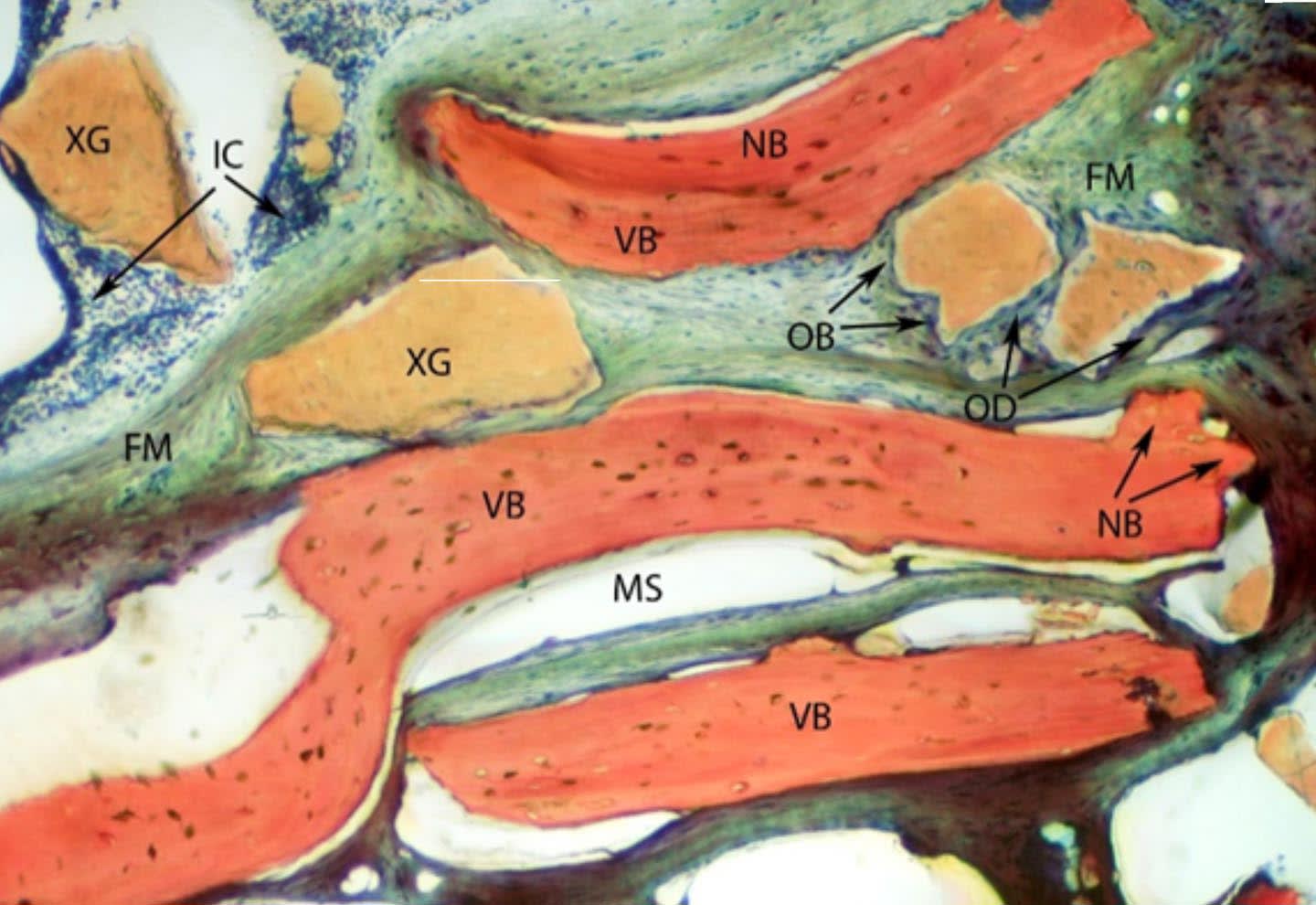
Xenografts provide long-term volumetric stability, while allografts show more active remodeling potential.
Growth factor therapy, such as rhPDGF-BB, promotes critical processes like angiogenesis and cellular recruitment.
Successful regenerative therapy requires a protected microenvironment conducive to tissue regeneration.
Traditional grafting approaches have limitations, necessitating the integration of biologic stimulation with mechanical stability.
Clinical Implications
Clinicians should consider the use of regenerative materials to enhance the predictability of implant site development. The combination of biologic mediators with scaffolds can significantly improve outcomes in both hard- and soft-tissue regeneration.
Conclusion
The integration of advanced regenerative materials is essential for optimizing implant placement and ensuring long-term success in dental restoration. Understanding their applications and mechanisms will aid clinicians in achieving better patient outcomes.
Related Resources & Content
R. A. H. et al., Journal of Dental Research, 2023 -- Regenerative Materials in Dental Implantology: A Comprehensive Review of Current Evidence
Frontiers in Immunology, 2026 -- Biomaterial physicochemical properties govern immune activation and bone regeneration: a titanium-focused design-oriented osteoimmunological framework
Knee Surgery, Sports Traumatology, Arthroscopy, 2017 -- A multilayered biomaterial demonstrates enhanced efficacy compared to microfracture techniques for treating osteochondral lesions: Results from a two-year multicenter randomized study.
inside dentistry, 2026 -- Acellular Dermal Matrix as a Treatment Option for Guided Bone Regeneration
Clinical Oral Implants Research, 2026 -- Special Issue: Proceedings of the 1st Global Consensus for Clinical Guidelines
The efficacy of platelet-rich fibrin in alveolar ridge preservation: a systematic review and meta-analysis of randomized controlled trials, 2026
Biphasic Calcium Phosphate Versus Deproteinized Bovine Bone Mineral for Sinus Floor Elevation: A Systematic Review and Meta-Analysis of Randomized Controlled Trials - PMC
Special Issue: Proceedings of the 1st Global Consensus for Clinical Guidelines: Clinical Oral Implants Research: Vol 37, No S30
The efficacy of platelet-rich fibrin in alveolar ridge preservation: a systematic review and meta-analysis of randomized controlled trials
Biphasic Calcium Phosphate Versus Deproteinized Bovine Bone Mineral for Sinus Floor Elevation: A Systematic Review and Meta-Analysis of Randomized Controlled Trials - PMC
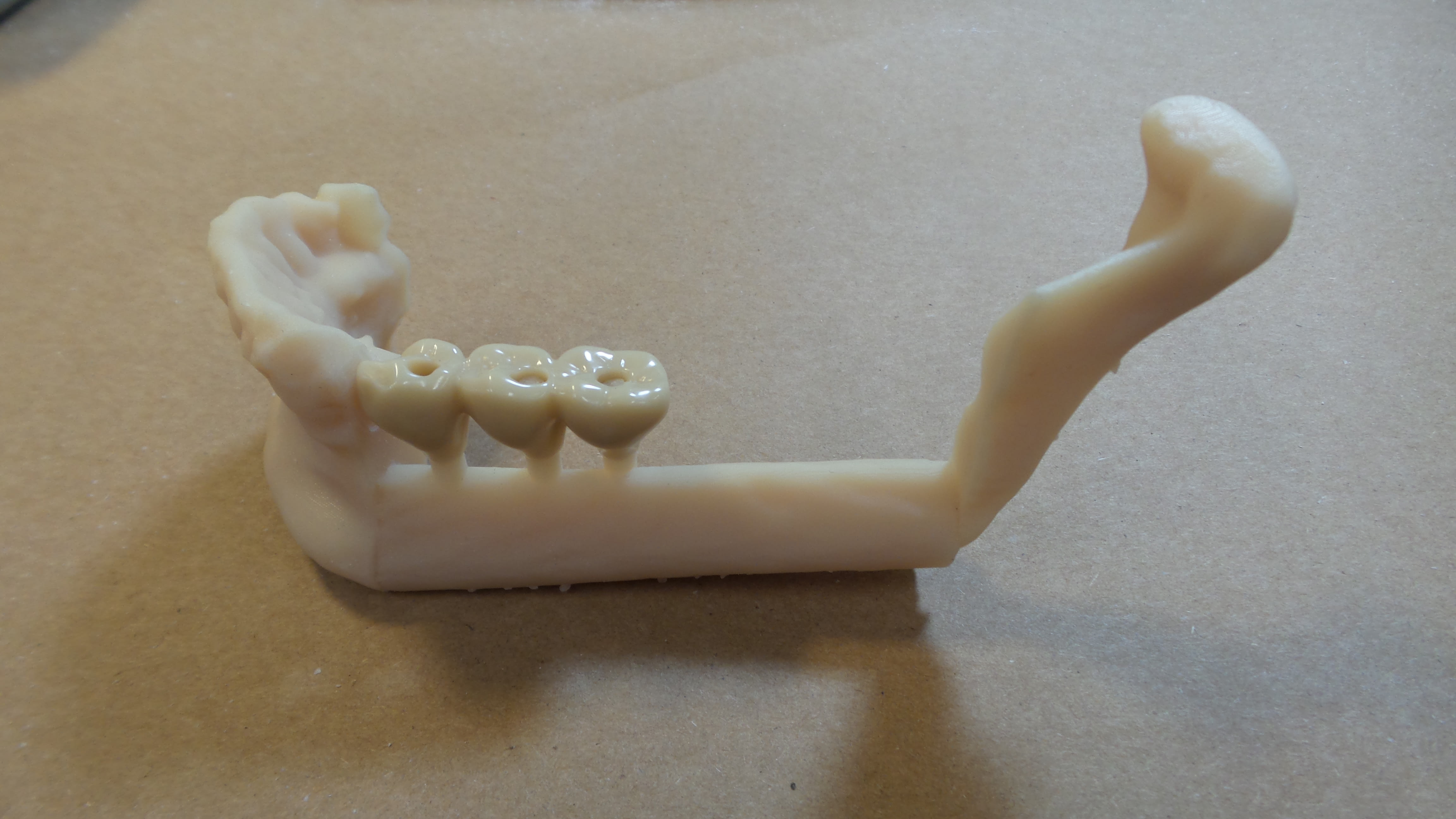
Jaw surgery for cancer patients and others can sometimes take several years to be completed, with the patient undergoing multiple procedures to place a prosthetic, secure and attach dental implants and undergo treatment for their disease.