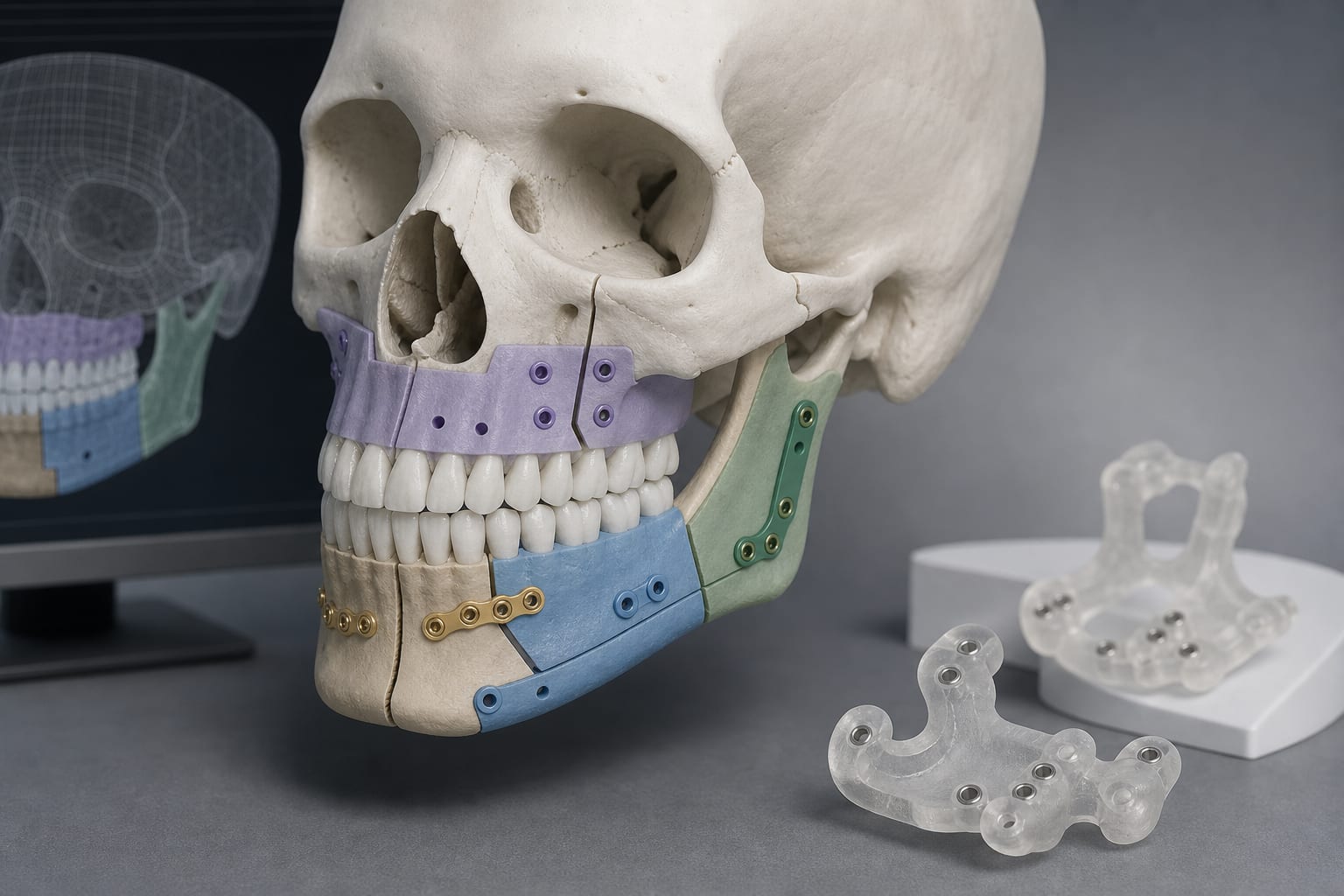
This pilot study introduces a modified surgery-first segmental orthognathic surgery technique for hemimandibular elongation, demonstrating good surgical accuracy and immediate improvements in facial symmetry. The approach integrates virtual surgical planning and individualized cutting guides.
Background
Hemimandibular elongation (HE) is a rare condition characterized by horizontal elongation of the mandibular body, leading to facial asymmetry and malocclusion. Traditional treatment options often involve prolonged orthodontic interventions, which may not meet patients' immediate aesthetic needs.
Data Highlights
Parameter
Mean Deviation (mm)
Follow-up Duration (months)
Surgical Accuracy
1.58 ± 0.39
8.2 (range 6–12)
Key Findings
All nine patients healed without major complications.
Mean 3D deviation between virtual surgical planning and postoperative models was 1.58 ± 0.39 mm.
Significant improvements in symmetry parameters were observed at 1 week postoperatively (p < 0.05).
No significant changes in symmetry parameters were noted from 1 week to mid-term follow-up.
The modified technique integrates unique osteotomy design and individualized cutting guides.
Clinical Implications
The modified surgery-first segmental orthognathic surgery technique provides an option for patients with hemimandibular elongation seeking immediate aesthetic improvement.
Conclusion
This pilot study demonstrates a modified surgery-first approach for hemimandibular elongation, achieving good surgical accuracy and mid-term stability.
The judgment stemmed from controlled-substance prescriptions issued after William C. Gardner, DDS, no longer held the state licensure required for federal prescribing authority.