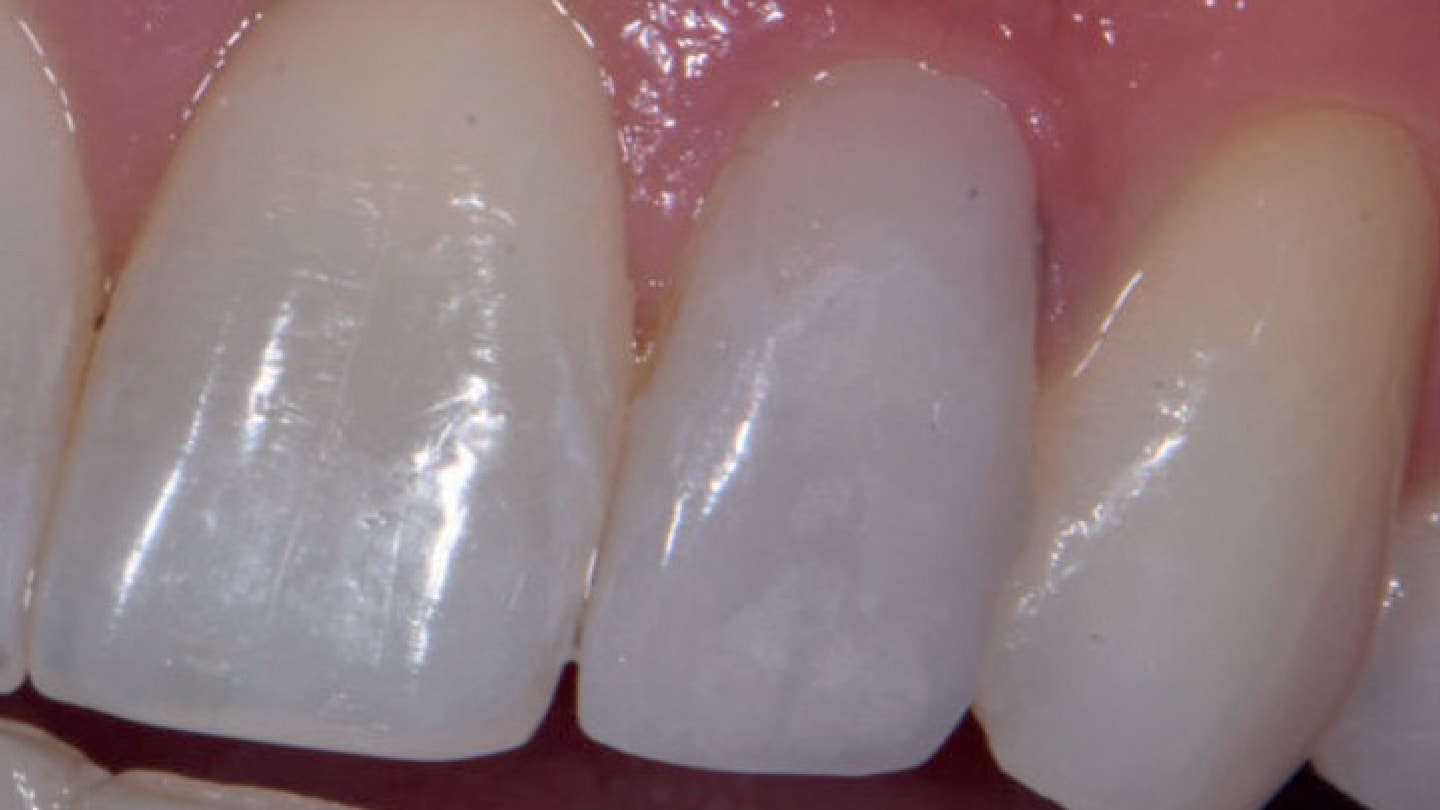
A 7-Year Follow-up: Managing Biomechanics, Function, and an Esthetic Disability
-
By
-
Kris Swanson
-
Leon Hermanides
-
March 1, 2026
-
11 min
Clinical Report: A 7-Year Follow-up on Managing Biomechanics and Function
Overview
This report details a 7-year follow-up of a patient who received restorative treatment for an esthetic disability, emphasizing a risk-based, minimally invasive approach. The findings highlight the long-term success of the treatment in achieving functional stability and pleasing esthetics without orthodontic intervention.
Background
The management of esthetic disabilities through restorative dentistry is crucial for improving patients' quality of life, particularly for those in public-facing roles. This case underscores the importance of a structured risk-management approach to treatment, which can lead to predictable outcomes and enhanced patient satisfaction. Understanding the long-term effects of such interventions is vital for clinicians aiming to replicate success in similar cases.
Data Highlights
No numerical data provided in the article.
Key Findings
- The patient experienced long-term functional stability and improved esthetics over 7 years.
- Initial treatment involved increasing the occlusal vertical dimension to correct chewing envelope friction.
- At follow-up, the patient's periodontal condition showed slight decline, with a change from AAP stage I to stage II.
- No additional restorative treatments were required during the follow-up period.
- The patient's medical status changed to ASA III due to cardiovascular issues, but this did not affect periodontal health.
Clinical Implications
Clinicians should consider a risk-based, minimally invasive approach when addressing esthetic disabilities in patients. Long-term follow-up data can guide treatment planning and risk assessment, ensuring that interventions remain effective and safe over time.
Conclusion
This 7-year follow-up case illustrates the effectiveness of a conservative, interdisciplinary approach to managing esthetic disabilities, with sustained improvements in both function and appearance. Ongoing patient monitoring remains essential for adapting treatment plans as medical conditions evolve.
Related Resources & Content
- Knee Surgery, Sports Traumatology, Arthroscopy, 2016 -- Long-term Outcomes of Sports Participation Following Arthroscopic Debridement and Bone Marrow Stimulation for Osteochondral Defects in the Talus: A Follow-Up Study Ranging from 5 to 24 Years
- Knee Surgery, Sports Traumatology, Arthroscopy, 2022 -- Long-term Outcomes of a Total Knee Replacement Featuring Multi-Radius Design, Ultra-Congruency, Poster Stabilization, and Mobile-Bearing Insert: A Decade of Pain, Stiffness, Function, and Stability Improvements
- Outcomes of Cementless Modular Stem Utilization in Femoral Revision for Total Hip Arthroplasty: An 8-Year Clinical and Radiological Assessment, 2023
- Knee Surgery, Sports Traumatology, Arthroscopy, 2018 -- Outstanding 10-Year Outcomes and Survival Rates Reported by Patients Following Single-Radius, Cruciate-Retaining Total Knee Arthroplasty
- Deep caries management: EFCD-ESE-ORCA S3-level clinical practice guideline | Clinical Oral Investigations | Springer Nature, 2025
- Importance of an evaluation phase when increasing the occlusal vertical dimension: a systematic review, 2025
- Deep caries management: EFCD-ESE-ORCA S3-level clinical practice guideline | Clinical Oral Investigations | Springer Nature Link
- Importance of an evaluation phase when increasing the occlusal vertical dimension: a systematic review.
- Clinical survival and complication rate of ceramic veneers bonded to different substrates: A systematic review and meta-analysis | CoLab
Based on findings from:
A 7-Year Follow-up: Managing Biomechanics, Function, and an Esthetic Disability
Kris Swanson, Leon Hermanides. Compendium, 2026.
https://compendiumlive.com/2026/03/biomechanics/
This content is an AI-generated, fully rewritten summary based on a published scholarly article. It does not reproduce the original text and is not a substitute for the original publication. Readers are encouraged to consult the source for full context, data, and methodology.