Immunomodulatory Influence of Human Dental Pulp Stem Cells on Macrophages from Different Donors
Clinical Scorecard: Immunomodulatory Influence of Human Dental Pulp Stem Cells on Macrophages from Different Donors
At a Glance
Category Detail
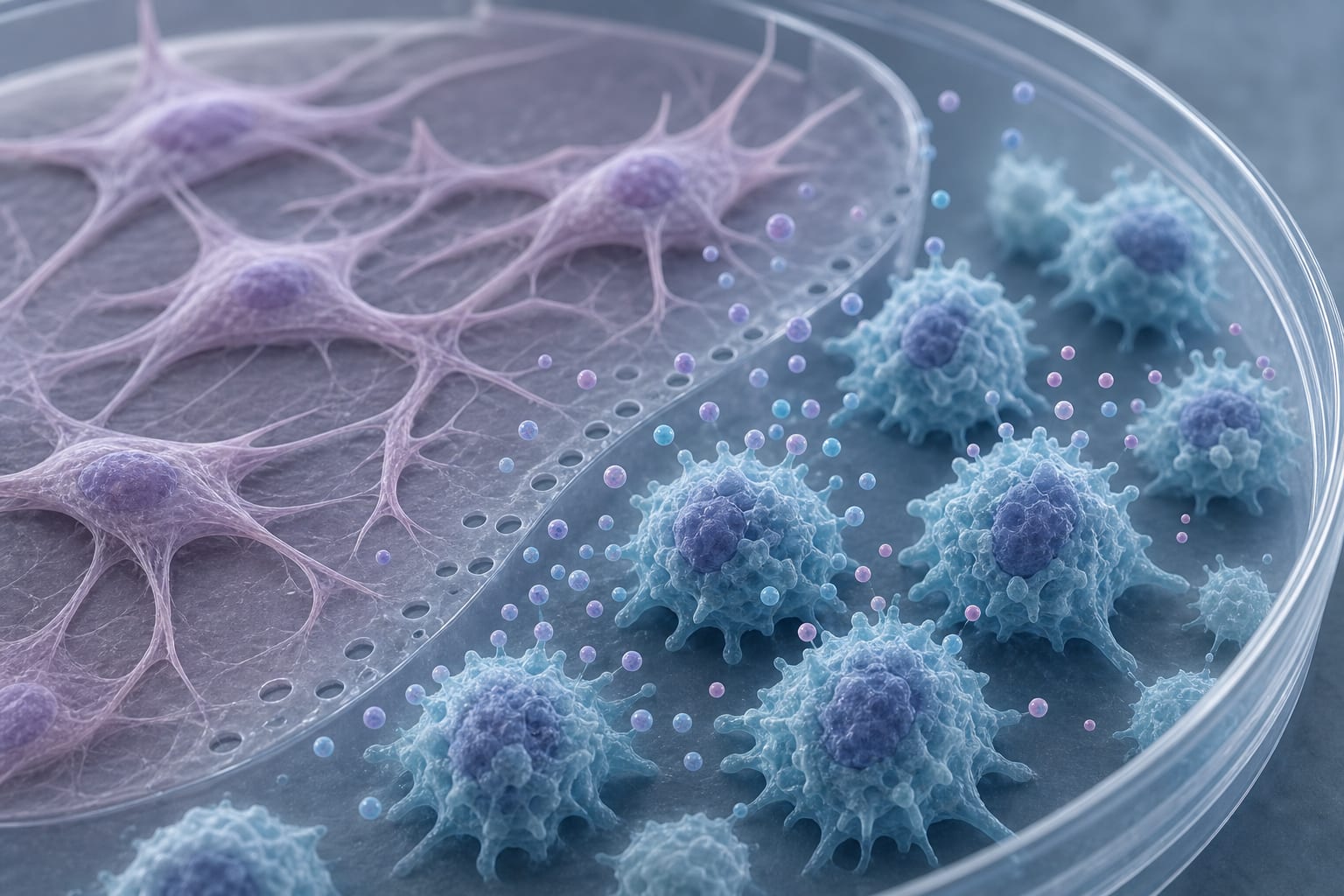
Condition Immunomodulatory properties of human dental pulp stem cells (hDPSCs) Key Mechanisms Modulation of cytokine secretion and macrophage surface marker expression Target Population Healthy children aged 6 to 12 years Care Setting In vitro co-culture assays
Key Highlights
hDPSCs exhibit donor- and lineage-specific modulation of cytokines. Key cytokines include TNF-α, IL-10, IL-6, IL-1β, CXCL10, and IL-1RA. Minimal macrophage polarization observed in response to hDPSCs. Transcriptional changes in inflammation-related genes noted upon macrophage interaction. Importance of donor-aware functional assays for potency assessment. Guideline-Based Recommendations
Diagnosis
Management
Monitoring & Follow-up
Risks
Patient & Prescribing Data
Healthy children aged 6 to 12 years from whom hDPSCs were isolated.
hDPSCs show potential for therapeutic applications but exhibit donor-dependent variability.
Clinical Best Practices
Utilize in vitro bioactivity assays to demonstrate clinical potential of cell therapy products. Consider donor-specific biological variations in hDPSCs for therapeutic standardization. Related Resources & Content