Evaluating the Effectiveness of Problem-Based Learning Versus Case-Based Learning in Dental Endodontics Education
By
Qun Li
Qiaojuan Zuo
Yanbo Xiao
Xun Liu
Yanan Yang
Bo Li
May 12, 2026
Clinical Scorecard: Evaluating the Effectiveness of Problem-Based Learning Versus Case-Based Learning in Dental Endodontics Education
At a Glance
Category Detail
Condition Dental Endodontics Education Key Mechanisms Comparison of Problem-Based Learning (PBL) and Case-Based Learning (CBL) methodologies. Target Population Junior undergraduate dental students Care Setting School of Stomatology, Hunan University of Chinese Medicine
Key Highlights
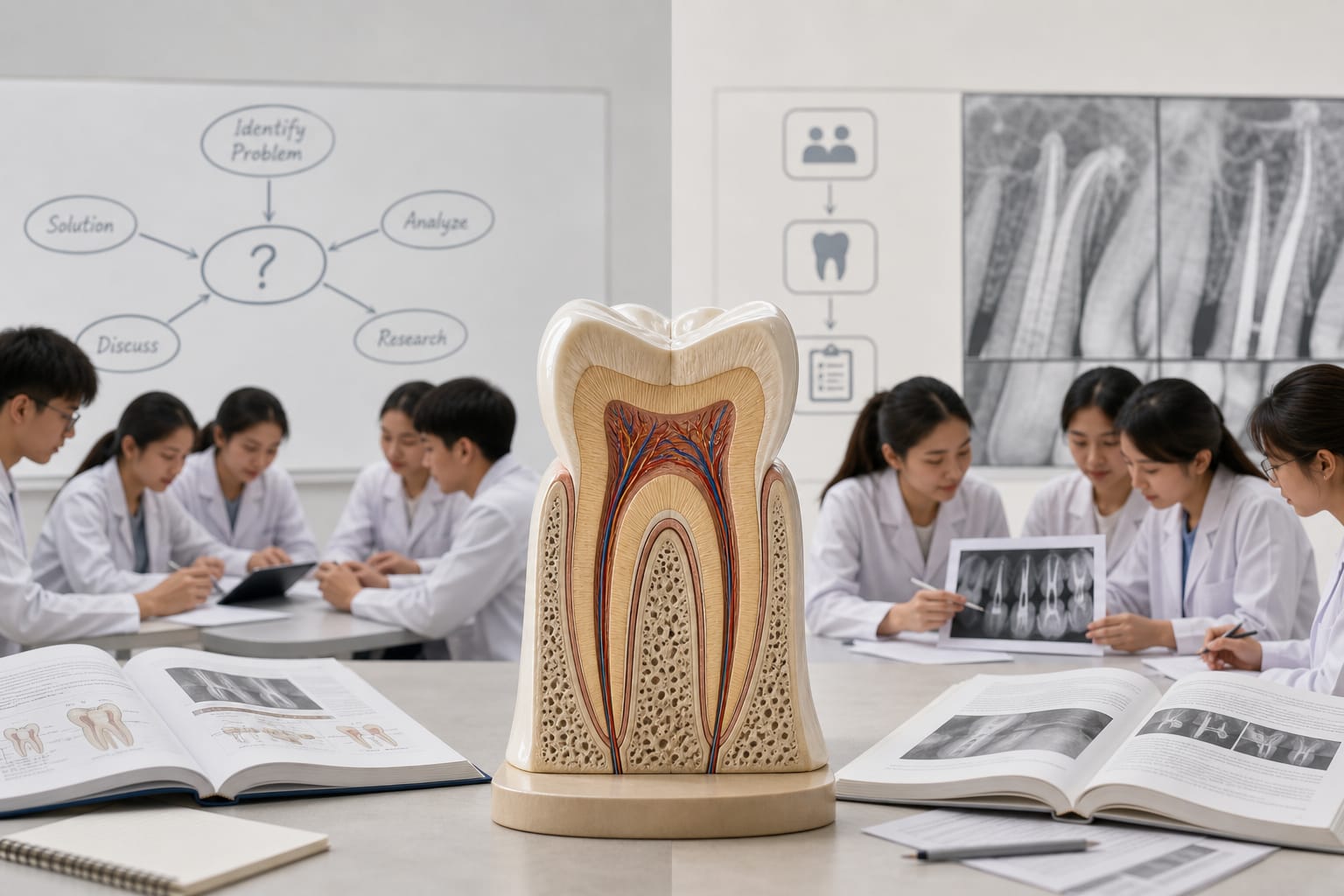
PBL enhances autonomous study and critical thinking skills. CBL improves practical skills and application of theoretical knowledge. Both methods yield high student satisfaction for different reasons. PBL fosters knowledge synthesis; CBL focuses on real-world applications. Educators should consider merging PBL and CBL for optimal outcomes. Guideline-Based Recommendations
Diagnosis
Assess students' theoretical understanding through knowledge tests. Management
Implement PBL for developing analytical reasoning and self-directed learning. Utilize CBL for enhancing practical competencies and clinical reasoning. Monitoring & Follow-up
Evaluate student satisfaction and learning outcomes post-instruction. Risks
Traditional lecture methods may hinder critical thinking and problem-solving skills. Patient & Prescribing Data
Undergraduate dental students in endodontics training.
PBL and CBL can be tailored to meet specific educational goals.
Clinical Best Practices
Incorporate both PBL and CBL in dental curricula for comprehensive skill development. Encourage collaborative learning and independent research among students. Related Resources & Content