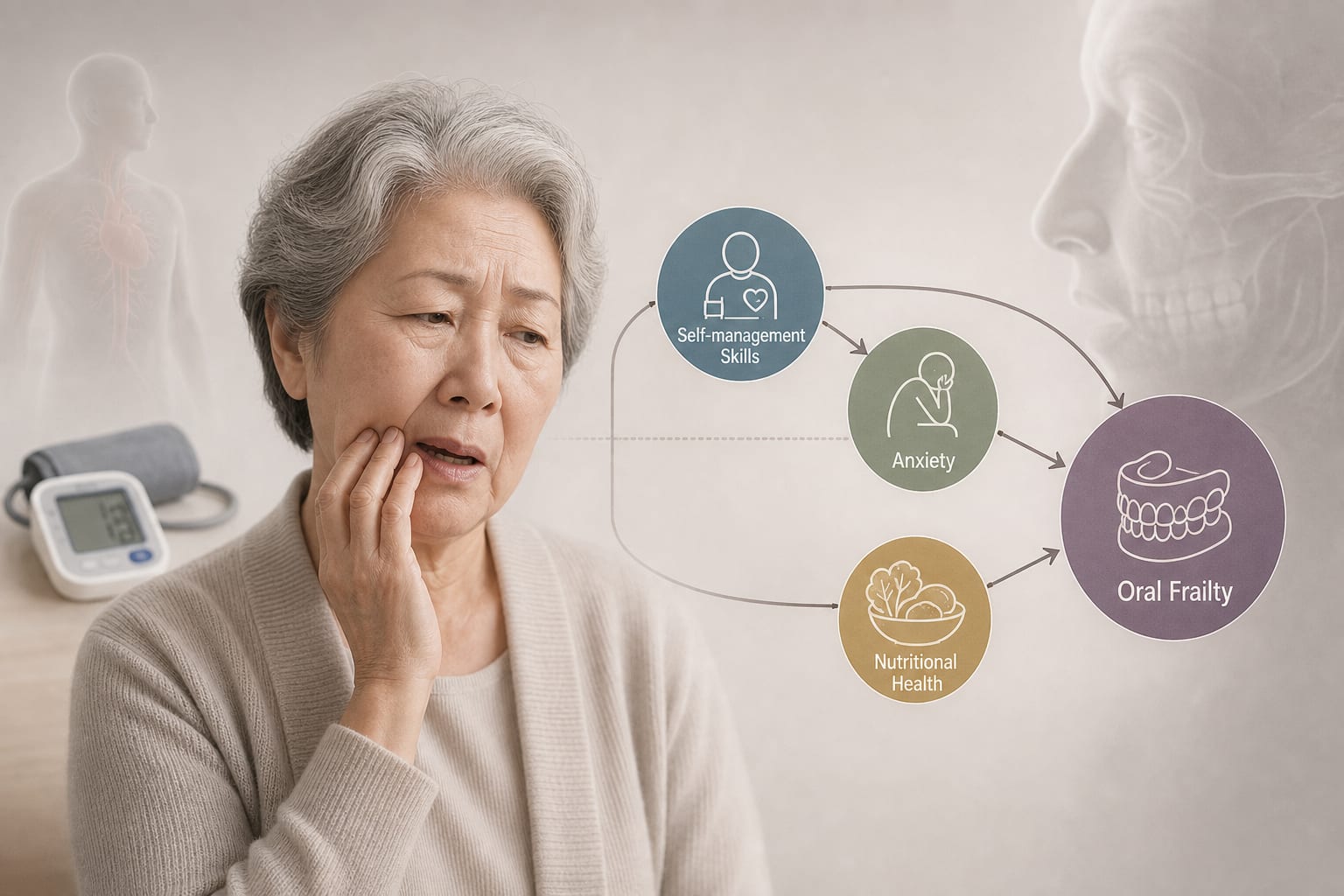
The Impact of Self-management Ability on Oral Frailty in Older Adults with Hypertension: The Chain Mediating Role of Anxiety and Nutritional Status
By
Xu, Min
Zhang, Xu
Bah, Chernor Sulaiman
Yuan, Yue
Wang, Yan
Zhao, Chenjian
Ma, Changke
Bao, Zexiang
May 19, 2026
Clinical Scorecard: The Role of Self-management Skills in Oral Frailty Among Hypertensive Seniors: Mediating Effects of Anxiety and Nutritional Health
At a Glance
Category Detail
Condition Oral Frailty in Hypertensive Seniors Key Mechanisms Hypertension self-management ability, anxiety, nutritional status Target Population Older adults with hypertension Care Setting Inpatient medical institutions
Key Highlights
Incidence of oral frailty among older hypertensive adults is 61.5% Significant correlations exist between self-management ability, oral frailty, anxiety, and nutritional status (p<0.001) Self-management ability has a direct negative effect on oral frailty (β=-0.037) Anxiety and nutritional status mediate the relationship between self-management ability and oral frailty Total mediating effect accounts for 47.90% of the total effect Guideline-Based Recommendations
Diagnosis
Utilize structured interviews and scales to assess oral frailty and related factors Management
Implement comprehensive interventions to improve self-management, alleviate anxiety, and optimize nutritional status Monitoring & Follow-up
Regularly assess anxiety levels and nutritional status in hypertensive patients Risks
Increased risk of adverse outcomes and mortality associated with oral frailty Patient & Prescribing Data
740 inpatients with hypertension
Focus on enhancing self-management skills and addressing anxiety and nutrition
Clinical Best Practices
Adopt a multidisciplinary approach to manage hypertension and oral health Incorporate anxiety management strategies in treatment plans Monitor nutritional status regularly in hypertensive patients Related Resources & Content