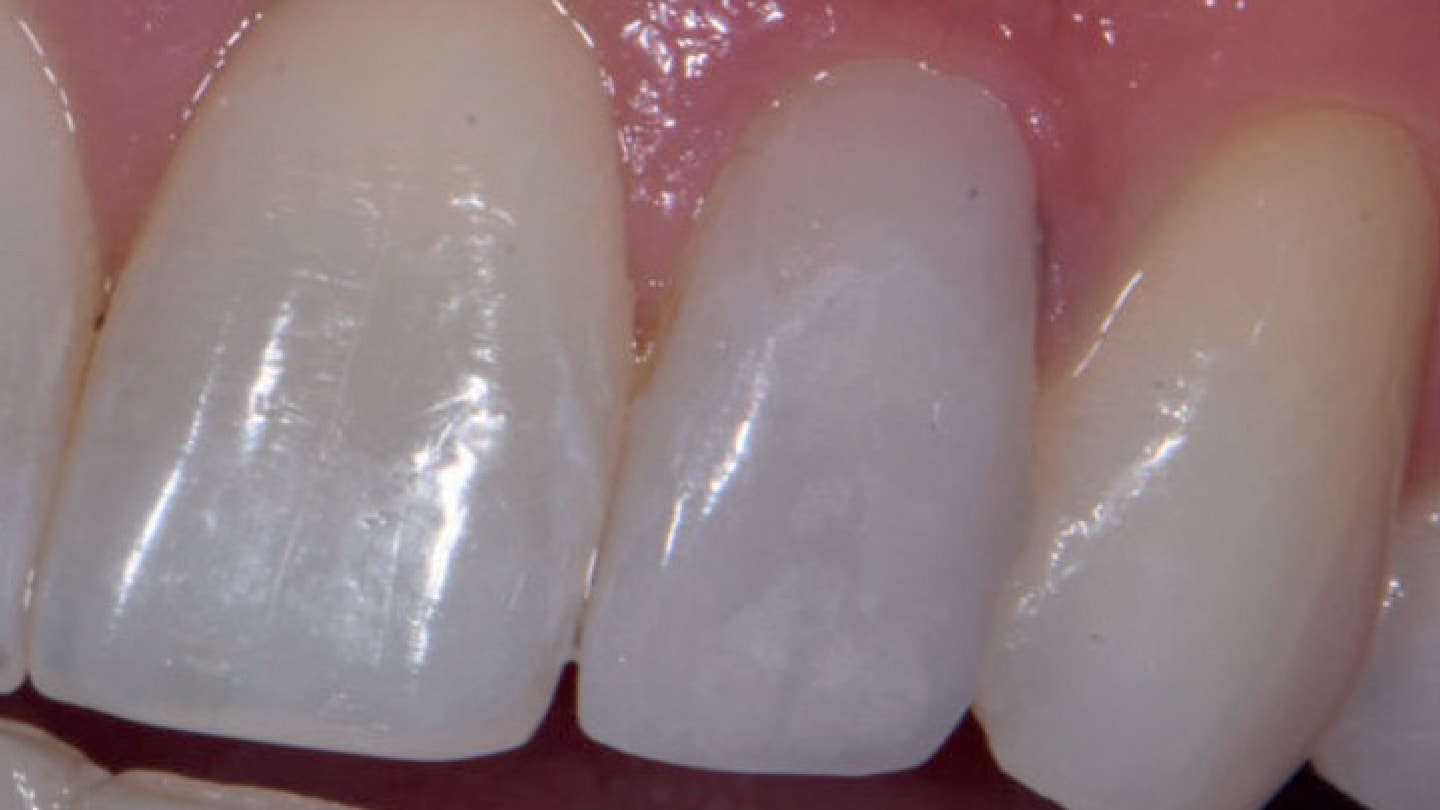
Simplifying Shade Selection for Esthetic Restorations
Tokuyama’s OMNICHROMA family supports efficient restorative workflows with a single composite shade.
-
By
-
Peter Auster
-
September 1, 2026
-
Clinical Scorecard: Simplifying Shade Selection for Esthetic Restorations
At a Glance
| Category | Detail |
|---|
| Condition | Esthetic Restorations |
| Key Mechanisms | OMNICHROMA uses Smart Chromatic Technology® and 260-nm spherical fillers for shade matching. |
| Target Population | Patients requiring anterior and posterior restorative procedures. |
| Care Setting | General dentistry practice |
Key Highlights
- OMNICHROMA blends seamlessly with various tooth shades, reducing the need for multiple composite shades.
- The material handles well, adhering to the tooth rather than the instrument.
- OMNICHROMA BLOCKER effectively masks dark stains without creating an unnatural appearance.
- Restorations continue to blend naturally with surrounding tooth structure after whitening.
- Economic advantages include maintaining fewer composite shades and reducing waste.
Guideline-Based Recommendations
Diagnosis
- Evaluate the need for esthetic restorations based on patient-specific conditions.
Management
- Use OMNICHROMA for a variety of esthetic restorations including diastema closures and Class V restorations.
Monitoring & Follow-up
- Assess the blending of restorations with natural tooth shades over time.
Risks
- Consider the potential for mismatch in highly demanding anterior esthetic applications.
Patient & Prescribing Data
Patients undergoing full-mouth reconstruction and cosmetic dentistry.
OMNICHROMA is recommended for both anterior and posterior restorations, with a focus on ease of use and esthetic outcomes.
Clinical Best Practices
- Start with posterior restorations before progressing to anterior esthetic applications.
- Utilize OMNICHROMA BLOCKER for masking when necessary.
Related Resources & Content