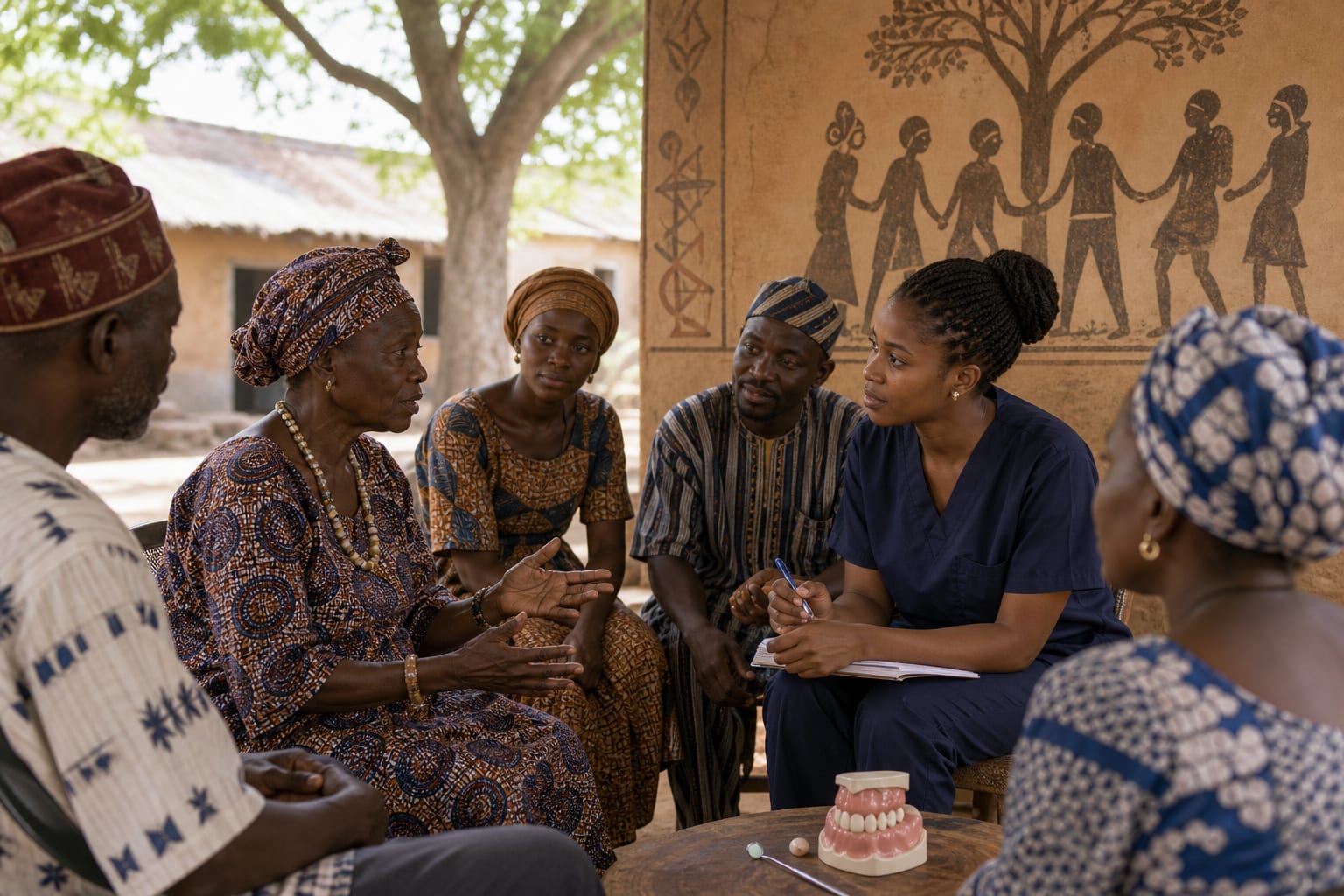
Transforming Oral Health Professionalism in Africa: Insights from Marginalized Perspectives
Clinical Scorecard: Transforming Oral Health Professionalism in Africa: Insights from Marginalized Perspectives
At a Glance
Category Detail
Condition Oral health professionalism in Africa Key Mechanisms Critique of colonial epistemologies and proposal of an Ubuntu-informed relational framework Target Population Yorùbá communities and other marginalized populations in Africa Care Setting Dental education and oral health services
Key Highlights
Colonial epistemologies privilege clinical detachment and exclude indigenous knowledge systems. An Ubuntu-informed alternative emphasizes mutual vulnerability and clinical empathy. Transformations in curriculum and governance are necessary to address epistemic injustices. Oral health is viewed as integral to spiritual personhood in Yorùbá culture. Modern dental service utilization remains low despite cultural reverence for oral health. Guideline-Based Recommendations
Diagnosis
Critique the Western epistemological foundations of oral health professionalism. Management
Adopt an Ubuntu-informed framework that centers marginalized community experiences. Monitoring & Follow-up
Evaluate the impact of relational approaches on oral health outcomes. Risks
Address the disjuncture between professional training and community worldviews. Patient & Prescribing Data
Marginalized communities, particularly Yorùbá populations in Southwest Nigeria
Oral health care is linked to broader concepts of dignity, self-care, and spiritual balance.
Clinical Best Practices
Integrate community-based participatory research into dental education. Foster an ecological professional identity that values relational knowing. Related Resources & Content