Comparative Evaluation of Growth Factor Bioavailability–Enhanced Allograft Vs Autogenous Bone Graft in Anterior Maxillary Ridge Augmentation - Scorecard - DentalSpire
Clinical Scorecard: Comparative Evaluation of Growth Factor Bioavailability–Enhanced Allograft Vs Autogenous Bone Graft in Anterior Maxillary Ridge Augmentation
At a Glance
Category
Detail
Condition
Alveolar ridge deficiencies
Key Mechanisms
Growth factor bioavailability enhancement in allografts vs. autogenous bone grafting
Target Population
Patients with anterior maxillary ridge deficiencies due to trauma or tooth loss
Care Setting
Dental implant rehabilitation
Key Highlights
GFBA demonstrated advanced integration compared to autogenous graft after 11 months.
Both grafting methods successfully supported dental implant placement.
Significant dimensional changes in alveolar ridge can occur post-extraction.
Guideline-Based Recommendations
Diagnosis
Use cone-beam computed tomography for assessing alveolar ridge conditions.
Management
Consider GFBA as an alternative to autogenous bone grafting for ridge augmentation.
Monitoring & Follow-up
Follow-up radiographs to confirm stable peri-implant bone levels.
Risks
Autogenous grafting associated with donor site morbidity and surgical complexity.
Patient & Prescribing Data
Adult patients with a history of dental trauma and inadequate alveolar ridge for implants.
GFBA may provide similar outcomes to autogenous grafts in ridge augmentation.
Clinical Best Practices
Perform socket debridement and ridge preservation following tooth extraction.
Utilize advanced imaging techniques for accurate diagnosis and treatment planning.
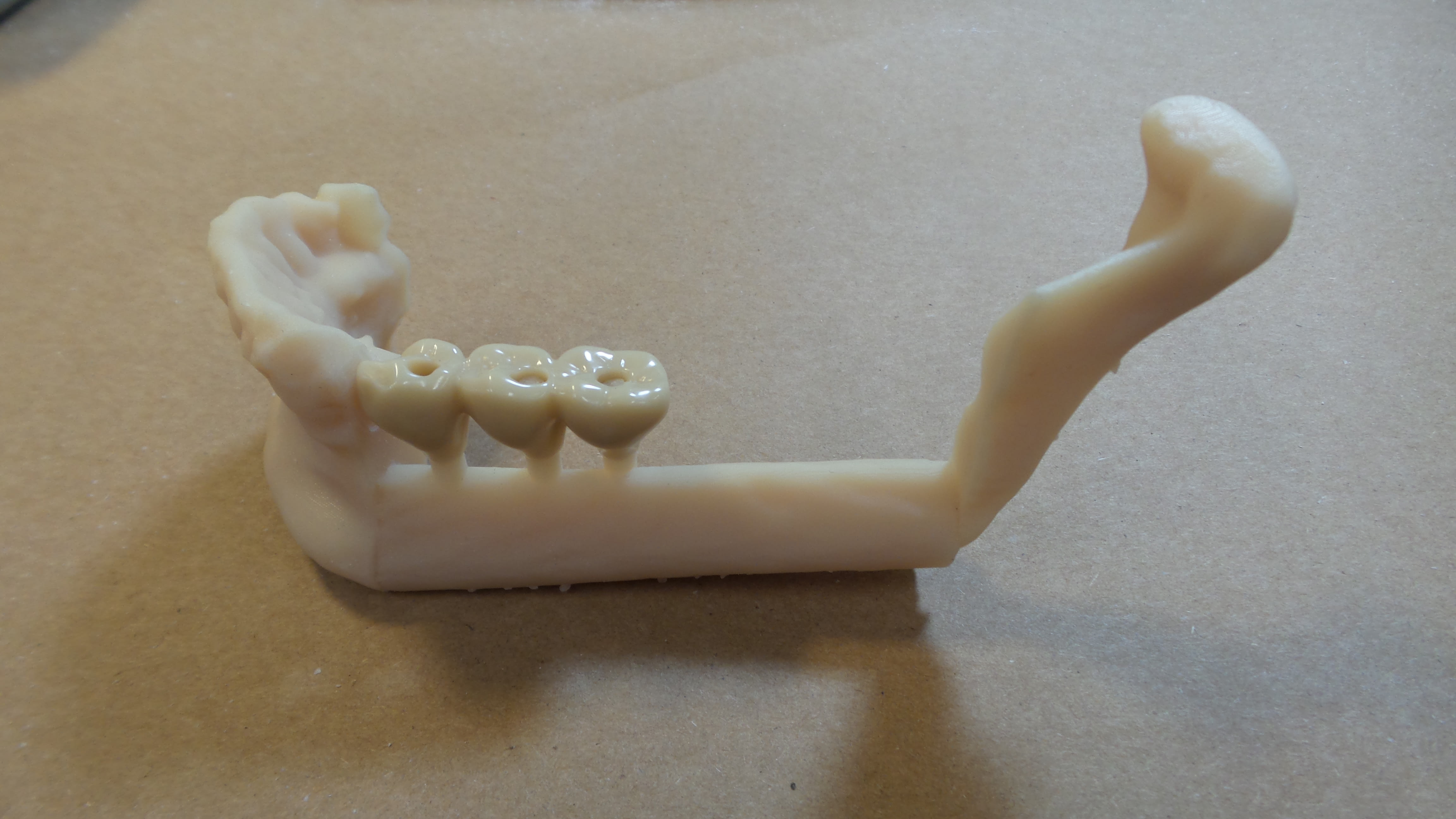
Jaw surgery for cancer patients and others can sometimes take several years to be completed, with the patient undergoing multiple procedures to place a prosthetic, secure and attach dental implants and undergo treatment for their disease.