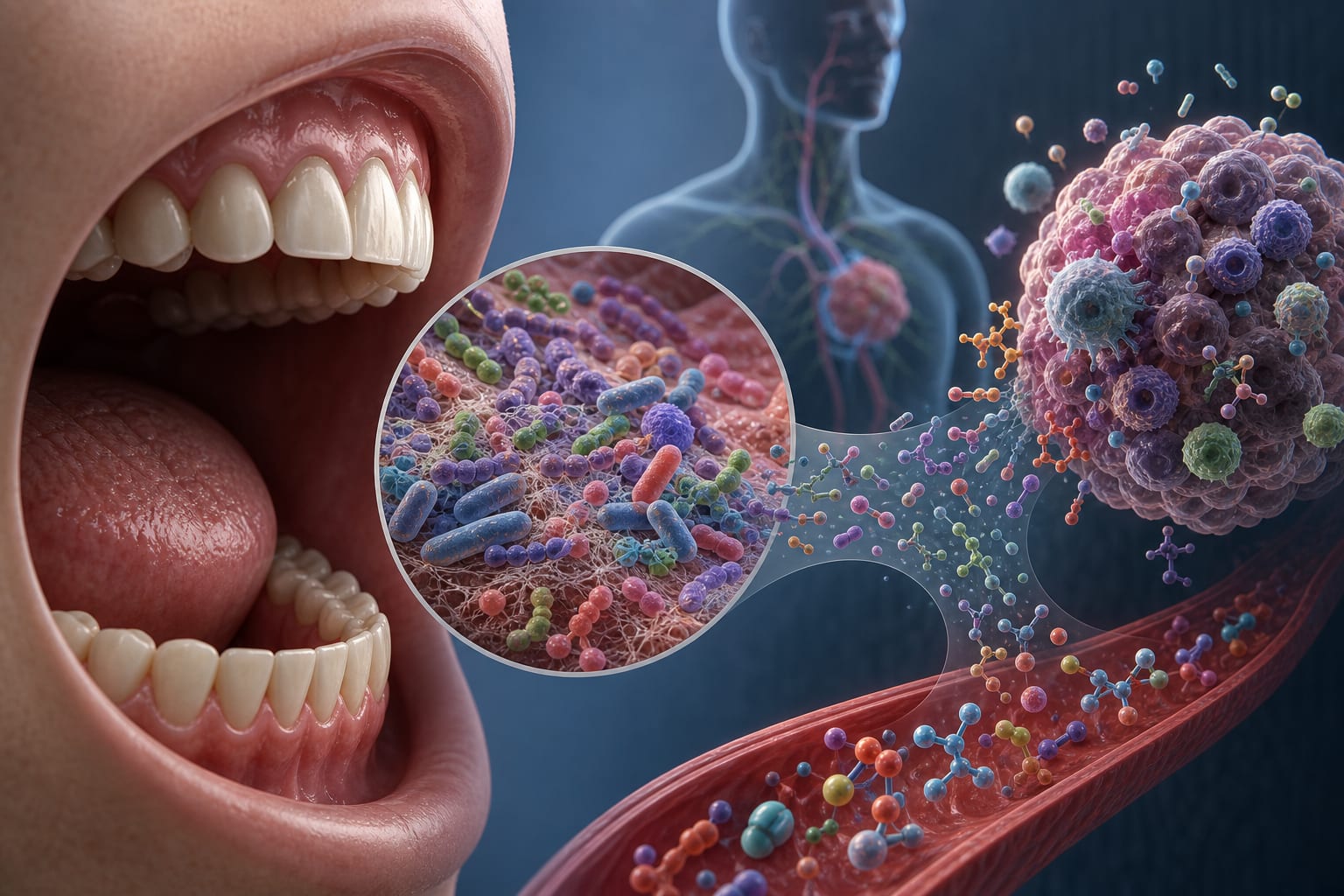
Poor Diet Quality Linked to Oral Cancer
Large prospective cohort data showed stronger associations among women without substantial tobacco or alcohol exposure.
By
Andrea Surnit
June 5, 2026
Clinical Scorecard: Poor Diet Quality Linked to Oral Cancer
At a Glance
Category Detail
Condition Oral Cavity Cancer Key Mechanisms Association with dietary patterns, particularly Prudent and Alternative Healthy Eating Index–2010. Target Population Women, particularly nonsmokers or light smokers and nondrinkers or light drinkers. Care Setting Prospective cohort study across three US cohorts.
Key Highlights
Lower adherence to healthy dietary patterns linked to higher oral cavity cancer risk in women. Women in lowest dietary adherence quartiles had 1.86 to 2.17 times the likelihood of oral cavity cancer. No significant associations found among men. Increased risk of nontongue oral cavity cancers noted with lower adherence to dietary patterns. Guideline-Based Recommendations
Diagnosis
Monitor dietary patterns in relation to oral cavity cancer risk. Management
Monitoring & Follow-up
Assess dietary intake regularly using validated food frequency questionnaires. Risks
Consider residual confounding factors such as oral hygiene and tobacco/alcohol exposure. Patient & Prescribing Data
Women without cancer at baseline, particularly nonsmokers/light smokers and nondrinkers/light drinkers.
Dietary quality may play a role in oral carcinogenesis.
Clinical Best Practices
Utilize validated tools for dietary assessment in clinical settings. Related Resources & Content