Study on the reproducibility of the Frankfort horizontal plane based on CBCT 3D reconstruction and comparative analysis with lateral radiographs - Scorecard - DentalSpire
Conexiant’s news site is now MDSpire News. Learn more
Advertisement
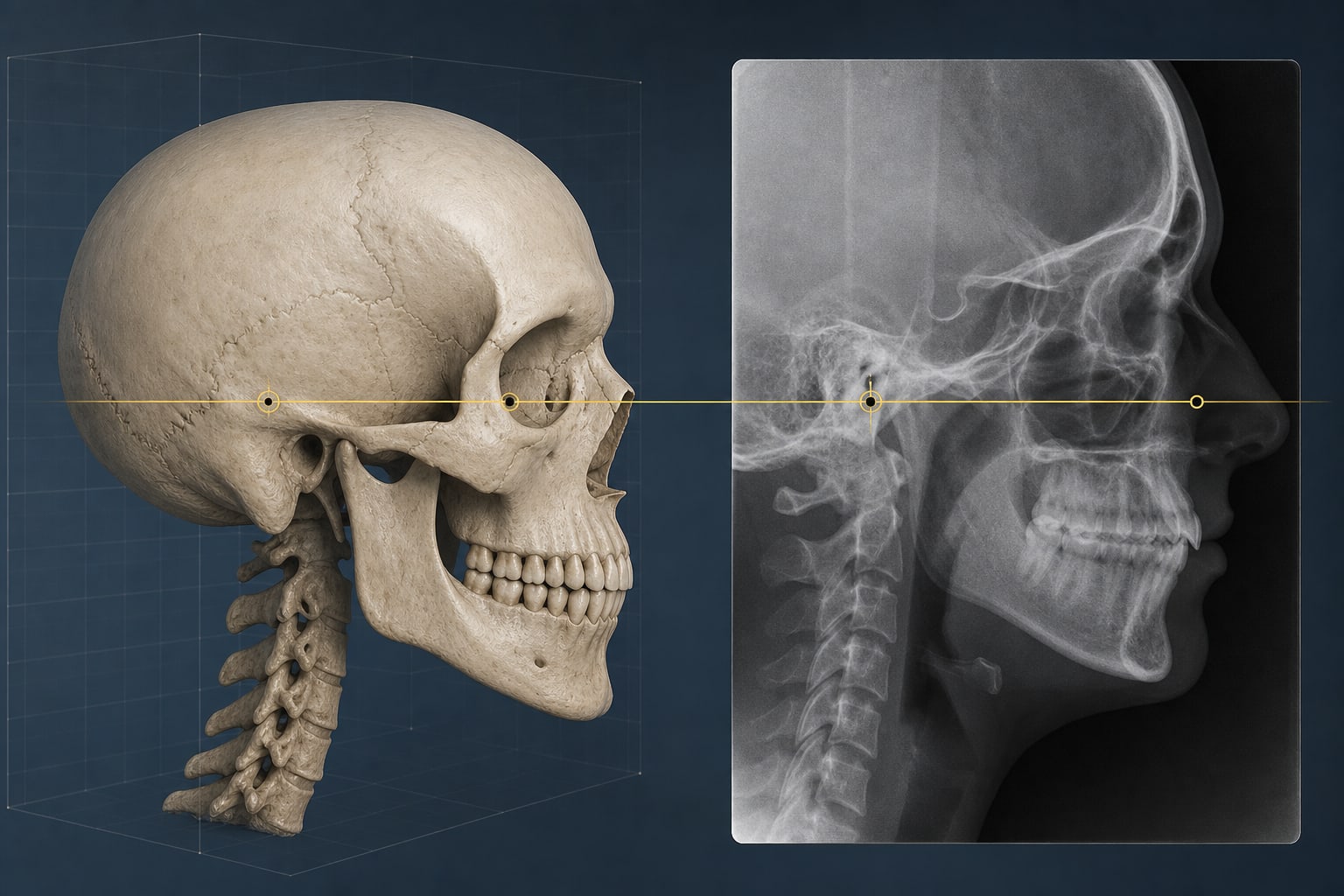
Evaluation of the Consistency of the Frankfort Horizontal Plane Using 3D Reconstruction from CBCT and Comparison with Lateral Cephalometric Radiographs
Clinical Scorecard: Evaluation of the Consistency of the Frankfort Horizontal Plane Using 3D Reconstruction from CBCT and Comparison with Lateral Cephalometric Radiographs
At a Glance
Category
Detail
Condition
Frankfort Horizontal Plane Construction
Key Mechanisms
3D reconstruction using CBCT for accurate anatomical landmark identification
Target Population
Patients with facial deformities
Care Setting
Oral and Maxillofacial Surgery, Orthodontics
Key Highlights
CBCT-based 3D reconstruction shows good reproducibility for establishing the Frankfort horizontal plane.
Lateral cephalometric measurements exhibit larger reproducibility errors compared to CBCT.
The study involved 27 patients with facial deformities.
Intra-class correlation coefficients and Bland–Altman analysis were used to assess reproducibility and agreement.
The findings support the use of CBCT in craniofacial diagnosis and treatment planning.
Guideline-Based Recommendations
Diagnosis
Utilize CBCT for accurate identification of anatomical landmarks in patients with facial deformities.
Management
Incorporate 3D reconstruction techniques in treatment planning for enhanced reliability.
Monitoring & Follow-up
Assess reproducibility errors in FHP construction using both CBCT and lateral cephalometric methods.
Risks
Consider the limitations of two-dimensional imaging in patients with complex facial deformities.
Patient & Prescribing Data
Patients presenting for treatment of malocclusion with facial deformities.
CBCT provides a reliable framework for diagnosis and treatment planning.
Clinical Best Practices
Employ CBCT for craniofacial structural assessment to enhance anatomical reliability.
Standardize the workflow for 3D FHP construction to improve reproducibility.