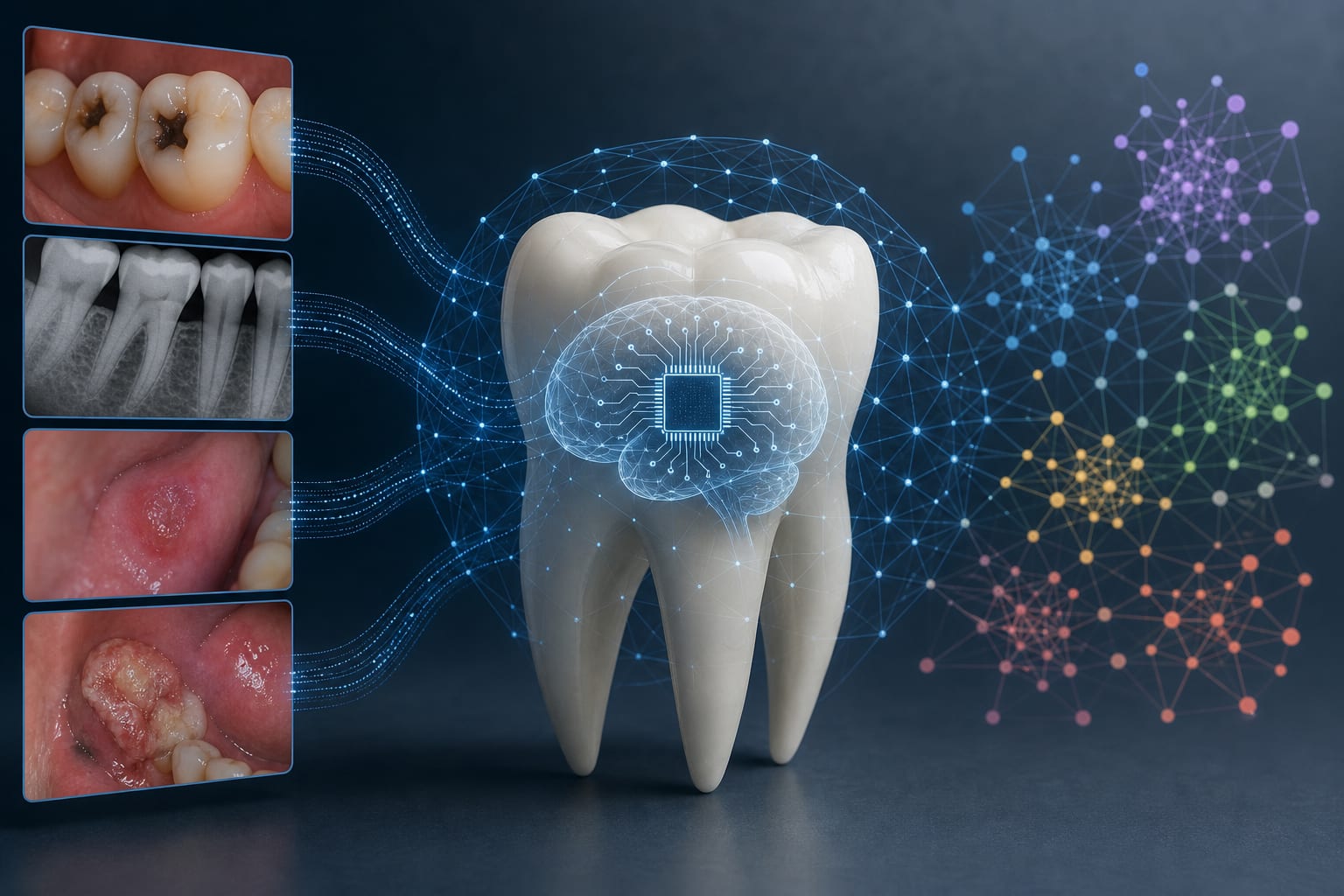
Visualization of artificial intelligence applications in oral disease diagnosis: A bibliometric analysis
By
Fangfang Liang
Ziyi Wang
Haonan Li
Panpan Zhang
Jing Shen
July 1, 2026
Clinical Scorecard: Exploring the Role of Artificial Intelligence in Diagnosing Oral Diseases: A Bibliometric Study
At a Glance
Category Detail
Condition Oral Diseases Key Mechanisms Artificial Intelligence and machine learning techniques for diagnosis Target Population Individuals affected by oral diseases, estimated at 3.5 billion worldwide Care Setting Dental practice and research
Key Highlights
Oral diseases affect up to 45% of the general population. AI significantly improves the speed and accuracy of oral disease diagnosis. Current research hotspots include disease diagnosis and orthodontic intervention. AI is increasingly integrated into dental practice for diagnostic purposes. The study provides a bibliometric overview of AI in oral disease diagnosis. Guideline-Based Recommendations
Diagnosis
Utilize AI-assisted methods to enhance diagnostic accuracy. Management
Incorporate AI tools in routine dental diagnostics. Monitoring & Follow-up
Regularly assess the effectiveness of AI in diagnosing oral diseases. Risks
Traditional diagnostic methods may compromise accuracy due to subjective judgment. Patient & Prescribing Data
Individuals with dental caries, periodontal disease, and other oral conditions.
AI can assist in early detection and management of oral diseases.
Clinical Best Practices
Combine traditional diagnostic methods with AI for improved outcomes. Stay updated on advancements in AI technology for dental applications. Related Resources & Content