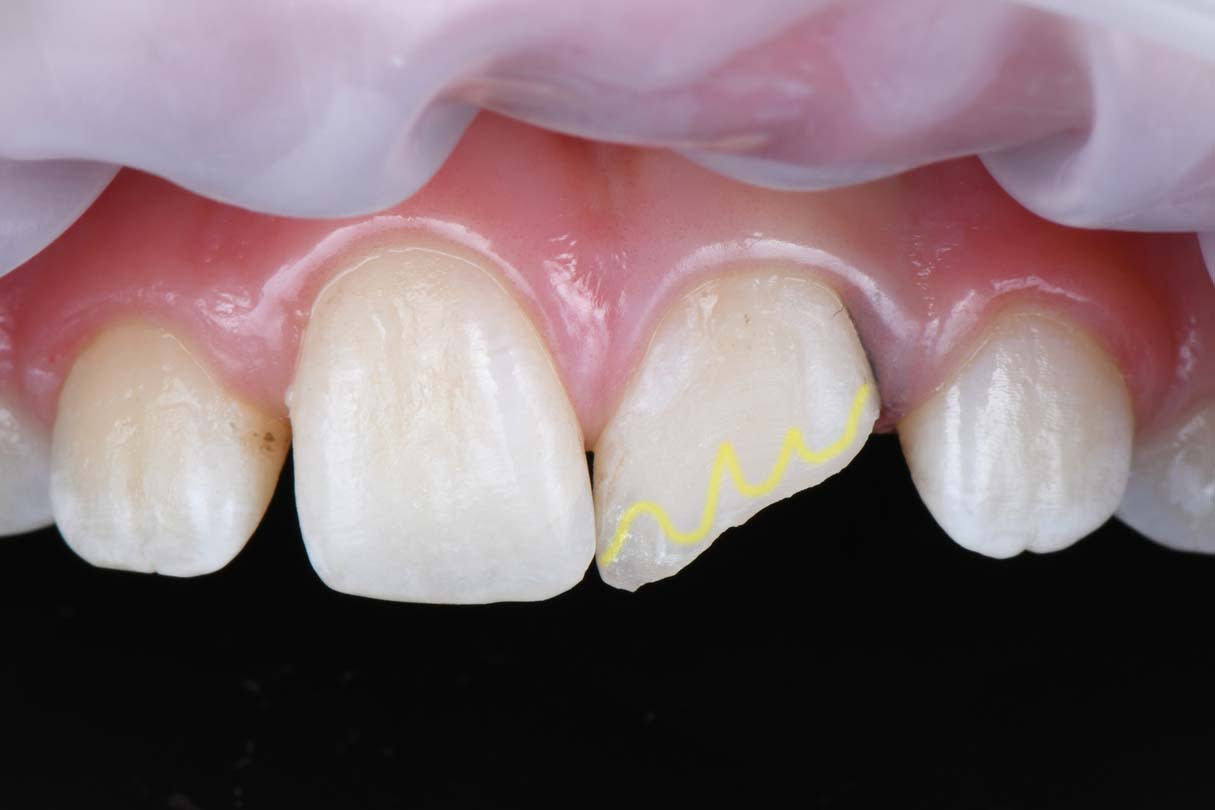
Restoring Anterior Trauma in a Pediatric Patient Using a Layered Direct Composite Technique
-
By
-
Michael J. Morgan
-
July 1, 2026
-
Clinical Scorecard: Restoring Anterior Trauma in a Pediatric Patient Using a Layered Direct Composite Technique
At a Glance
| Category | Detail |
|---|
| Condition | Fractured maxillary left central incisor |
| Key Mechanisms | Layered composite technique using CLEARFIL MAJESTY® ES-2 |
| Target Population | Pediatric patients with dental trauma |
| Care Setting | Dental restoration procedures |
Key Highlights
- Conservative direct composite restoration planned for fractured incisor
- Use of silicone stent for accurate enamel placement
- Three-plane beveling maximizes bonding surface area
- Restoration achieves esthetic outcomes comparable to indirect restorations
- Postoperative photography confirms successful restoration
Guideline-Based Recommendations
Diagnosis
- Clinical photography and radiographs for assessment
- Endodontic assessment to determine need for root canal therapy
Management
- Conservative direct composite restoration using layered technique
- Utilization of a single-tooth wax-up for restorative design
Monitoring & Follow-up
- Postoperative evaluation to confirm restoration integrity
- Future assessment for potential need for root canal therapy
Risks
- Possibility of early pulpal degradation
Patient & Prescribing Data
9-year-old pediatric patient
Layered composite technique allows for precise recreation of tooth anatomy
Clinical Best Practices
- Employ silicone stent for reliable lingual scaffold
- Ensure accurate tooth contour and incisal length from the outset
- Utilize red articulating paper for refining microanatomy during finishing
Related Resources & Content