Clinical Scorecard: Hypercementosis Progression With Evidence of Acquired Concrescence: A Case Report
At a Glance
Category
Detail
Condition
Hypercementosis with acquired concrescence
Key Mechanisms
Excessive, non-neoplastic deposition of radicular cementum leading to root thickening and fusion (concrescence) due to parafunctional occlusal trauma and biomechanical loading
Target Population
Adults, exemplified by a 62-year-old female patient
Care Setting
Dental clinical setting with periodic examinations and radiographic imaging
Key Highlights
Hypercementosis may be idiopathic, local, or systemic in origin and often affects premolars bilaterally.
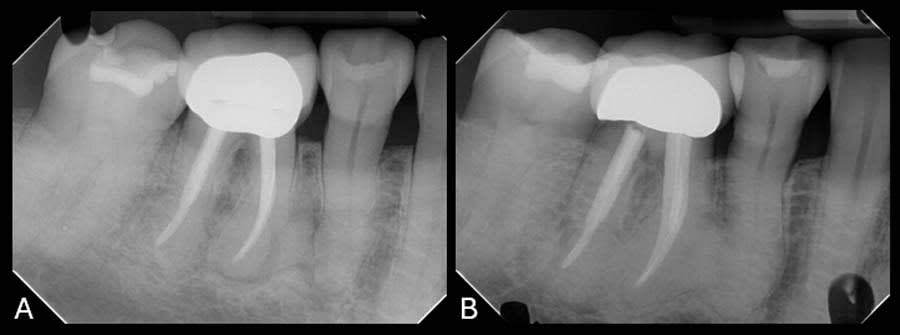
Progression of hypercementosis can lead to concrescence, complicating future dental extractions.
Periodic dental examinations and radiographic monitoring are critical for early identification and management.
Guideline-Based Recommendations
Diagnosis
Perform full-mouth series radiographs to identify hypercementosis and concrescence.
Conduct clinical examinations including periodontal probing and pulp vitality testing.
Review patient medical and dental history to exclude systemic causes and periodontitis.
Management
Monitor progression with periodic dental examinations and radiographs.
Consider treatment modifications if teeth become nonrestorable, especially due to concrescence complicating extractions.
Address parafunctional habits and occlusal trauma to reduce biomechanical loading.
Monitoring & Follow-up
Schedule regular 6-month recare visits with clinical and radiographic assessments.
Compare current imaging with prior radiographs to assess progression of cementum deposition.
Evaluate periodontal status and pulp vitality periodically.
Risks
Concrescence may complicate tooth extraction due to fusion of roots by cementum.
Progressive hypercementosis can lead to root bulbous thickening and potential periodontal complications.
Lack of early detection may result in more complex dental procedures.
Patient & Prescribing Data
Adults with generalized hypercementosis and acquired concrescence
No specific pharmacologic treatment; management focuses on monitoring, occlusal adjustment, and careful planning for extractions if needed.
Clinical Best Practices
Conduct thorough clinical and radiographic examinations at regular intervals to detect hypercementosis progression.
Assess occlusal forces and parafunctional habits as contributing factors and manage accordingly.
Plan extractions carefully in cases of concrescence to avoid complications.
Exclude systemic diseases and periodontitis as etiologic factors through comprehensive history and examination.
Combining IL-17 with TNF-alpha showed strong discrimination between carious lesions and healthy controls, but performance was more modest against gingival inflammation.