Clinical Scorecard: Owandy Radiology to Introduce AI Segmentation for QuickVision 3D
At a Glance
Category
Detail
Condition
AI segmentation feature for dental implant planning using cone-beam computed tomography (CBCT)
Key Mechanisms
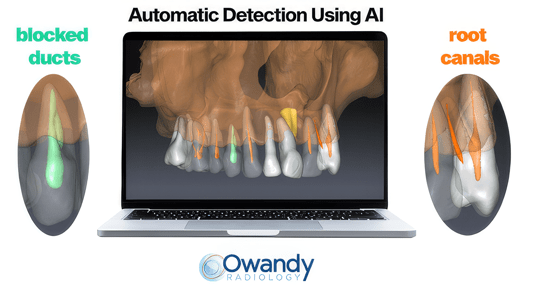
According to Owandy Radiology, the software automatically separates the maxilla, mandible, individual teeth from crown to root, and anatomical canals, including the mandibular canal, on CBCT scans.
Target Population
Clinicians using CBCT for dental implant planning; the source notes potential endodontic applications for examining root anatomy.
Care Setting
Dental imaging and digital treatment-planning workflows using QuickVision 3D.
Key Highlights
Owandy Radiology will introduce the AI segmentation feature for QuickVision 3D at the Greater New York Dental Meeting, November 29 through December 1, 2026, at the Jacob K. Javits Convention Center in New York.
The software automatically separates specified anatomical structures on CBCT scans for individual review.
The feature is designed to help clinicians evaluate available bone volume, examine root anatomy, and identify structures relevant to implant placement.
QuickVision 3D supports image review, digital impression overlays, implant simulation, and surgical guide design and export for 3D printing.
The source states that clinicians are responsible for reviewing and validating AI-generated segmentation before using it for treatment planning.
Guideline-Based Recommendations
Diagnosis
Management
Monitoring & Follow-up
Risks
Patient & Prescribing Data
The source describes a clinician-facing dental planning tool and does not specify patient eligibility or characteristics.
The feature is intended to support implant planning and has potential endodontic applications for examining root anatomy; the source provides no prescribing or treatment-outcome data.
Clinical Best Practices
The source states that clinicians are responsible for reviewing and validating AI-generated segmentation before using it for treatment planning.
The source describes examining available bone, nearby roots, and anatomical canals when planning implant placement.