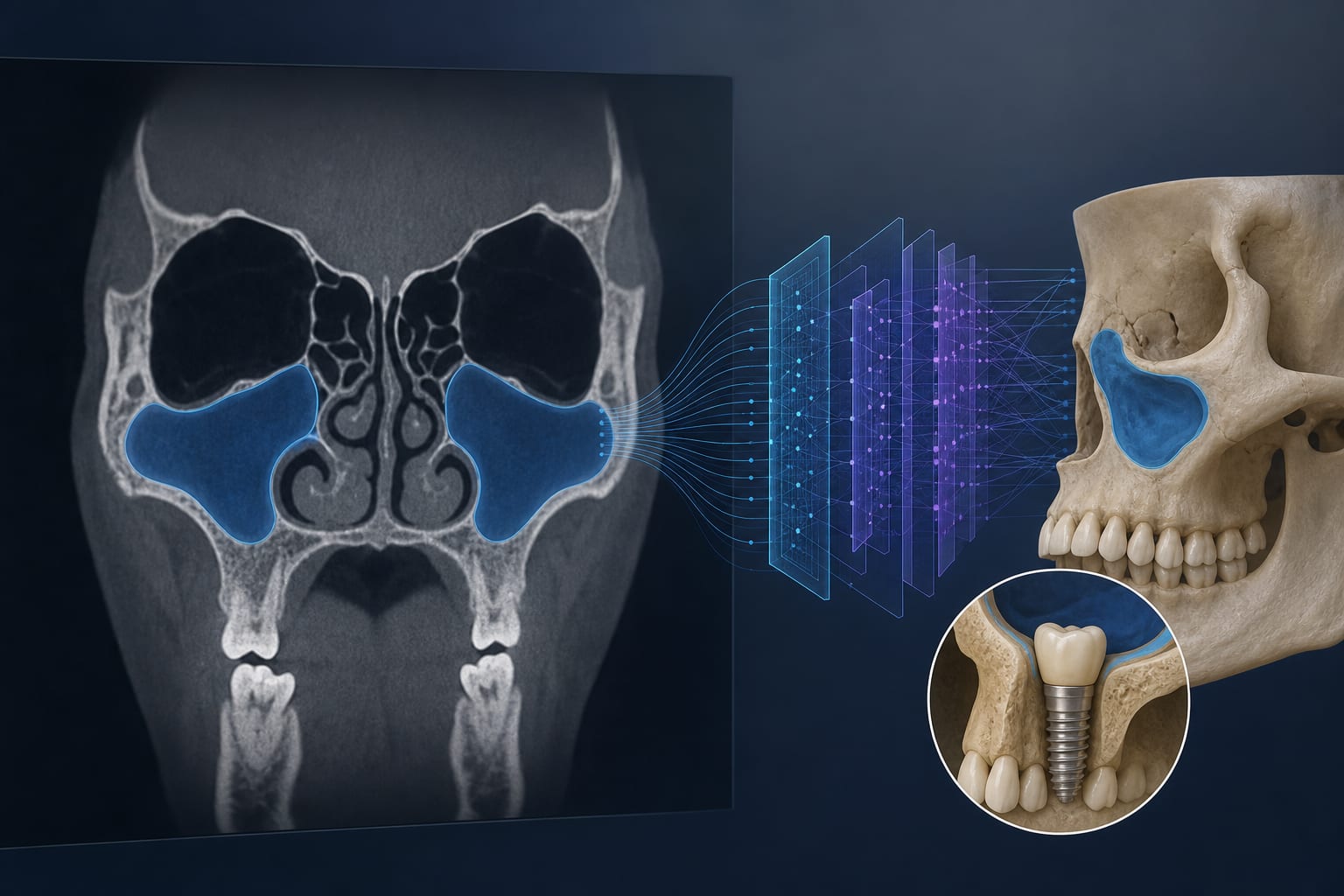
To explore the application of AI, particularly deep learning, in the segmentation of the maxillary sinus for dental and ENT practices, highlighting its potential to improve patient outcomes.
Key Findings:
Deep learning can significantly enhance the accuracy of maxillary sinus segmentation in CT/CBCT imaging, leading to better diagnostic outcomes.
Automated segmentation can assist junior physicians in identifying the maxillary sinus, improving medical education and reducing errors.
Anatomical variations of the maxillary sinus pose challenges for accurate segmentation and annotation, necessitating ongoing research.
Interpretation:
The application of deep learning in maxillary sinus segmentation has the potential to revolutionize both dental and ENT practices by improving diagnostic accuracy and efficiency, ultimately enhancing patient care.
Limitations:
High-quality annotated datasets for training deep learning models are scarce, which limits the effectiveness of these models.
Anatomical variations can lead to biases in segmentation results, highlighting the need for more comprehensive training datasets.
Conclusion:
Integrating AI-driven segmentation algorithms into clinical practice can enhance diagnostic capabilities and streamline workflows in dental and ENT settings, ultimately improving patient outcomes.