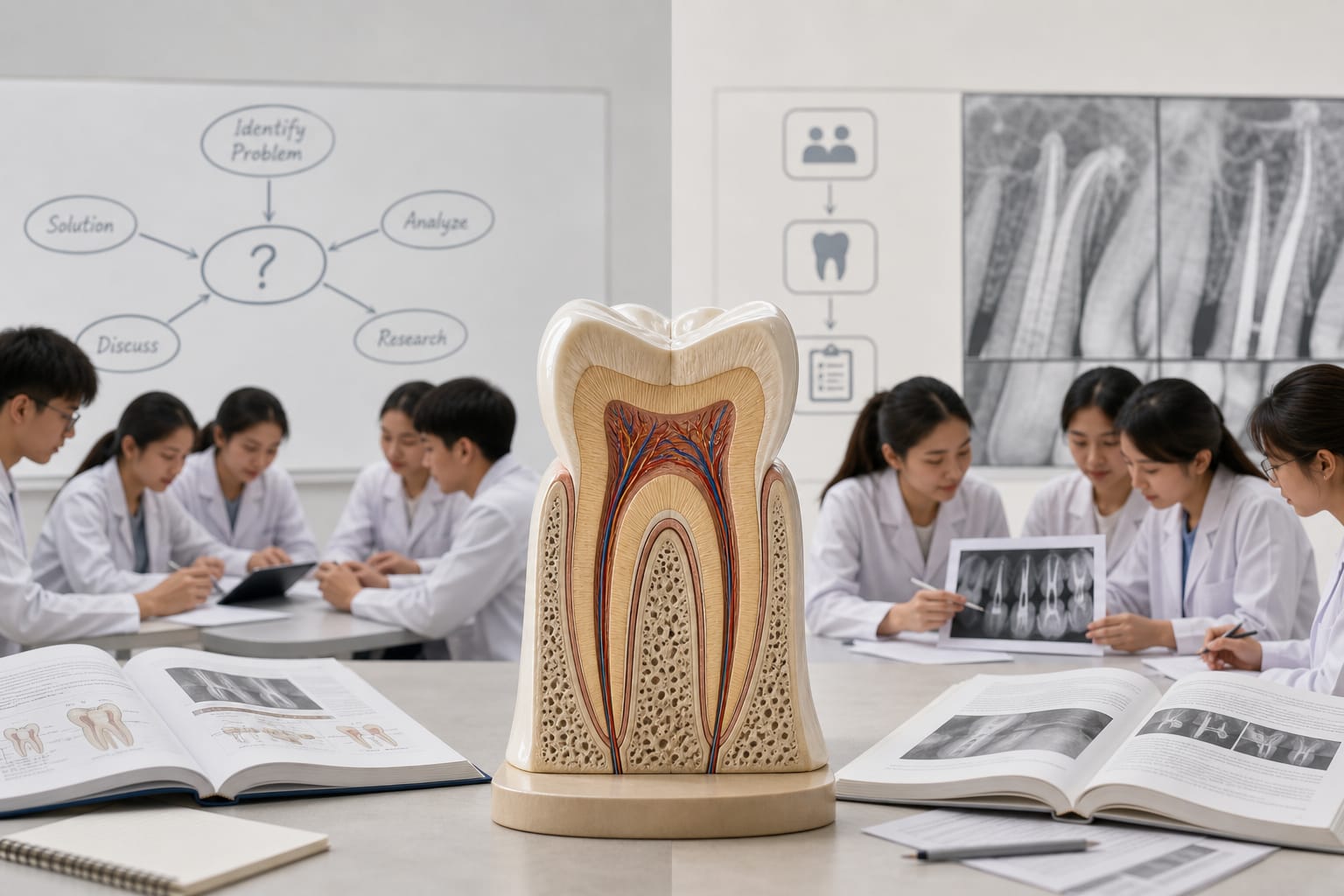
Comparison of the teaching effect of problem-based learning and case-based learning teaching methods in dental endodontics education - Summary - DentalSpire
To evaluate the educational impacts of problem-based learning (PBL) versus case-based learning (CBL) in dental endodontics instruction among junior undergraduate dental students at the School of Stomatology, Hunan University of Chinese Medicine.
Key Findings:
PBL cohort showed superior grasp of complex concepts and knowledge synthesis.
CBL cohort excelled in knowledge application and practical operational skills.
PBL students displayed greater enthusiasm for autonomous inquiry.
CBL students had a heightened awareness of the practical relevance of their learning.
Both cohorts expressed satisfaction with their respective instructional methodologies for different reasons.
Interpretation:
Both PBL and CBL approaches positively impact dental endodontics training, with PBL enhancing critical thinking and self-directed learning, while CBL improves practical skills and application of theoretical knowledge. Integrating both may optimize educational outcomes.
Limitations:
Study limited to a single institution, which may affect generalizability.
Sample size may not represent broader populations of dental students.
Potential biases in student selection or assessment methods.
Conclusion:
Educators should choose instructional strategies based on educational goals and learner attributes, and consider integrating both PBL and CBL to optimize educational outcomes in dental endodontics.