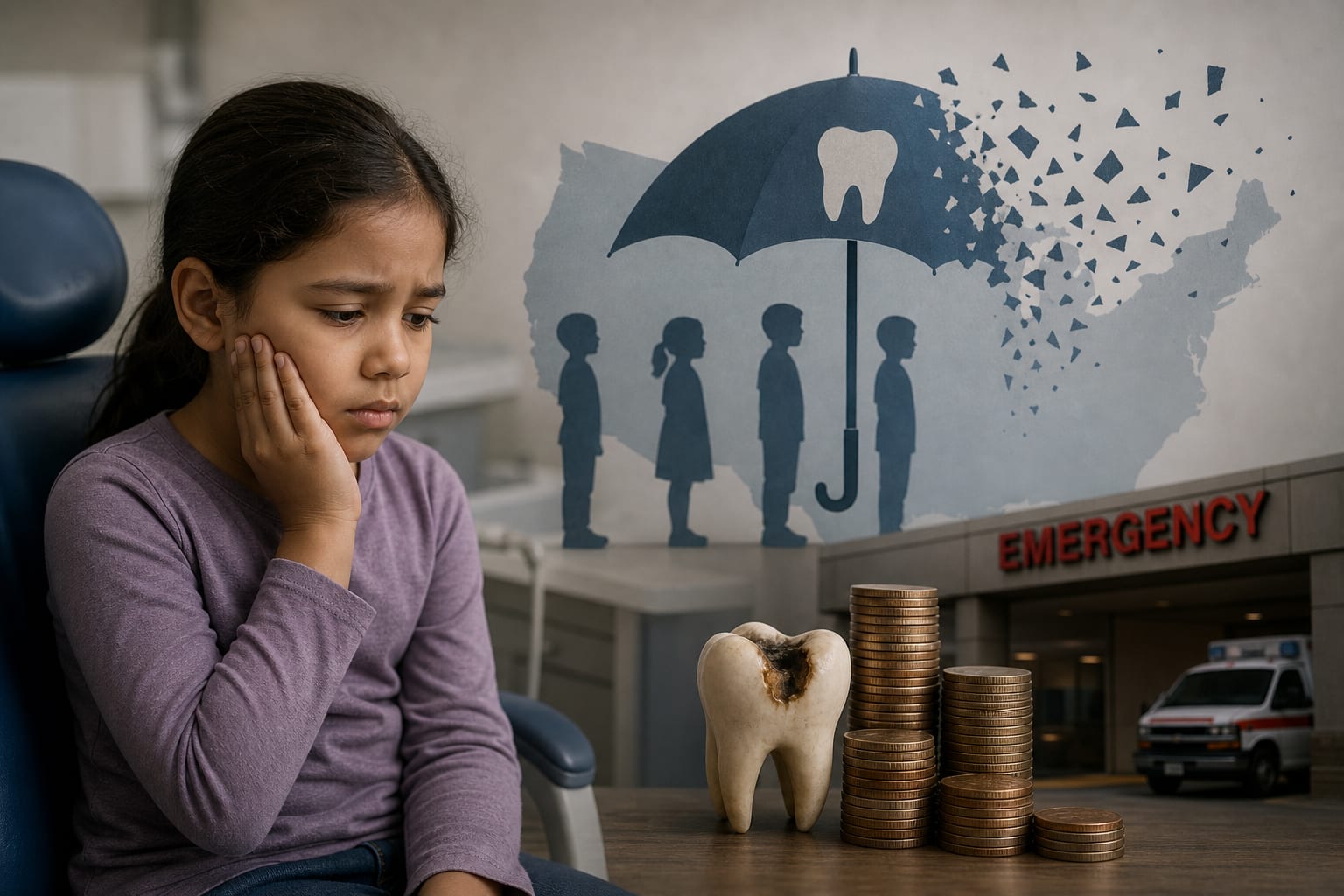
To estimate the association between Medicaid coverage loss and oral health outcomes and associated costs among US children due to the One Big Beautiful Bill Act (OBBBA).
Key Findings:
Approximately 480,000 children per year could lose Medicaid coverage between 2025 and 2034 under the OBBBA, potentially leading to increased dental health issues.
Loss of Medicaid coverage may disproportionately affect low-income families, worsening access to dental care and increasing health disparities.
The simulation indicated significant increases in dental caries and associated costs due to coverage loss, highlighting the urgent need for policy intervention.
Interpretation:
The anticipated disenrollment from Medicaid could lead to increased dental health issues and financial burdens on the healthcare system, particularly for vulnerable populations. This underscores the need for continued support for Medicaid coverage.
Limitations:
The model relies on projections and assumptions that may not fully capture real-world complexities, such as variations in state policies and economic conditions.
Data is based on historical trends and may not account for future changes in policy or healthcare access, which could affect the accuracy of projections.
Conclusion:
The study underscores the critical importance of Medicaid coverage for maintaining pediatric dental health and preventing costly emergency care, emphasizing the need for policy measures to protect vulnerable populations.
Increases in apnea-hypopnea events were greatest among patients with an elevated baseline index, while evidence supporting mouth taping remained preliminary.