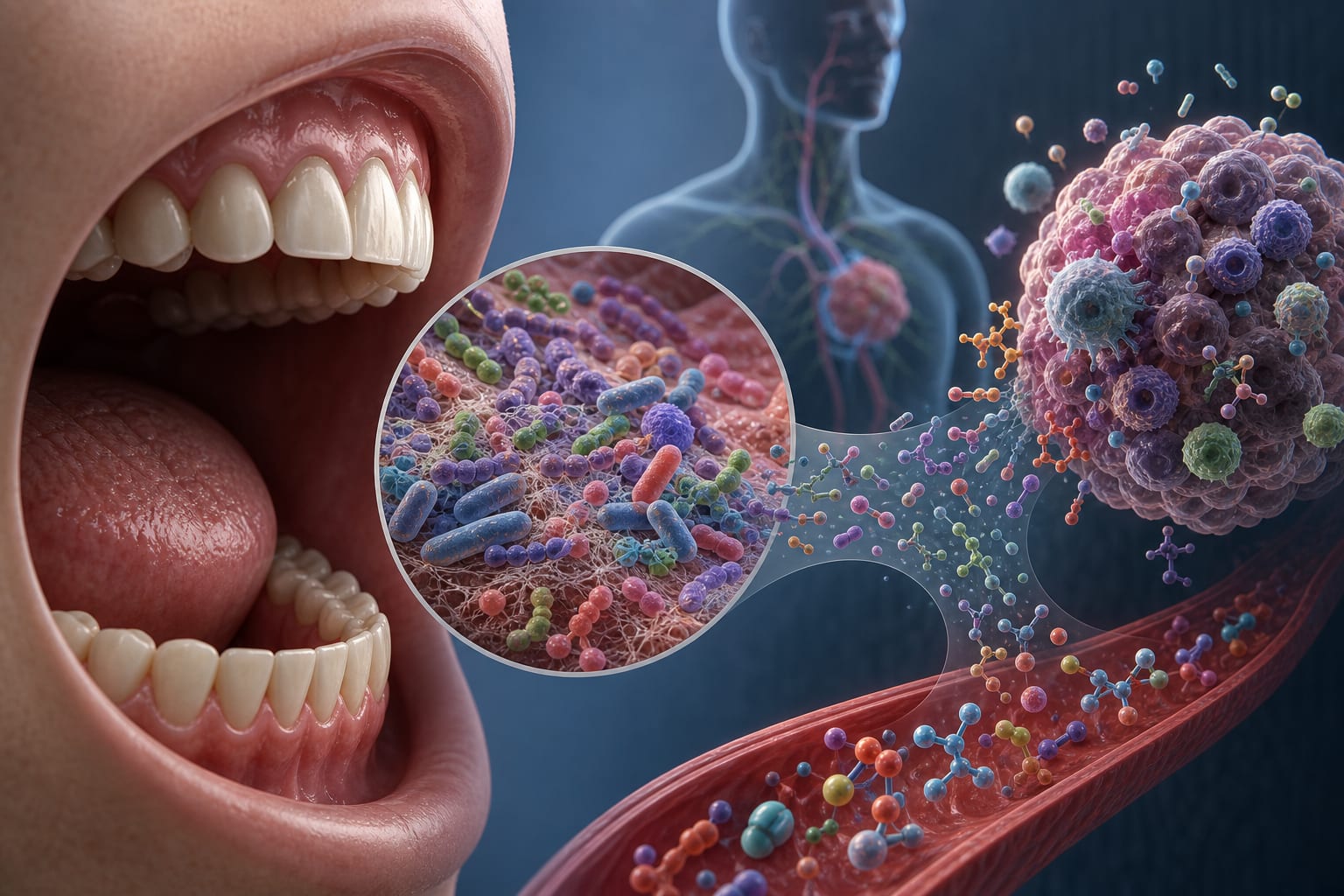
To identify drugs that cause halitosis and suggest management strategies for individuals affected by drug-related halitosis, emphasizing the social implications.
Approach:
Key Findings:
Halitosis can be intra-oral or extra-oral, with various drugs contributing to both types.
Drugs causing xerostomia and medication-related osteonecrosis of the jaw are linked to halitosis.
Common drug classes associated with halitosis include anticholinergics, antidepressants, appetite suppressants, and antiresorptives, with specific examples provided.
Interpretation:
Prior knowledge of medications that cause halitosis can aid clinicians in diagnosing and managing the condition effectively, considering its social impact.
Limitations:
Few studies have explored halitosis as an independent drug-related adverse effect, highlighting a gap in research.
Conclusion:
Dental evaluations and management strategies, such as improving oral hygiene and addressing xerostomia, can help mitigate halitosis, especially before social interactions.