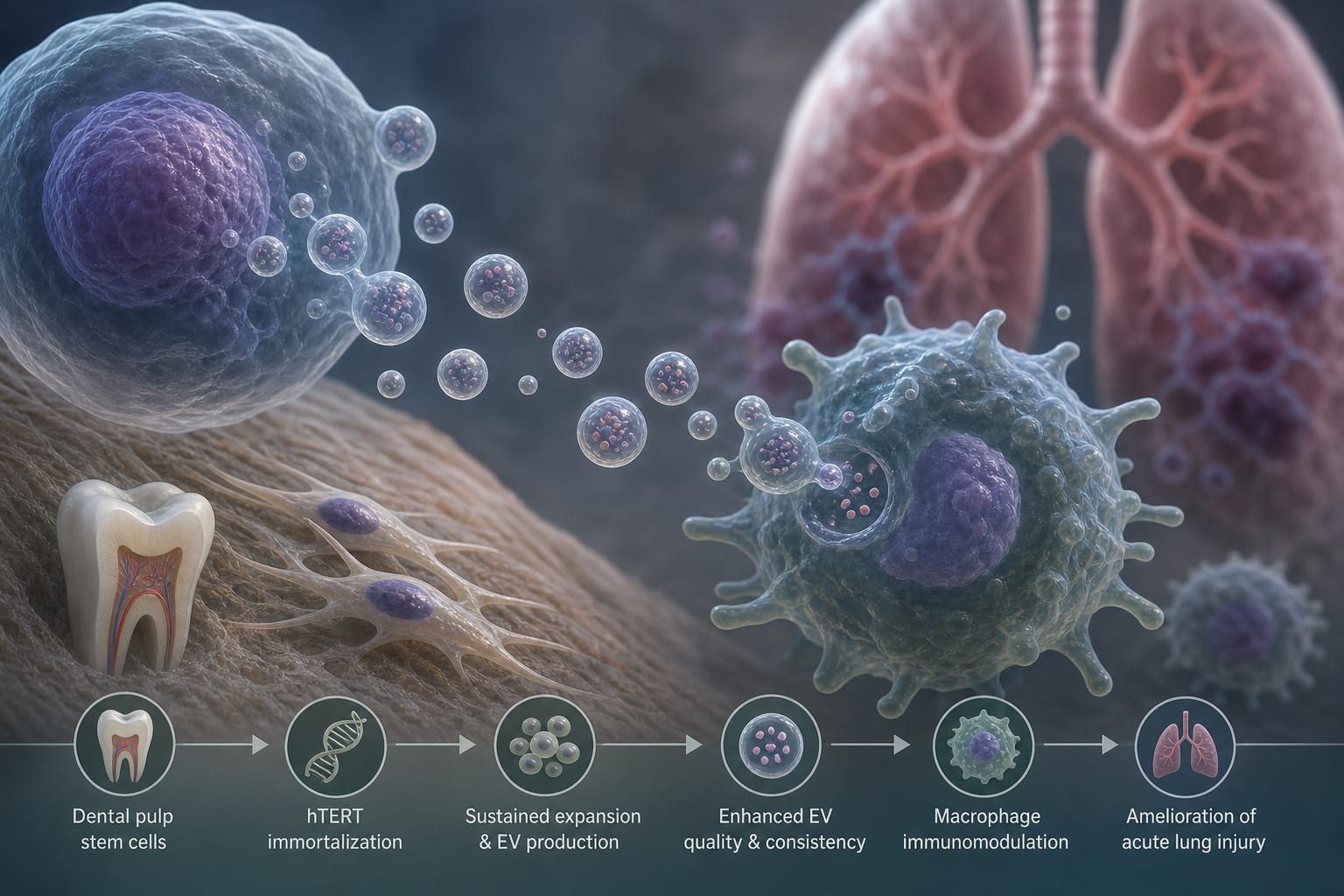
To evaluate the effects of hTERT-mediated immortalization on the production and immunomodulatory properties of extracellular vesicles (EVs) derived from dental pulp stem cells (DPSCs), highlighting its significance in regenerative medicine.
Approach:
Key Findings:
hTERT expression increased telomerase levels without affecting the differentiation potential of DPSCs.
No significant changes in EV size, morphology, or marker expression were observed between naïve and immortalized DPSC-derived EVs.
Both EV sources similarly suppressed pro-inflammatory cytokines, including TNF-α, IL-1β, and IL-6, in inflamed macrophages.
EVs from hTERT-immortalized DPSCs retained immunomodulatory activity through at least passage 15.
In vivo, both EV sources comparably reduced pulmonary edema and inflammatory responses following LPS challenge.
Interpretation:
hTERT-mediated immortalization allows for the production of stable and functionally active EVs from DPSCs, making them a viable source for therapeutic applications in immunomodulation.
Limitations:
The study primarily focuses on in vitro and murine models, which may not fully represent human responses.
Long-term effects of hTERT expression on other cellular functions and potential oncogenic risks were not assessed.
Conclusion:
hTERT-immortalized DPSCs provide a reproducible source of EVs with consistent anti-inflammatory properties, supporting their potential use in immunomodulatory therapies and clinical applications.
Researchers identified endogenous mutational and immune-response patterns in oral cancers arising without exposure to tobacco, alcohol, or human papillomavirus infections.