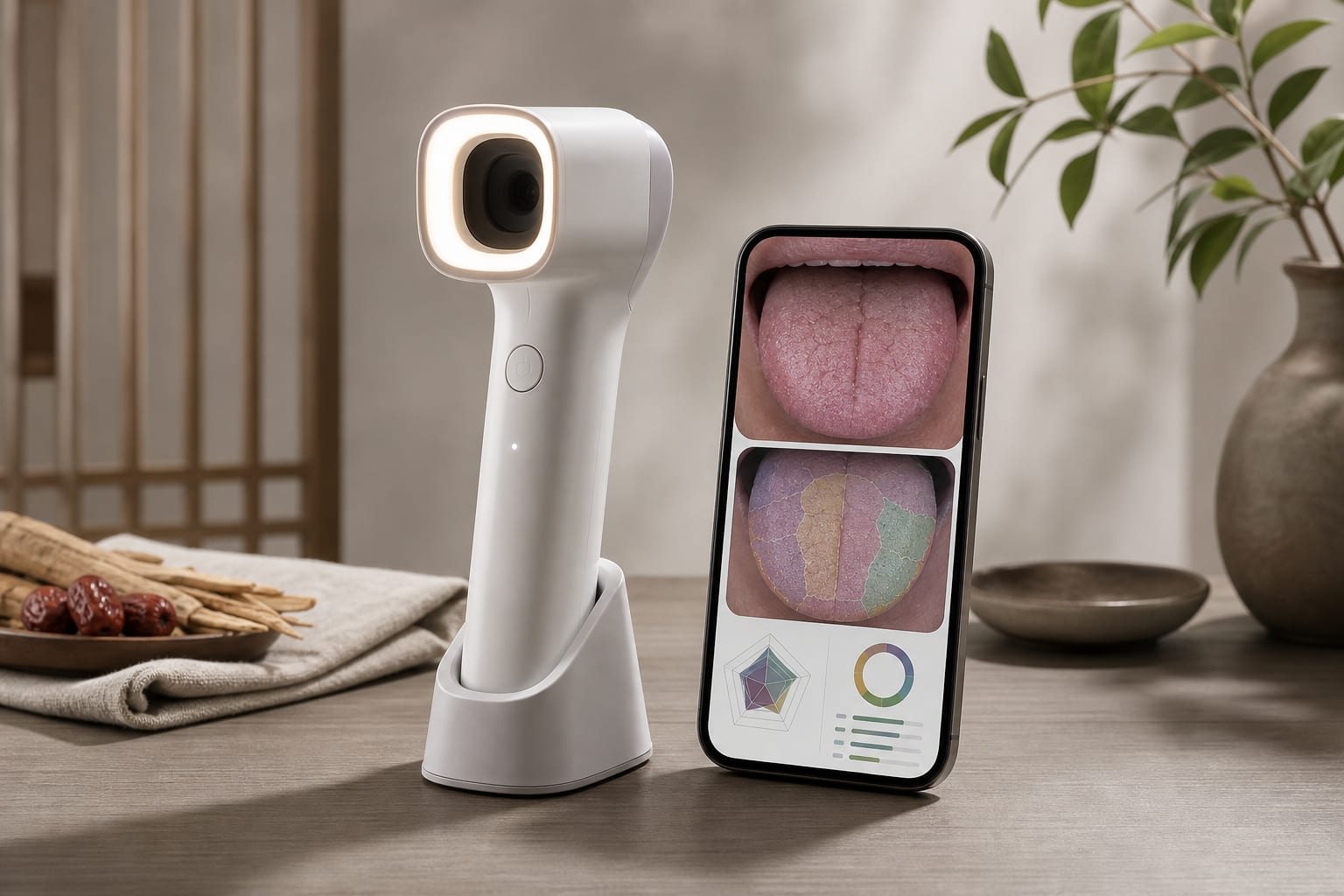
To develop a portable tongue analysis system that automates tongue image acquisition and evaluation for improved accessibility and reliability in health assessments.
Approach:
Tongue Image Acquisition: Design of a portable tongue image acquisition prototype with supplementary illumination and multimodal interaction for reliable data collection.
Tongue Image Segmentation: Development of TongueSegNet (TSegNet) for robust tongue image segmentation in unconstrained conditions, utilizing advanced deep learning techniques.
Fissured-Tongue Feature Recognition: Creation of a Residual Kolmogorov-Arnold Network (ResKAN) that combines CNN feature extraction with a KAN-based head for enhanced recognition of fissured tongue features.
Key Findings:
Fissured tongue is a significant morphological sign in Traditional Chinese Medicine, associated with various internal conditions.
Conventional tongue inspection is limited by subjective judgment and requires extensive training.
Existing automated methods for tongue analysis face challenges in real-world settings due to environmental variability.
Interpretation:
The study integrates advanced imaging and deep learning techniques to address the need for objective and automated tongue analysis.
Limitations:
The study does not address the potential variability in user proficiency with the mobile device.
Real-world deployment challenges, such as environmental factors affecting image quality, remain to be fully evaluated.
Conclusion:
The proposed system aims to enhance the accessibility and reliability of tongue assessments in community and domestic environments.