To integrate the understanding of oral diseases as disorders of host-microbiome-immune disequilibrium, considering microbial ecology, immune regulation, and clinical context, and to explore emerging therapeutic strategies.
Approach:
Key Findings:
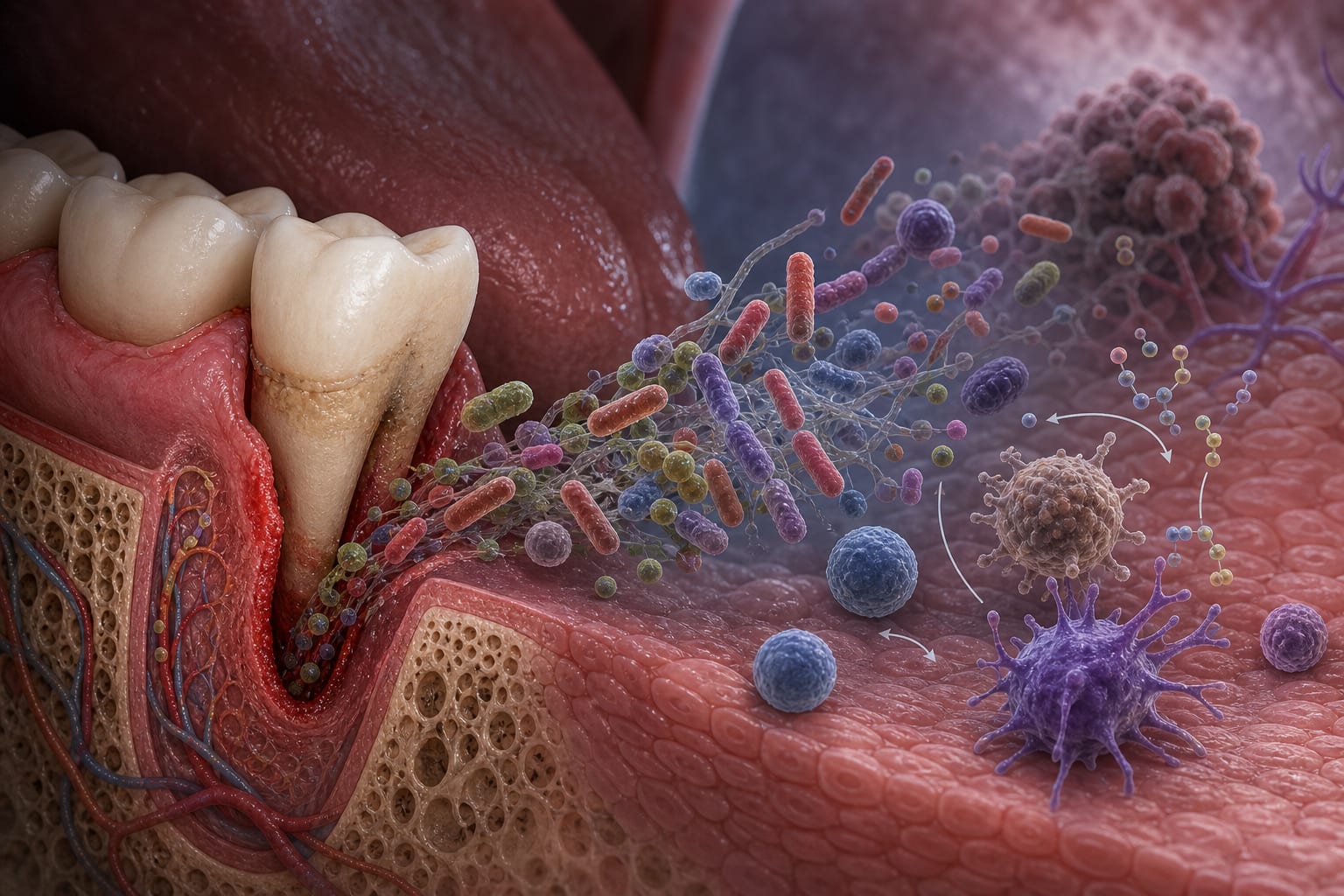
Oral homeostasis relies on interactions among commensal microbial communities, epithelial barriers, and immune surveillance.
Dysbiosis leads to the expansion of pathobionts and amplifies inflammatory responses, contributing to tissue injury.
Environmental and behavioral factors, including nutrition and dental hygiene, modify microbial composition and elevate inflammatory signals.
Emerging technologies, including microbiome-modulating therapies and AI, are advancing precision therapeutic development.
Interpretation:
Oral diseases should be viewed as context-dependent failures of the integrated host-microbiome-immune system rather than isolated infections.
Limitations:
Existing evidence on the interplay between microbial ecology and immune regulation is fragmented.
Traditional models often focus on specific pathogens, overlooking complex interactions and the need for mechanistic integration.
Conclusion:
An integrated approach considering microbial ecology, immune regulation, epithelial barrier function, and clinical context is essential for improving prevention, diagnosis, and treatment in precision oral medicine, highlighting the importance of systems biology and multi-omics integration.
Study found species-specific differences in biofilm -forming capacity and antimicrobial susceptibility among supragingival bacterial isolates from patients with active dental caries.