To review the biologic mechanisms and clinical applications of regenerative materials in implant site preparation.
Approach:
Biologic Mechanisms: The article discusses the integration of biologic mediators, osteoconductive scaffolds, and resorbable barrier membranes to enhance regenerative outcomes.
Clinical Applications: It highlights the use of growth factor–enhanced matrices, xenografts, and allografts in supporting hard- and soft-tissue regeneration.
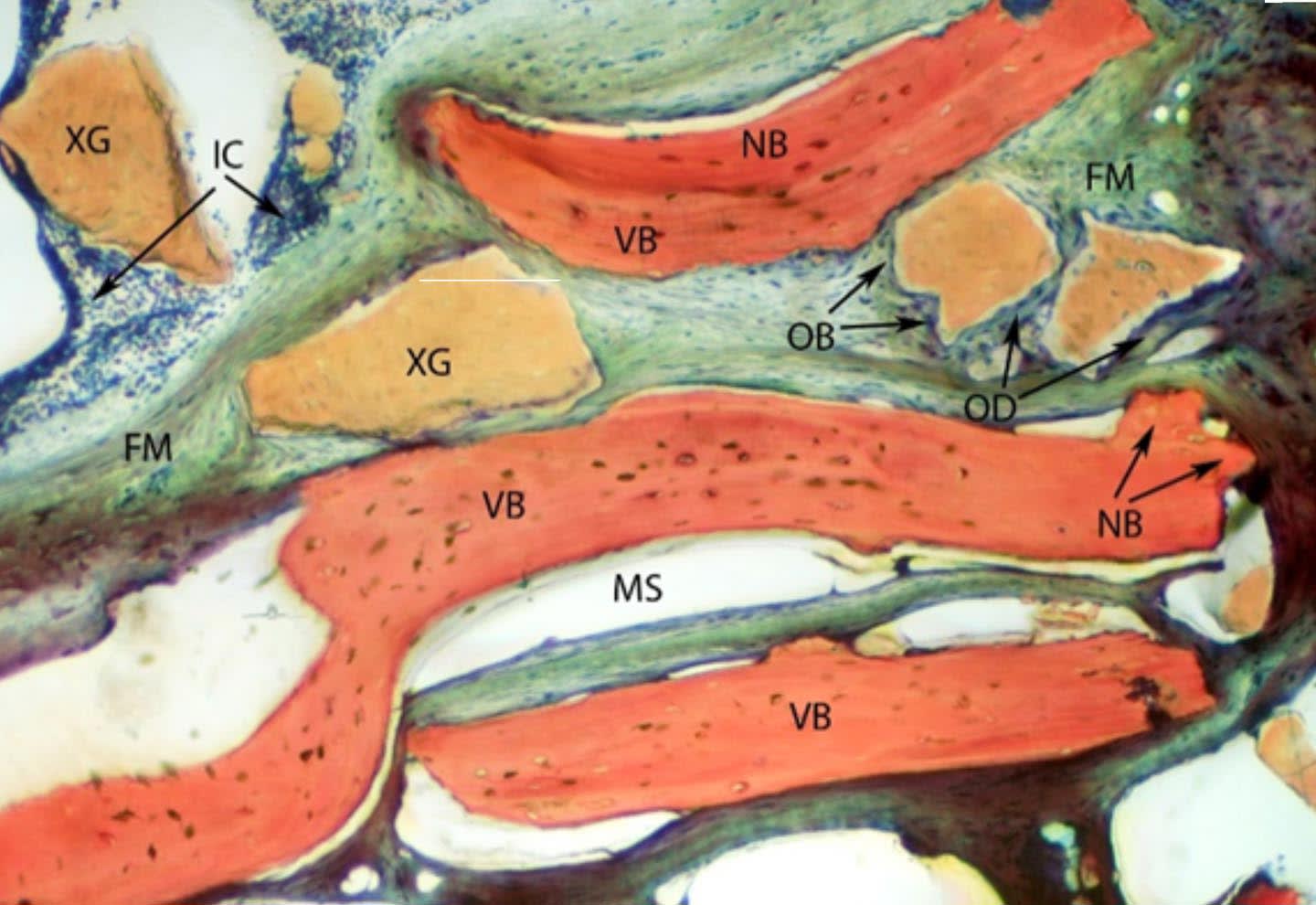
Histological Perspective: Case examples are provided to demonstrate the incorporation and conversion of graft materials to viable host bone.
Key Findings:
Regenerative therapy is essential for managing bone deficiencies during implant placement.
Xenografts provide long-term volumetric stability, while allografts show active remodeling potential.
Growth factor therapy enhances cellular migration and vascular ingrowth, accelerating bone regeneration.
Interpretation:
The integration of biologic stimulation with mechanical scaffold stability is crucial for successful regenerative therapy.
Limitations:
Variability in remodeling kinetics of allogeneic bone depending on mineralization and processing.
Potential lack of intrinsic biologic signaling in xenogeneic materials.
Conclusion:
Regenerative techniques are integral to contemporary periodontal and implant-related treatment planning.