-
1
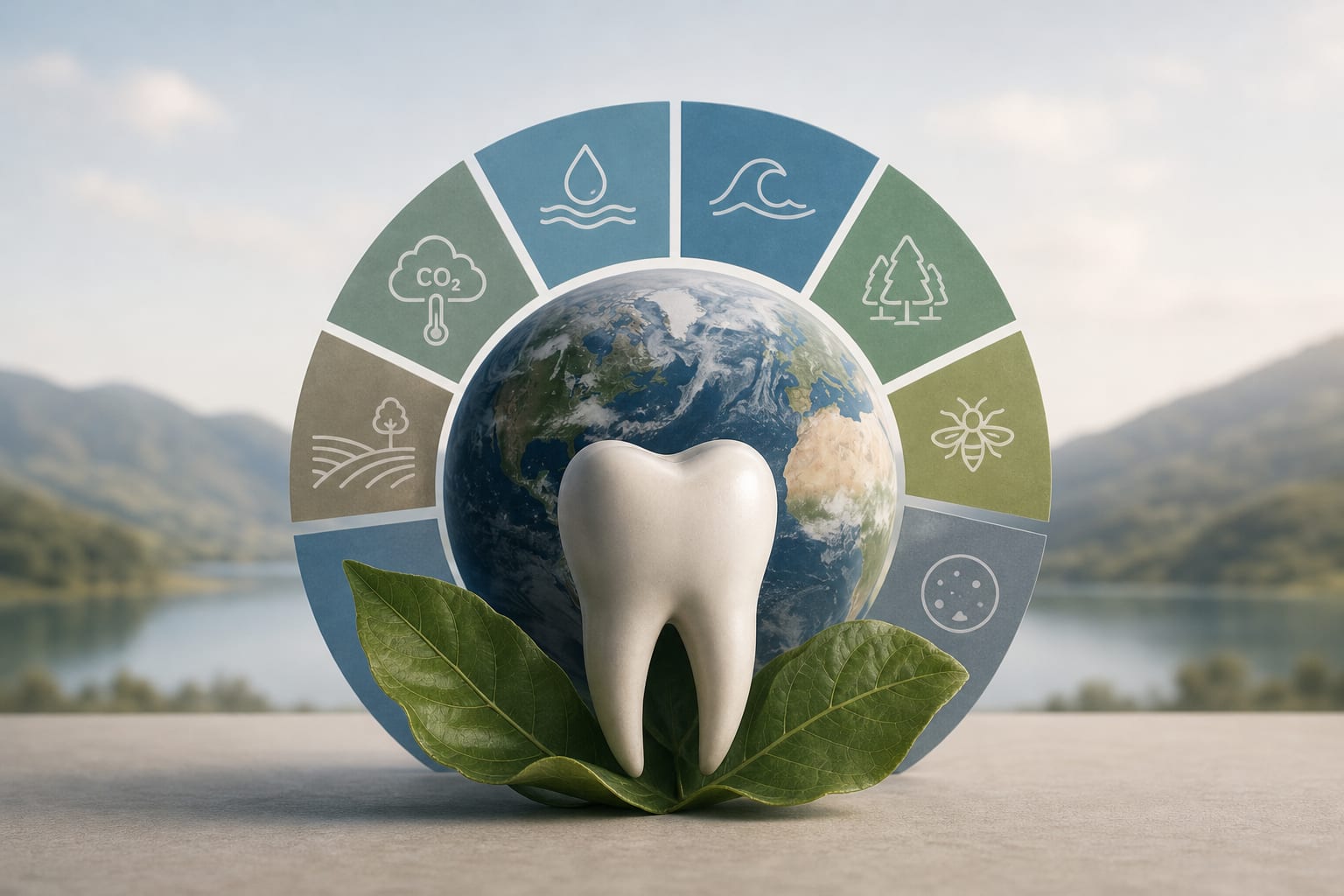
Planetary boundaries define a safe operating space for humanity and other forms of life; their transgression can contribute to extreme heat, food and water insecurity, and changing infectious disease patterns that threaten health.
-
2
Dental care contributes to environmental burdens through energy and water use, greenhouse gas emissions, chemicals, materials, and waste, with downstream consequences for people and communities.
-
3
Prevention-focused care, risk-based recall intervals, minimally invasive approaches, and teledentistry may maintain or reduce undesirable clinical outcomes while decreasing travel, consumable use, and energy demands.
-
4
Guideline panels can use a dedicated planetary-boundaries criterion and a planetary-health equity subjudgment to consider environmental evidence, its certainty, and related trade-offs alongside established decision factors.
-
5
Life cycle assessment, standardized under International Organization for Standardization standards 14040 and 14044, quantifies environmental effects from cradle to grave and supports comparisons among clinically appropriate alternatives.