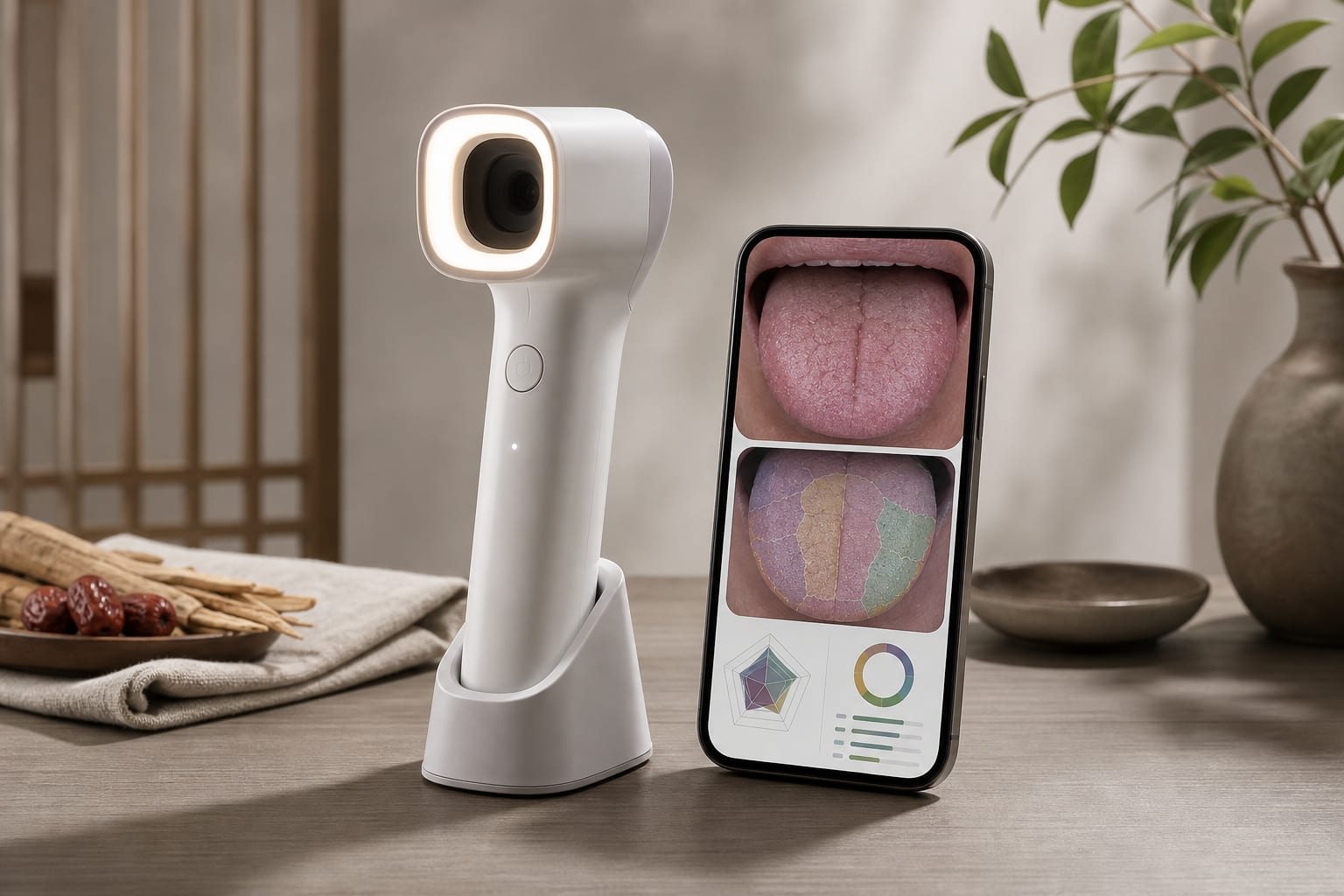
A portable non-contact tongue imaging system with automated analysis for community and home settings
-
By
-
Jiehan Wei
-
Jun Song
-
Weiliang Lu
-
Shaoyang Men
-
Chuangquan Lin
-
Peipei Zhou
-
June 24, 2026
-
0 min
4 Topic Commentaries
A mobile non-invasive tongue imaging device with automated evaluation for use in community and domestic environments
-
Manu Prakash, PhD
[Source]The feedback we got from surgeons who see patients every day, and from cancer screening clinics in rural parts of South India, shaped the project. I am always inspired by the energy of rural health workers in the field and I am thankful for the current support so we can continue this transition from technology development to field deployment.
-
Ruikang K. Wang, PhD
[Source]Bacteria on skin and in our mouths can have wide impacts on our health — from causing tooth to decay to slowing down wound healing. Since smartphones are so widely used, we wanted to develop a cost-effective, easy tool that people could use to learn about bacteria on skin and in the oral cavity.
-
William V. Giannobile, DDS, DMSc
[Source]As dentists, we are already collecting biomedical imaging and by integrating patient clinical diagnostic information and applying advanced analytics, we can get a really robust picture of the oral health of a patient population.
-
Petra Wilder-Smith, DDS, PhD
[Source]My goal is to use our highly sophisticated imaging tools to map the molecular risk so that we can tell the surgeon, first when they plan the surgery, and then intraoperatively, how close they can keep the excision to the tumor margins and still keep a minimal risk of recurrence in the patient.