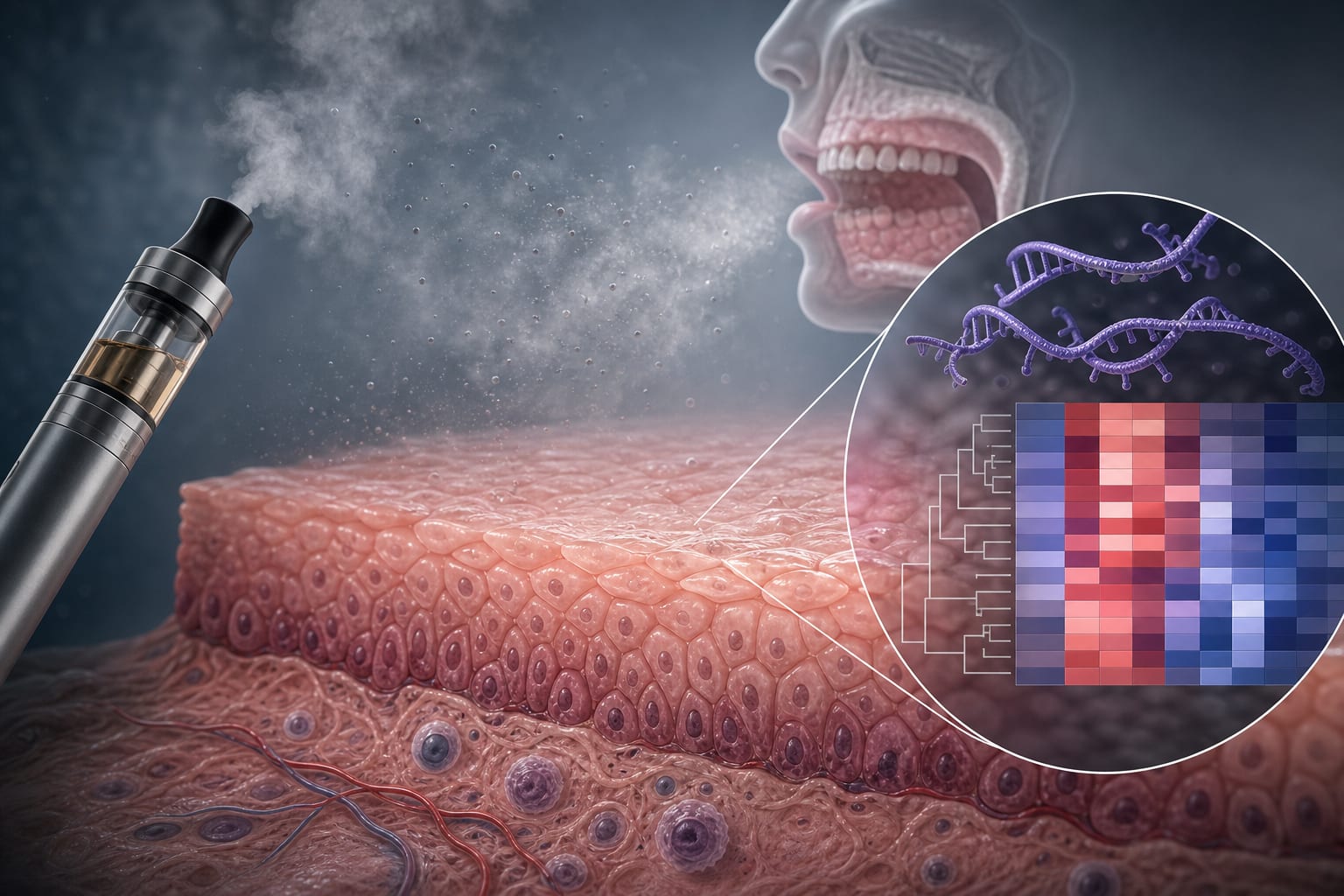
Clinical Report: The Impact of Complex Exposure Factors on Transcriptomic Changes in Oral Epithelium Linked to Vaping
Overview
This study evaluates the transcriptomic changes in oral epithelial cells due to vaping and smoking, highlighting the influence of exposure metrics and product characteristics. Findings indicate significant dysregulation of genes associated with cancer and signaling pathways, with distinct patterns observed between vapers and smokers.
Background
The rise of electronic cigarette use has raised concerns about its health implications, particularly regarding the oral epithelium, which is directly exposed to harmful constituents in e-cig aerosol. Understanding the molecular effects of vaping is crucial for assessing its potential risks and informing public health strategies. This research provides insights into how different vaping products and usage patterns may contribute to gene expression changes.
Data Highlights
No numerical data available.
Key Findings
Both vaping and smoking caused significant transcriptomic dysregulation compared to non-users.
27.6% of differentially expressed genes (DEGs) among vapers showed consistent behavior across various dose metrics.
Device generation and flavor type contributed to additional variability in gene expression among vapers.
54.1% of smoking-associated DEGs exhibited consistent dose-dependent responses.
Functional enrichment analyses revealed disruptions in cancer- and signaling pathways.
Clinical Implications
Healthcare professionals should be aware of the distinct molecular impacts of vaping compared to smoking, particularly in the context of oral health. This knowledge can guide patient counseling and inform regulatory decisions regarding e-cigarette products.
Conclusion
The study underscores the complexity of vaping's biological effects, suggesting that both exposure metrics and product characteristics play critical roles in gene expression changes. This information is vital for developing effective public health policies and clinical practices.
by Jessica George, Stella Tommasi, Niccolo Pabustan, Daria M. Kessler, Zairah L. Thomas, Lourdes Baezconde-Garbanati, Kimberly D. Siegmund, Ahmad Besaratinia