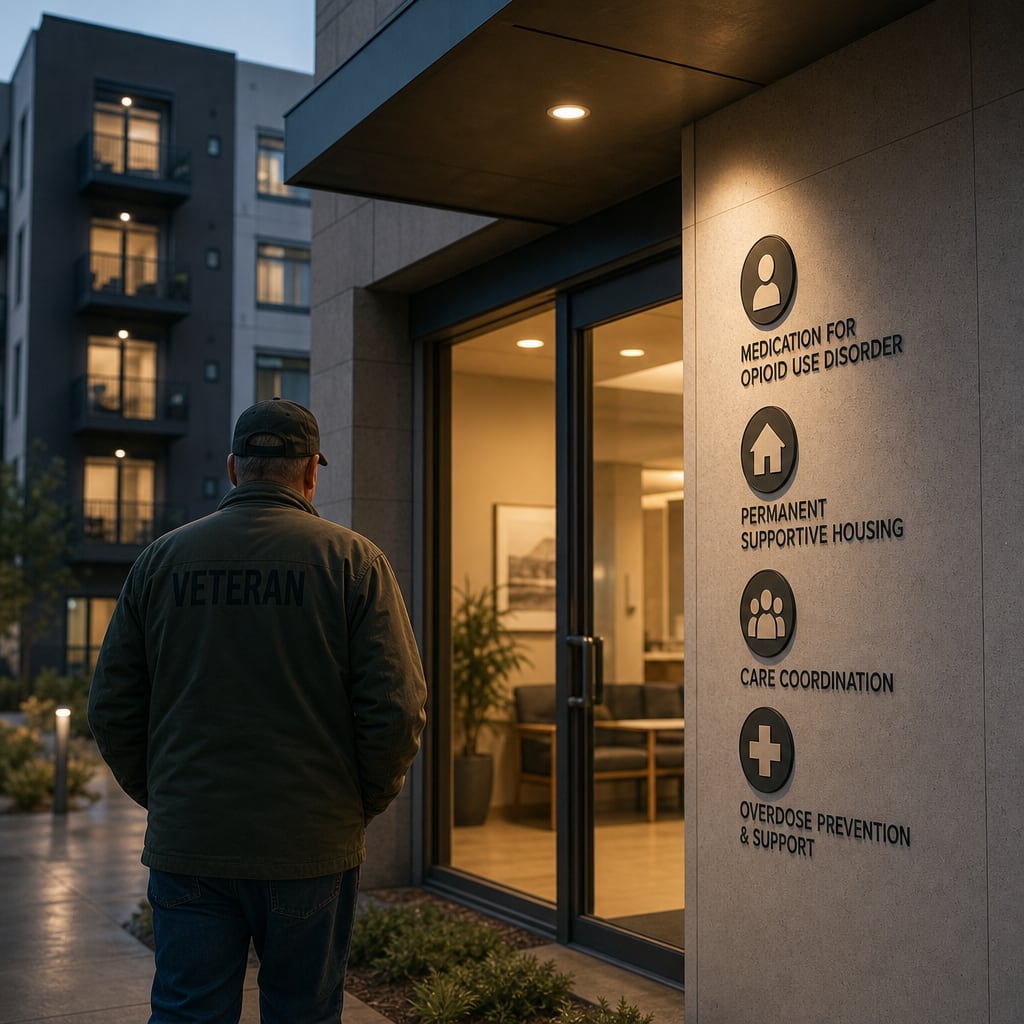
Access to Medications for Opioid Use Disorder Among Veterans With Homeless Experience in Permanent Supportive
By
Michael Hsu
Talia Panadero
Larissa J. Mooney
David Kim
David Lawrence
Anita Yuan
Prabha Siddarth
Sonya Gabrielian
May 5, 2026
Clinical Scorecard: Availability of Opioid Use Disorder Treatments for Veterans with a History of Homelessness in Permanent Supportive Housing
At a Glance
Category Detail
Condition Opioid Use Disorder (OUD) Key Mechanisms Medications for opioid use disorder (MOUD) including buprenorphine, methadone, and naltrexone reduce overdose deaths and improve treatment retention. Target Population Veterans with a history of homelessness residing in Permanent Supportive Housing (PSH). Care Setting Integrated health systems, specifically the US Department of Veterans Affairs (VA) and HUD-VASH program.
Key Highlights
Drug overdose is a leading cause of death among veterans with homeless experience. Access to MOUD is low among veterans despite its effectiveness in reducing mortality. Structural barriers such as stigma and fragmented care limit MOUD access. HUD-VASH has reduced homelessness but not significantly improved substance use disorder outcomes. Racial and ethnic disparities exist in MOUD receipt among veterans. Guideline-Based Recommendations
Diagnosis
Utilize ICD-10 codes to identify OUD and related diagnoses. Management
Implement evidence-based interventions for substance use disorder within PSH settings. Monitoring & Follow-up
Track MOUD uptake and overdose mortality rates among veterans in PSH. Risks
Consider the impact of housing instability and comorbid conditions on treatment outcomes. Patient & Prescribing Data
Veterans enrolled in HUD-VASH with a diagnosis of OUD.
Buprenorphine and methadone have shown effectiveness in improving quality of life and reducing overdose deaths.
Clinical Best Practices
Integrate housing and health services to address barriers to MOUD access. Utilize telehealth for MOUD initiation to improve access. References