Multidimensional exposure architecture shapes vaping-associated transcriptomic dysregulation in oral epithelium - Scorecard - DentalSpire

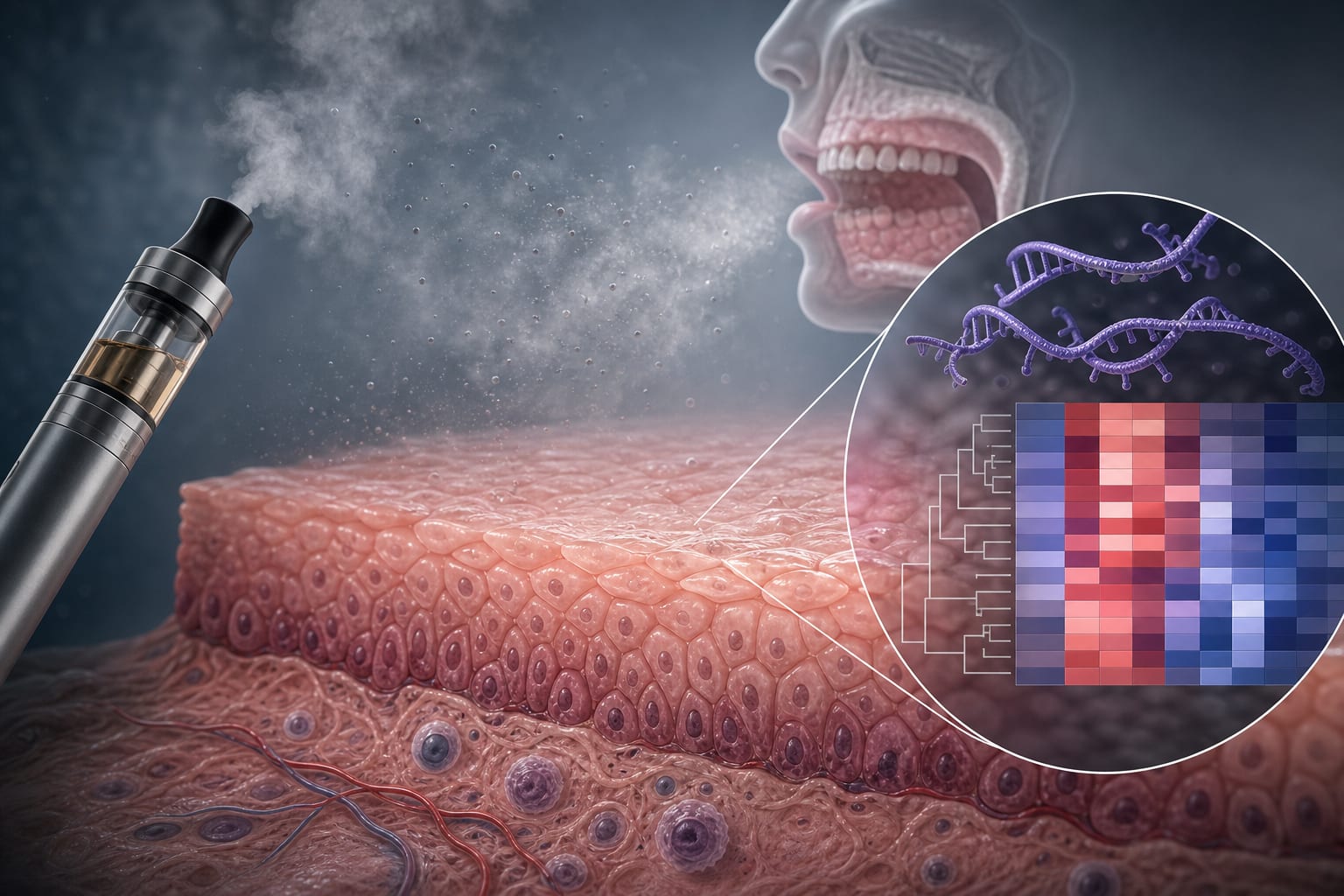
Multidimensional exposure architecture shapes vaping-associated transcriptomic dysregulation in oral epithelium

  • By

  • Jessica George

  • Stella Tommasi

  • Niccolo Pabustan

  • Daria M. Kessler

  • Zairah L. Thomas

  • Lourdes Baezconde-Garbanati

  • Kimberly D. Siegmund

  • Ahmad Besaratinia

  • June 1, 2026

  • 0 min

Share

Clinical Scorecard: The Impact of Complex Exposure Factors on Transcriptomic Changes in Oral Epithelium Linked to Vaping

At a Glance

CategoryDetail
ConditionVaping-associated transcriptomic dysregulation
Key MechanismsDysregulation of genes and molecular pathways in epithelial tissues due to exposure to e-cig aerosol
Target PopulationE-cig users (vapers), cigarette smokers, and non-users
Care SettingClinical and public health settings

Key Highlights

  • Vaping and smoking both cause transcriptomic dysregulation in oral epithelium compared to non-users.
  • Device generation and flavor type contribute to gene expression variability among vapers.
  • 54.1% of smoking-associated differentially expressed genes (DEGs) showed consistent dose-dependent responses.
  • 27.6% of vapers' DEGs exhibited heterogeneous dose-response patterns.
  • Functional enrichment analyses revealed disruption of cancer- and signaling pathways.

Guideline-Based Recommendations

Diagnosis

  • Assess differential gene expression in oral epithelial cells of e-cig users and smokers.

Management

  • Incorporate multidimensional exposure metrics into regulatory evaluations of e-cig products.

Monitoring & Follow-up

  • Monitor transcriptional changes in response to varying e-cig exposure levels.

Risks

  • Recognize the potential health risks associated with vaping, including transcriptional dysregulation.

Patient & Prescribing Data

Healthy adult vapers, cigarette smokers, and non-users

Understanding the biological complexity of e-cig exposure may inform clinical and public health practices.

Clinical Best Practices

  • Evaluate the impact of e-cig use on oral health and disease risk.
  • Consider the role of product characteristics in assessing health outcomes related to vaping.

Related Resources & Content

Original Source(s)

Related Content