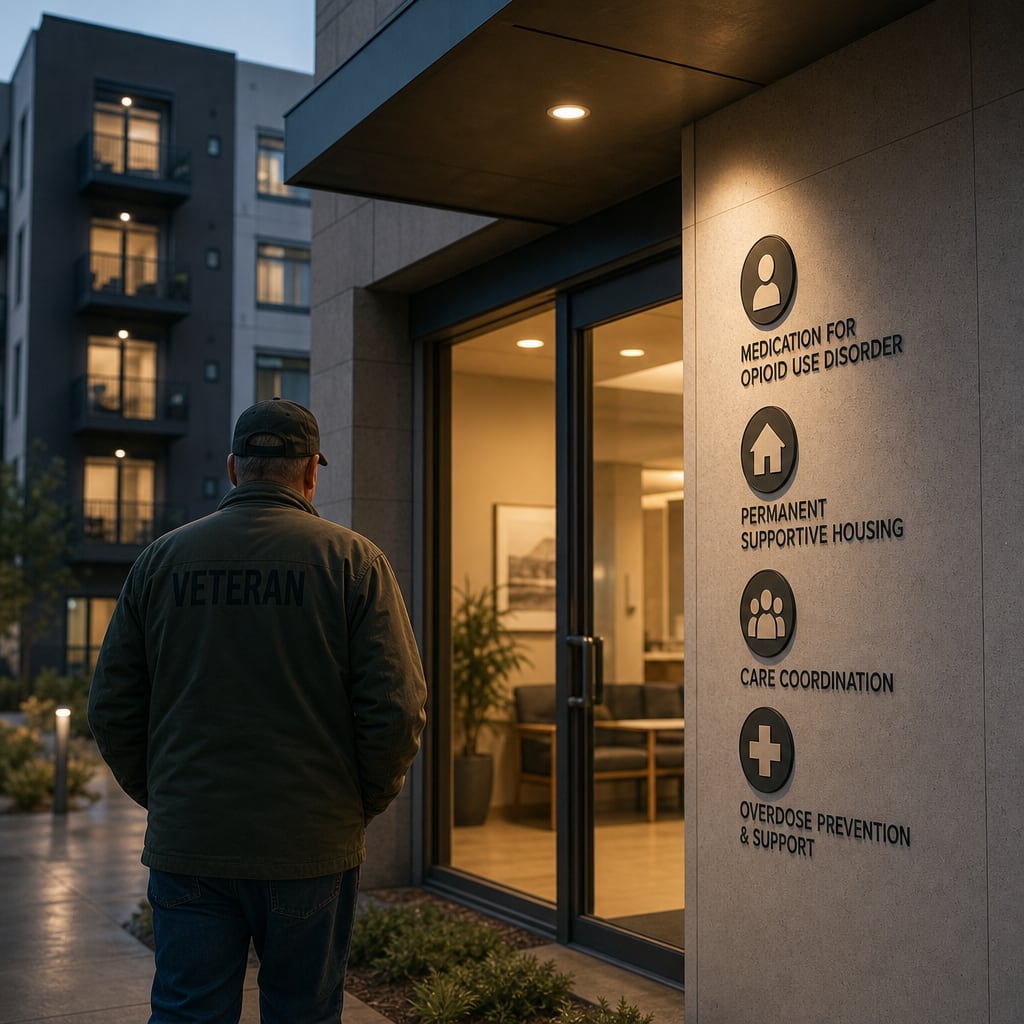
To explore factors associated with the receipt of medications for opioid use disorder (MOUD) among veterans with a history of homelessness residing in permanent supportive housing (PSH), highlighting the importance of addressing health disparities.
Key Findings:
Access to MOUD remains low among veterans with a history of homelessness despite the effectiveness of treatments, indicating a need for targeted interventions.
Structural barriers such as fragmented care and stigma limit MOUD access, necessitating systemic changes.
HUD-VASH has reduced homelessness but not significantly improved substance use disorder outcomes, suggesting a gap in integrated care.
Interpretation:
Increasing MOUD use among veterans in PSH could save lives and promote equity, particularly by addressing disparities in treatment access among racial and ethnic minorities, such as through tailored outreach programs.
Limitations:
Study findings may not be generalizable beyond the VA system, and potential biases in data collection could affect results.
Potential confounding factors were not fully controlled in the analysis, which may limit the robustness of the findings.
Conclusion:
Implementing evidence-based interventions for SUD and overdose prevention in PSH, such as integrated care models and stigma reduction programs, is crucial to improve health outcomes for veterans with OUD.