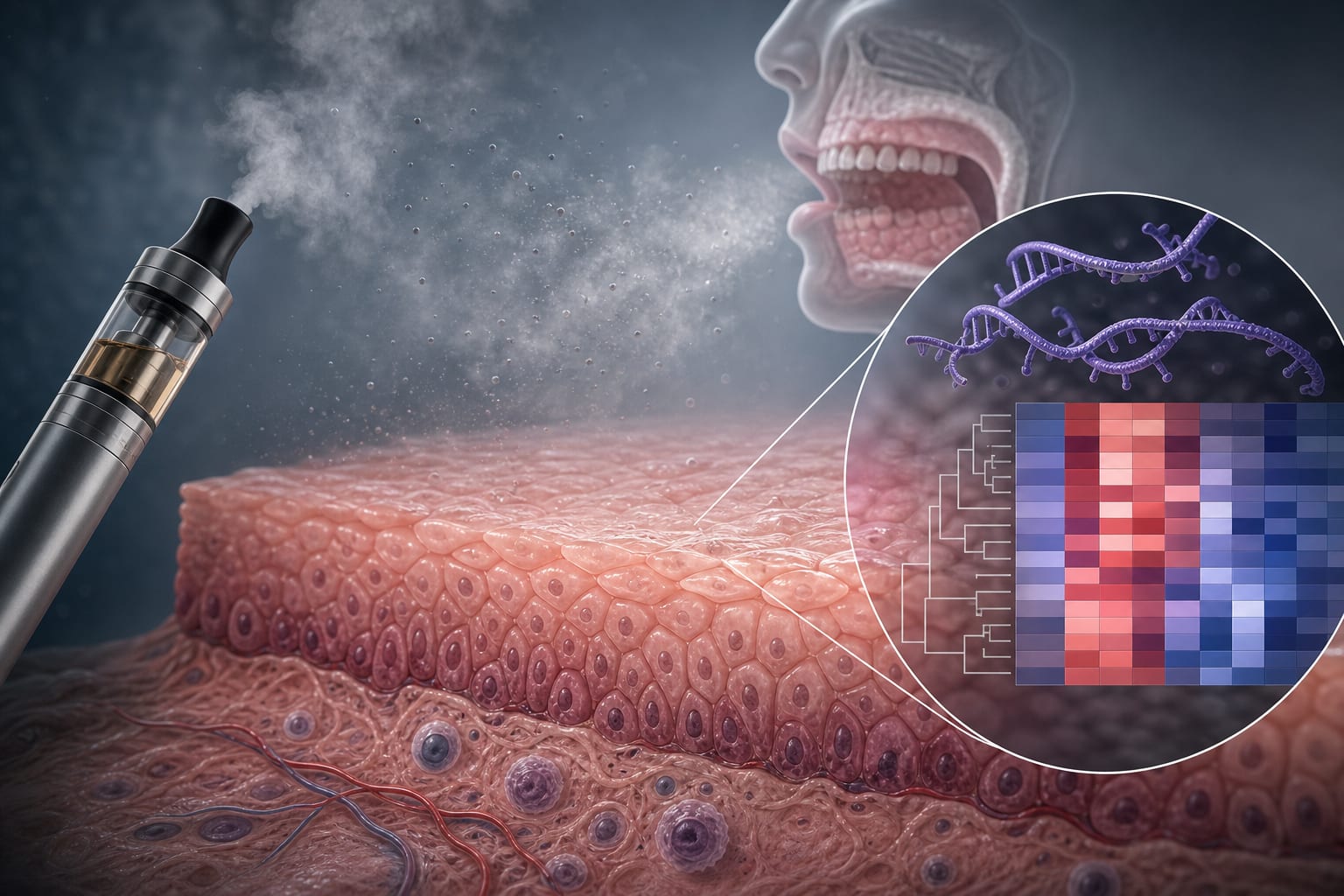
To systematically evaluate the contributions of dose and product characteristics to vaping-associated transcriptomic alterations in oral epithelial cells.
Key Findings:
Both vaping and smoking were associated with transcriptomic dysregulation compared to non-users, with partial overlap in differentially expressed genes (DEGs).
Functional enrichment analyses revealed disruption of cancer- and signaling pathways, including the RHO GTPase Cycle.
Among vapers, 27.6% of DEGs showed concordant behavior across all dose metrics, indicating heterogeneous dose-response patterns.
Device generation and flavor type contributed additional variability in gene expression among vapers.
A higher proportion of smoking-associated DEGs (54.1%) showed consistent effects across dose metrics.
Interpretation:
Vaping-associated transcriptional dysregulation reflects the combined influences of dose and product characteristics, indicating structural differences in molecular perturbations between vaping and smoking, with significant implications for public health.
Limitations:
The study may not capture all potential confounding factors influencing gene expression, such as environmental exposures or genetic predispositions.
The sample size and demographic diversity of participants may limit the generalizability of the findings.
Conclusion:
Incorporating multidimensional exposure metrics and product features into regulatory evaluations may better capture the biological complexity of e-cig exposure, ultimately informing clinical, public health practice, and regulatory decisions.
by Jessica George, Stella Tommasi, Niccolo Pabustan, Daria M. Kessler, Zairah L. Thomas, Lourdes Baezconde-Garbanati, Kimberly D. Siegmund, Ahmad Besaratinia
Most people know that tobacco use is a major risk factor for oral and head and neck cancers. Some even understand that excessive alcohol consumption also ups the odds.